




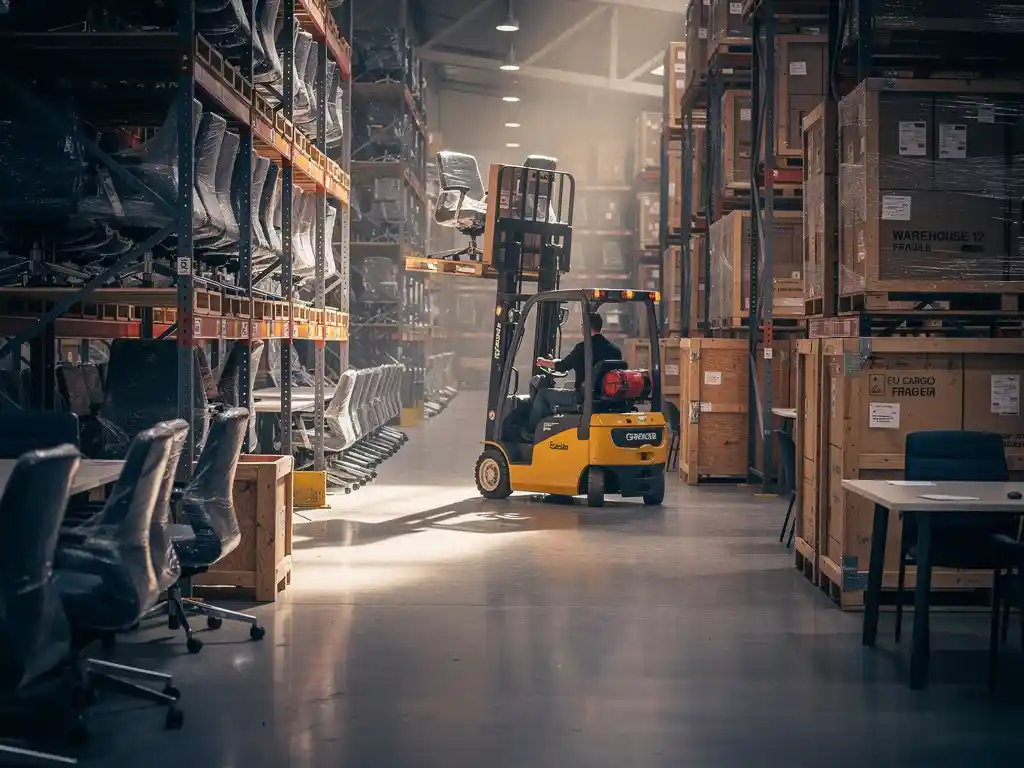
B2B furniture distribution across Europe represents a complex network of manufacturers, distributors, logistics providers, and retailers working together to move commercial furniture from production facilities to end customers. This sophisticated supply chain involves specialized handling, cross-border coordination, and value-added services that distinguish it from standard freight transportation.
Understanding how European furniture logistics operates is crucial for businesses looking to expand their reach, optimize costs, or improve delivery performance in this competitive market. From warehousing strategies to transportation methods, each component plays a vital role in ensuring furniture reaches its destination safely and on time.
What is B2B furniture distribution in Europe?
B2B furniture distribution in Europe is the specialized logistics process of moving commercial furniture products from manufacturers to business customers across European markets. This involves dedicated supply chain networks that handle everything from office furniture and hotel furnishings to restaurant equipment and retail displays through coordinated transportation, warehousing, and delivery services.
The European furniture distribution landscape differs significantly from consumer markets due to its focus on bulk orders, project-based deliveries, and specialized handling requirements. Commercial furniture often requires assembly services, installation support, and precise timing to coordinate with construction or renovation schedules. Distribution networks must accommodate varying regulations across EU member states, different VAT requirements, and diverse delivery preferences ranging from urban offices in London to remote hotels in rural Sweden.
Key players in this ecosystem include furniture manufacturers, specialized logistics providers, regional distributors, and installation teams. The network spans major manufacturing hubs in Germany, Italy, and Poland, connecting to distribution centers in strategic locations across the continent. This infrastructure supports everything from single-item deliveries to large-scale project furnishing for hotels, offices, and retail spaces.
How does the European furniture supply chain work?
The European furniture supply chain operates through a multi-stage process beginning with manufacturing hubs primarily located in Germany, Italy, Poland, and Scandinavia, then flowing through regional distribution centers before reaching end customers via specialized delivery networks. This system coordinates production planning, inventory management, cross-border transportation, and last-mile delivery to serve diverse European markets efficiently.
Manufacturing typically concentrates in regions with established woodworking traditions and efficient production capabilities. German manufacturers excel in office furniture and high-end commercial pieces, while Italian producers dominate luxury and design furniture segments. Polish facilities often handle volume production for cost-sensitive markets, and Scandinavian manufacturers focus on sustainable and minimalist designs.
Distribution centers play a crucial role as consolidation points where furniture from multiple manufacturers is combined into customer-specific shipments. These facilities often provide value-added services like quality inspections, minor assembly, custom packaging, and inventory management. Strategic placement near major transportation corridors allows for efficient onward distribution across Europe.
The final stage involves specialized delivery teams equipped to handle furniture’s unique requirements. This includes protective wrapping, careful maneuvering through tight spaces, assembly services, and installation coordination. Many distribution networks maintain partnerships with local delivery specialists who understand regional preferences and building access requirements.
What are the main challenges in European furniture logistics?
European furniture logistics faces three primary challenges: handling fragile and oversized items that require specialized equipment and careful handling, navigating complex cross-border regulations and customs procedures across different EU member states, and managing seasonal demand fluctuations that can strain capacity during peak periods like spring office relocations and holiday retail preparations.
The physical nature of furniture creates unique logistical hurdles. Large items like conference tables and wardrobes require specialized vehicles with hydraulic lifts, protective padding, and experienced handling teams. Fragile materials such as glass surfaces, delicate fabrics, and intricate woodwork demand careful packaging and climate-controlled transportation to prevent damage during transit.
Cross-border complexity adds another layer of difficulty. While EU regulations have simplified many procedures, furniture shipments still encounter varying VAT rates, different safety standards, and diverse documentation requirements. Language barriers can complicate delivery coordination, especially for complex installation projects requiring detailed communication between multiple parties.
Demand volatility presents ongoing challenges for capacity planning. Office furniture orders spike during corporate relocations and new building openings, while hospitality furniture follows tourism and development cycles. This unpredictability makes it difficult to maintain optimal fleet utilization and warehouse capacity throughout the year, often requiring flexible partnerships and scalable solutions.
Which transportation methods work best for furniture distribution?
Road transportation using specialized furniture trucks equipped with hydraulic lifts, air-ride suspension, and protective interiors provides the most effective method for European furniture distribution. These vehicles offer door-to-door delivery capability, flexible scheduling, and the specialized equipment necessary to handle fragile and oversized furniture safely across diverse European markets.
Dedicated furniture vehicles feature several critical adaptations that make them superior to standard freight trucks. Air-ride suspension systems minimize vibration damage during transport, while hydraulic lift gates enable safe loading and unloading without manual lifting. Interior padding systems and adjustable securing points prevent movement and scratching during transit. Climate control capabilities protect sensitive materials from temperature and humidity fluctuations.
For long-distance routes, many logistics providers utilize innovative swap-body systems that separate the cargo container from the truck chassis. This approach reduces loading times at distribution centers and allows for more efficient vehicle utilization. The containers can be pre-loaded with customer orders while trucks complete other deliveries, then quickly attached for final delivery runs.
Rail transportation serves as a complementary method for high-volume routes between major manufacturing and distribution centers. While less flexible than road transport, rail offers cost advantages for bulk shipments and reduced environmental impact. However, furniture shipments typically require road transport for the final delivery stage due to accessibility requirements and customer service expectations.
How do furniture distribution networks operate across Europe?
European furniture distribution networks operate through strategic hub-and-spoke systems centered on major distribution facilities in key locations like the Netherlands, Germany, and northern France, which serve as consolidation points for shipments flowing to regional delivery networks across the continent. These networks coordinate inventory management, transportation scheduling, and local delivery services to provide comprehensive coverage while maintaining cost efficiency.
Hub locations are strategically chosen based on transportation infrastructure, central geographic positioning, and access to major European markets. The Netherlands serves as a popular hub due to its excellent port facilities, central location, and business-friendly logistics environment. Major distribution centers in these hubs can process thousands of furniture items daily, sorting them by destination and combining orders for efficient delivery routes.
Regional networks extend from these central hubs to serve local markets with specialized knowledge and capabilities. Local partners understand specific market requirements, building access restrictions, and customer preferences that vary significantly across European countries. This local expertise proves essential for successful furniture delivery, especially for complex installation projects requiring coordination with construction schedules.
Technology integration enables seamless coordination across these distributed networks. Advanced warehouse management systems track inventory levels and automate order processing, while transportation management platforms optimize routing and provide real-time visibility to customers. This technological backbone allows furniture distribution networks to operate efficiently across multiple countries while maintaining service quality standards.
Hoe Jan Krediet helpt met B2B-meubellogistiek
Als specialist in Europese meubellogistiek biedt Jan Krediet complete oplossingen voor B2B-meubeldistributie dankzij onze uitgebreide expertise, strategische locaties en gespecialiseerde dienstverlening. We ondersteunen bedrijven bij hun Europese distributie-uitdagingen met:
- Gespecialiseerd meubeltransport met aangepaste voertuigen en ervaren teams
- Strategische magazijnlocaties in Nederland voor optimale Europese dekking
- Assemblage- en installatiediensten voor complete projectoplossingen
- Douaneafhandeling en cross-border expertise voor naadloze internationale leveringen
- Flexibele wissellaadbaksystemen voor efficiënte laad- en lostijden
Dankzij ons lidmaatschap van het wereldwijde MACH-3000-netwerk kunnen we meubellogistieke oplossingen leveren op meer dan 150 locaties wereldwijd. Of het nu gaat om kantoormeubilair, hotelinrichting of projectmeubels, wij zorgen voor een complete ontzorging van uw distributieproces. Neem contact op om te ontdekken hoe we uw Europese meubeldistributie kunnen optimaliseren.