




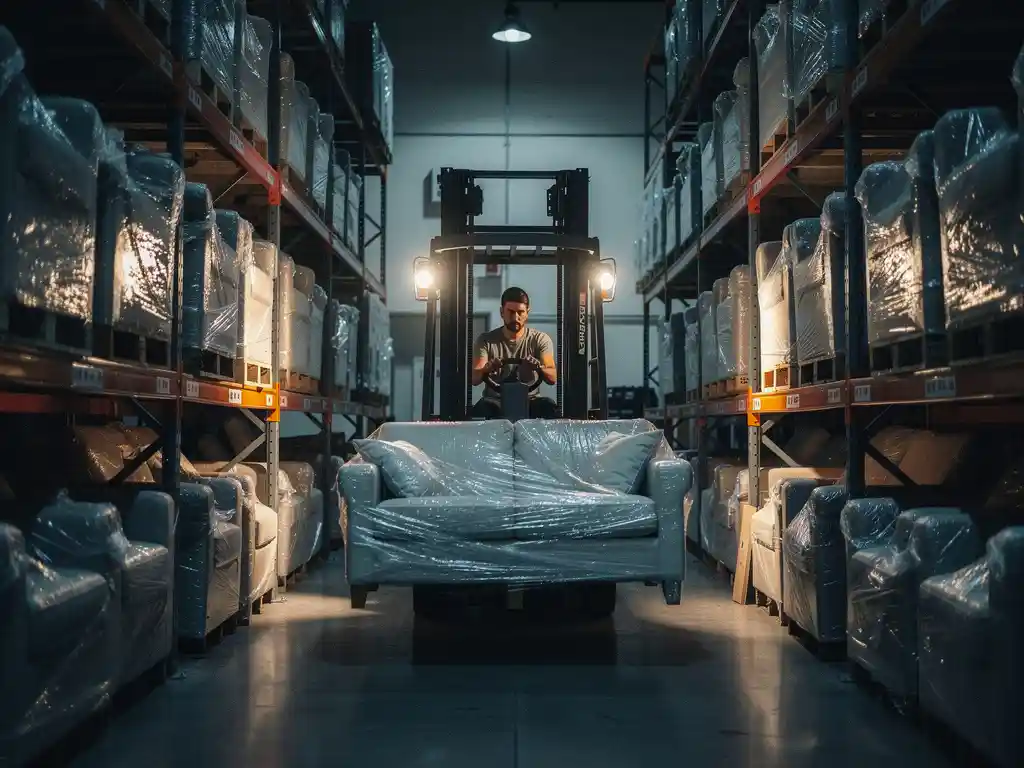
When furniture needs to be transported over long distances or through complex supply chains, it often requires temporary storage at strategic points along the journey. This intermediate storage plays a crucial role in furniture logistics, ensuring items remain safe and accessible while coordinating deliveries, managing inventory, or handling customs procedures.
Understanding how storage between furniture transports works helps businesses and consumers appreciate the sophisticated logistics infrastructure that keeps furniture moving efficiently from manufacturers to final destinations while maintaining quality and security throughout the process.
What is storage between furniture transports?
Storage between furniture transports is the temporary warehousing of furniture items at strategic locations during the logistics journey from origin to final destination. This intermediate storage serves as a buffer, where furniture can be safely held, consolidated, or redistributed before continuing to its next transport phase.
This storage typically occurs in specialized warehouses equipped with furniture-specific handling capabilities. These facilities serve multiple functions, including consolidation centers where shipments from different suppliers are combined, distribution hubs where large shipments are broken down for local delivery, and cross-docking points where furniture is transferred between different transportation modes.
The storage duration can range from a few hours for quick transfers to several weeks for complex international shipments requiring customs clearance or coordinated delivery schedules. These facilities operate as critical nodes in the supply chain, ensuring smooth transitions between different phases of the transport process.
Why do furniture items need temporary storage during transport?
Furniture items require temporary storage during transport to optimize logistics efficiency, manage delivery schedules, and accommodate the complex requirements of modern supply chains. Storage points allow for the consolidation of shipments, the coordination of delivery timing, and the handling of customs or regulatory procedures.
Several operational factors necessitate this intermediate storage. International shipments often require customs clearance periods during which furniture must be held in bonded warehouses. Large furniture pieces may need to be broken down into components for efficient transport and then reassembled later in the journey. Additionally, coordinating deliveries to match customer availability or project timelines frequently requires holding items until the optimal delivery window.
Economic considerations also drive the need for storage between transports. Consolidating multiple small shipments into full truckloads significantly reduces transportation costs. Similarly, storing furniture near major metropolitan areas allows for more efficient last-mile delivery using smaller, more maneuverable vehicles suited to urban environments.
How are furniture pieces handled in storage facilities?
Furniture pieces in storage facilities are handled using specialized equipment and procedures designed to prevent damage while maximizing space efficiency. Items are typically wrapped in protective materials, placed on appropriate racking systems, and tracked using inventory management systems that monitor location and condition throughout the storage period.
The handling process begins with careful inspection and documentation upon arrival. Each piece receives protective wrapping or padding based on its material and fragility. Wooden furniture may be covered with blankets or plastic sheeting, while upholstered items often receive breathable fabric covers to prevent moisture buildup.
Storage facilities utilize various racking and shelving systems optimized for different furniture types. Heavy items like dining tables are stored on reinforced, ground-level platforms, while lighter pieces may be placed on multi-level racking systems. Vertical storage solutions maximize space utilization while maintaining easy access for retrieval. Climate-controlled environments protect sensitive materials from temperature and humidity fluctuations that could cause warping, cracking, or other damage.
What security measures protect stored furniture?
Security measures that protect stored furniture include 24-hour surveillance systems, access control protocols, fire suppression systems, and comprehensive insurance coverage. These multilayered security approaches protect against theft, vandalism, fire damage, and environmental hazards while maintaining detailed tracking of all stored items.
Physical security typically includes perimeter fencing, security lighting, and monitored entry points with keycard or biometric access controls. Surveillance cameras provide continuous monitoring of storage areas, with recordings maintained for extended periods. Security personnel conduct regular patrols and respond to any detected irregularities.
Environmental protection systems maintain optimal storage conditions through climate control, humidity regulation, and air filtration. Fire suppression systems use appropriate extinguishing agents that won’t damage furniture materials. Pest control measures prevent infestations that could damage wooden or upholstered items. Additionally, inventory tracking systems monitor the location and status of each piece, creating an audit trail that enhances accountability and enables quick identification of any issues.
How long can furniture stay in storage between transports?
Furniture can typically stay in storage between transports for periods ranging from a few days to several months, depending on specific logistics requirements, customs procedures, and delivery coordination needs. Most intermediate storage periods last between one and four weeks for domestic shipments and up to eight weeks for international transport.
The duration depends on several factors, including the complexity of the supply chain, seasonal demand fluctuations, and specific customer requirements. International shipments may require extended storage periods for customs clearance, especially when dealing with multiple countries or complex regulatory requirements. Project-based deliveries often involve longer storage periods to coordinate with construction or renovation schedules.
Storage costs generally increase with duration, creating economic incentives to minimize storage time while balancing operational efficiency. Modern logistics planning uses sophisticated software to optimize storage duration, coordinating inbound and outbound transportation to reduce unnecessary holding periods while maintaining delivery reliability.
How Jan Krediet helps with furniture storage solutions
We provide comprehensive furniture storage and transport solutions that seamlessly integrate temporary warehousing with our extensive European logistics network. Our specialized facilities offer secure, climate-controlled storage with advanced handling capabilities for all types of furniture and interior furnishings.
Our storage services include:
- Over 60,000 square meters of specialized warehouse space across strategic European locations
- Advanced inventory management systems providing real-time tracking and status updates
- Professional assembly and disassembly services to optimize storage space and transport efficiency
- Flexible storage duration options, from short-term cross-docking to extended project coordination
- Integrated customs handling and documentation services for international shipments
With nearly 100 years of experience in furniture logistics and our membership in the MACH-3000 network, we understand the unique requirements of storage between furniture transports. Our team coordinates every aspect of the storage process to ensure your furniture arrives at its destination in perfect condition and on schedule. Contact us to discuss how our storage solutions can optimize your furniture logistics.