




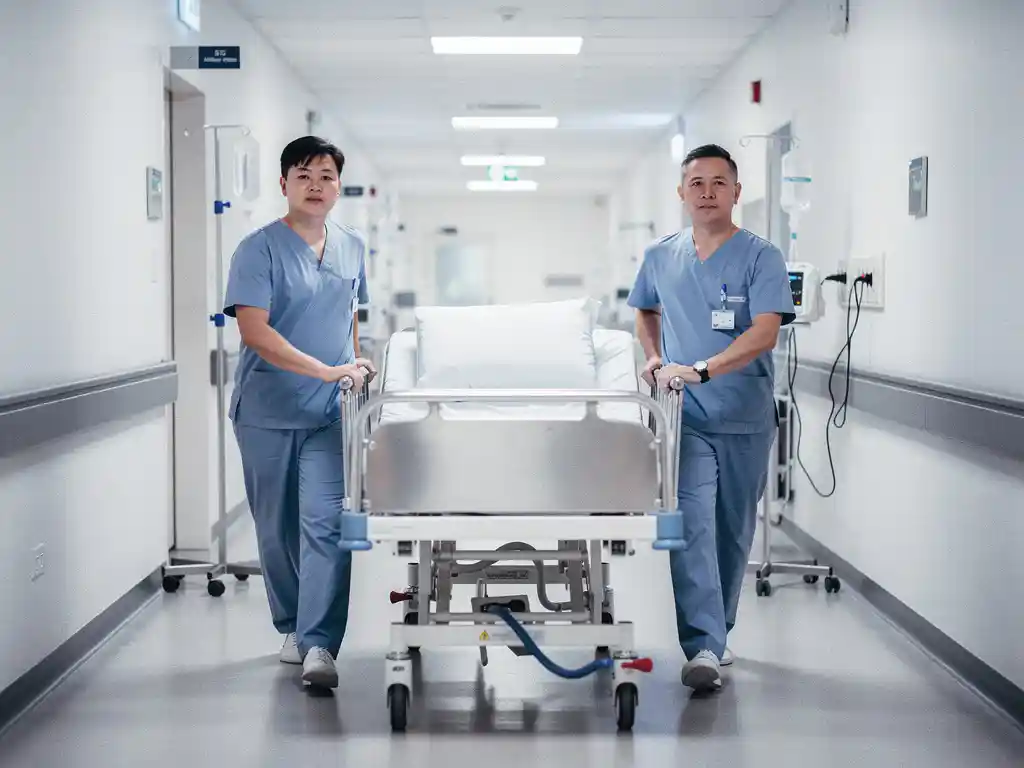
Hospital furniture transport represents one of the most complex challenges in healthcare logistics. Unlike standard commercial deliveries, moving furniture into medical facilities requires specialized knowledge of infection control protocols, precise scheduling around patient care, and an understanding of the unique regulatory environment that governs healthcare operations.
From surgical equipment to patient room furnishings, every item requires careful coordination to ensure seamless integration into active medical environments. This specialized approach to furniture transport helps healthcare facilities maintain critical operations while upgrading their infrastructure and patient care capabilities.
What makes furniture transport different for hospitals?
Hospital furniture transport requires strict adherence to infection control protocols, specialized scheduling around patient care activities, and compliance with healthcare regulations that do not apply to standard commercial deliveries. Medical facilities operate 24/7 with zero tolerance for disruptions that could impact patient safety.
The sterile environment requires that all furniture and equipment undergo specific cleaning and sanitization procedures before entering patient areas. Transport teams must coordinate with hospital staff to identify appropriate delivery windows that avoid critical care periods and high-traffic zones. Additionally, many hospitals have restricted access points, requiring advance security clearance and escort protocols for delivery personnel.
Weight restrictions in elevators designed for medical equipment, narrow corridors built for patient transport, and the need to keep emergency pathways clear all create unique logistical challenges. These factors require detailed advance planning and specialized equipment-handling techniques that standard furniture delivery services typically cannot provide.
How do logistics companies handle medical furniture delivery?
Professional logistics companies approach medical furniture delivery through detailed pre-delivery planning, specialized teams trained in healthcare protocols, and coordination with hospital facilities management to ensure minimal disruption to medical operations. The process begins weeks before the actual delivery date.
Site surveys are conducted to map delivery routes, identify potential obstacles, and determine optimal delivery windows. Logistics teams work closely with hospital infection control departments to understand specific sanitization requirements and establish proper procedures for bringing furniture into sterile environments. This includes using protective coverings, following designated pathways, and ensuring all personnel have appropriate health clearances.
Specialized equipment, such as air-ride suspension vehicles, helps protect sensitive medical furniture during transport. Teams coordinate with hospital security, facilities management, and department heads to schedule deliveries during low-activity periods, typically early morning or late evening. Real-time communication systems keep all stakeholders informed throughout the delivery process, allowing for immediate adjustments if medical emergencies require route changes or delays.
What types of furniture require special transport considerations in hospitals?
Medical furniture requiring special transport considerations includes patient beds with integrated monitoring systems, surgical tables with precision calibration requirements, imaging-equipment furniture, laboratory workstations with sensitive instruments, and specialized seating for treatment areas. Each category presents unique handling and delivery challenges.
Patient beds often incorporate complex electronic systems that require careful handling to prevent damage to integrated monitors, call systems, and mobility mechanisms. These items typically require custom crating and climate-controlled transport to protect sensitive components. Surgical furniture demands extreme precision during transport, as even minor impacts can affect calibration and compromise patient safety during procedures.
Laboratory furniture frequently contains built-in ventilation systems, chemical-resistant surfaces, and precision-engineered storage compartments that require specialized handling techniques. Imaging-equipment furniture must meet exact specifications to support heavy diagnostic machinery while ensuring proper electromagnetic shielding remains intact during transport.
How does installation work for hospital furniture projects?
Hospital furniture installation involves coordinated teams working in phases to minimize disruption to medical operations. Installations are typically scheduled during off-peak hours and coordinated with hospital staff to ensure continuity of patient care. The process requires extensive advance planning and flexible execution.
Installation teams must complete health screenings and receive facility-specific training before beginning work. Projects are broken into phases that allow departments to remain partially operational during upgrades. Critical areas, such as intensive care units and emergency departments, often require overnight or weekend installation windows to avoid interfering with patient care.
Each installation phase includes thorough testing of integrated systems, coordination with hospital biomedical engineering teams for equipment verification, and final inspections to ensure compliance with healthcare standards. Installation teams work closely with nursing staff and department managers to provide training on new furniture features and ensure a seamless transition to upgraded equipment.
How Jan Krediet helps with hospital furniture logistics
We specialize in complex healthcare furniture projects through our comprehensive project logistics solutions, providing end-to-end coordination from initial planning to final installation. Our experienced team understands the unique requirements of medical facilities and works closely with healthcare professionals to ensure seamless project execution.
Our hospital furniture transport services include:
- Detailed site surveys and delivery planning coordination
- Specialized handling for sensitive medical equipment and furniture
- Coordination with hospital infection control and facilities management teams
- Flexible scheduling around patient care activities and medical emergencies
- Professional installation teams trained in healthcare environment protocols
- Complete project management from warehouse to final room setup
Whether you’re upgrading patient rooms, installing new surgical suites, or furnishing an entire medical facility, our team provides the specialized expertise needed for successful healthcare furniture projects. Contact us to discuss your hospital furniture logistics requirements and discover how we can support your healthcare facility’s needs.