




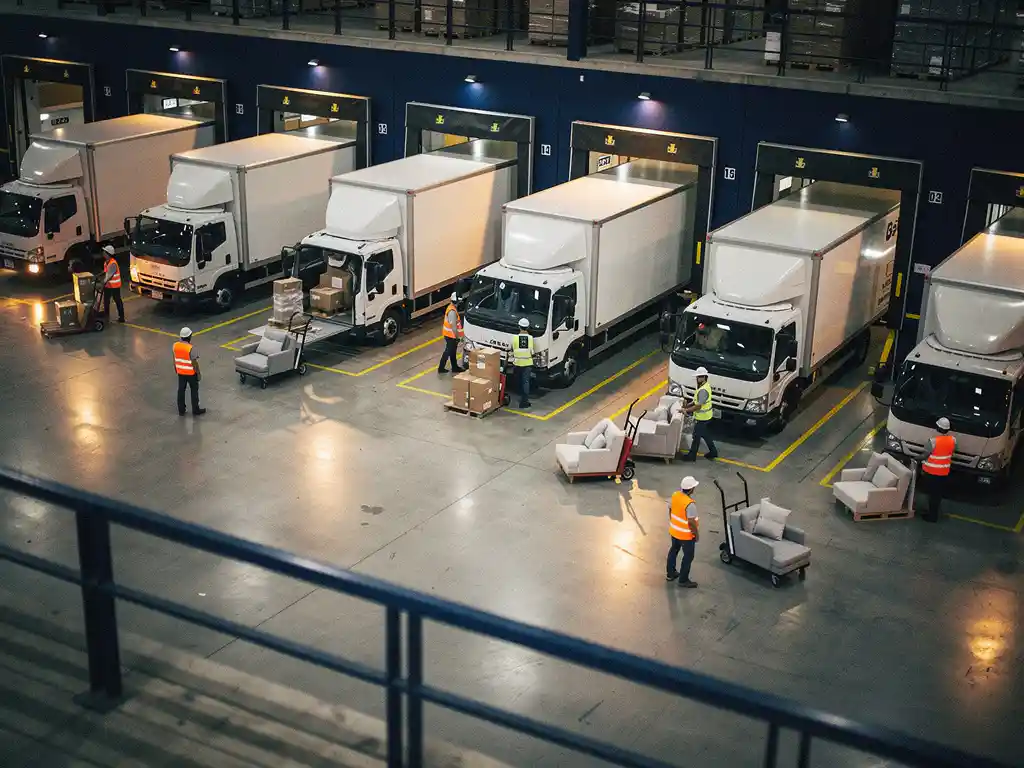
Managing multiple furniture transports simultaneously is one of the most complex challenges in logistics. Whether you’re coordinating office relocations across several buildings, managing furniture deliveries for multiple retail locations, or handling simultaneous residential moves, success depends on strategic planning, advanced technology, and seamless execution.
The complexity multiplies when you consider that each transport involves different pickup points, delivery locations, time windows, and specific handling requirements. Modern furniture logistics demands sophisticated coordination systems that can optimize routes, manage resources, and adapt to real-time changes while maintaining service quality across all deliveries.
What does coordinating multiple furniture transports involve?
Coordinating multiple furniture transports involves managing simultaneous logistics operations across different routes, vehicles, and delivery schedules while ensuring optimal resource allocation and customer satisfaction. This process requires orchestrating pickup schedules, delivery windows, vehicle assignments, crew coordination, and real-time communication across all active transports.
The coordination process begins with comprehensive planning that maps out each transport’s requirements. This includes analyzing furniture types, dimensions, and handling needs for each shipment. Special considerations must be made for fragile items, oversized pieces, and installations that require specific tools or expertise.
Resource management forms the backbone of successful coordination. This involves assigning the right vehicles for each job based on cargo requirements, ensuring that enough crew members with the appropriate skills are available, and maintaining backup resources for unexpected situations. Effective coordination also requires establishing clear communication channels between dispatch, drivers, warehouse teams, and customers.
Timeline synchronization is crucial when managing multiple simultaneous transports. Coordinators must balance pickup schedules to avoid warehouse congestion while ensuring delivery windows align with customer availability and site access requirements.
How do you plan routes for multiple furniture deliveries?
Route planning for multiple furniture deliveries involves using advanced routing algorithms to optimize travel distances, minimize fuel consumption, and maximize delivery efficiency while respecting time windows and vehicle capacity constraints. The process starts by analyzing all delivery locations, traffic patterns, and operational constraints to create the most efficient sequence of stops.
Modern route planning begins with data collection. This includes mapping exact delivery addresses, noting any access restrictions such as narrow streets or loading dock limitations, and identifying optimal time windows for each location. Traffic pattern analysis helps avoid congested areas during peak hours while considering factors such as school zones, construction areas, and seasonal restrictions.
Vehicle capacity optimization ensures each truck is loaded efficiently without exceeding weight limits or space constraints. This involves strategic loading so that items for later deliveries are placed first, while fragile or priority items are positioned for safe transport and easy access.
Dynamic routing capabilities allow for real-time adjustments when unexpected situations arise. This flexibility is essential for maintaining delivery schedules when traffic delays, customer reschedules, or vehicle issues occur during active transport operations.
What technology helps coordinate furniture transport operations?
Transportation Management Systems (TMS), GPS tracking, mobile applications, and automated scheduling software are the primary technologies that help coordinate furniture transport operations. These integrated systems provide real-time visibility, automate routine tasks, and enable data-driven decision-making across all aspects of transport coordination.
TMS platforms serve as the central command center for coordinating multiple transports. These systems integrate route optimization, vehicle tracking, driver communication, and customer notifications into a single interface. Advanced TMS solutions can automatically assign vehicles based on cargo requirements, optimize routes across multiple deliveries, and provide real-time updates on transport status.
GPS tracking technology provides precise location data for all vehicles, enabling coordinators to monitor progress, identify potential delays, and make proactive adjustments. This technology also supports customer communication by providing accurate delivery time estimates and automatic notifications about driver arrival times.
Mobile applications empower drivers with digital delivery confirmations, photo documentation, and direct communication with dispatch. These tools eliminate paperwork delays and provide immediate updates on delivery completion, damage reports, or customer feedback.
Warehouse Management Systems (WMS) integrate with transport coordination to ensure proper loading sequences, inventory tracking, and quality control before items leave the facility.
How do you handle scheduling conflicts in furniture logistics?
Scheduling conflicts in furniture logistics are handled through proactive buffer time allocation, flexible resource pools, alternative route planning, and clear customer communication protocols. The key is maintaining contingency plans that can be activated quickly when conflicts arise without disrupting other scheduled deliveries.
Buffer time management is essential for handling unexpected delays. Professional logistics coordinators build cushion time into schedules, particularly between deliveries that share resources or routes. This prevents cascading delays when one delivery takes longer than anticipated.
Resource flexibility involves maintaining backup vehicles and crews that can be deployed when primary resources become unavailable. Cross-trained personnel who can handle different types of furniture deliveries provide additional scheduling flexibility.
Customer communication plays a crucial role in conflict resolution. Proactive notification about potential delays, offering alternative delivery windows, and providing regular updates help maintain customer satisfaction even when schedules must be adjusted.
Priority-based rescheduling ensures that the most critical deliveries maintain their schedules while less urgent transports are adjusted. This might involve prioritizing commercial installations with fixed deadlines over residential deliveries with flexible timing.
What are the biggest challenges in coordinating simultaneous furniture transports?
The biggest challenges in coordinating simultaneous furniture transports include resource allocation conflicts, unpredictable delivery complications, real-time communication management, and maintaining service quality standards across all operations. These challenges are magnified when dealing with different furniture types, varying customer requirements, and geographic spread across delivery locations.
Resource allocation becomes complex when multiple transports compete for the same specialized equipment or skilled personnel. Large furniture pieces may require specific vehicles or lifting equipment, while delicate antiques need experienced handlers. Coordinating these resources across simultaneous operations requires careful planning and backup alternatives.
Unpredictable complications such as access restrictions, customer unavailability, or damage discoveries can disrupt carefully planned schedules. When these issues affect one transport in a coordinated sequence, they can impact multiple other deliveries sharing the same resources or routes.
Communication complexity increases exponentially with each additional transport. Coordinators must maintain clear channels with multiple driver teams, warehouse staff, customers, and potentially installation crews while ensuring information accuracy and timely updates across all parties.
Quality control becomes challenging when attention is divided across multiple simultaneous operations. Maintaining consistent service standards for loading procedures, transport care, and delivery execution requires robust processes and experienced supervision.
How Jan Krediet helps with furniture transport coordination
At Jan Krediet, we specialize in coordinating complex furniture transport operations through our comprehensive project logistics services. With more than 200 logistics professionals and advanced coordination systems, we manage simultaneous furniture transports across Europe and beyond, ensuring seamless execution for even the most challenging projects.
Our coordination capabilities include:
- Advanced route optimization across multiple delivery locations
- Real-time tracking and communication systems for all active transports
- Specialized vehicles and equipment for different furniture types
- Experienced project teams that handle scheduling conflicts proactively
- End-to-end supply chain management from pickup to final installation
Whether you need to coordinate office relocations across multiple buildings, manage furniture deliveries for retail chains, or handle complex installation projects, our team creates customized logistics solutions that optimize efficiency while maintaining service quality. Contact us to discuss how we can streamline your furniture transport coordination challenges.