




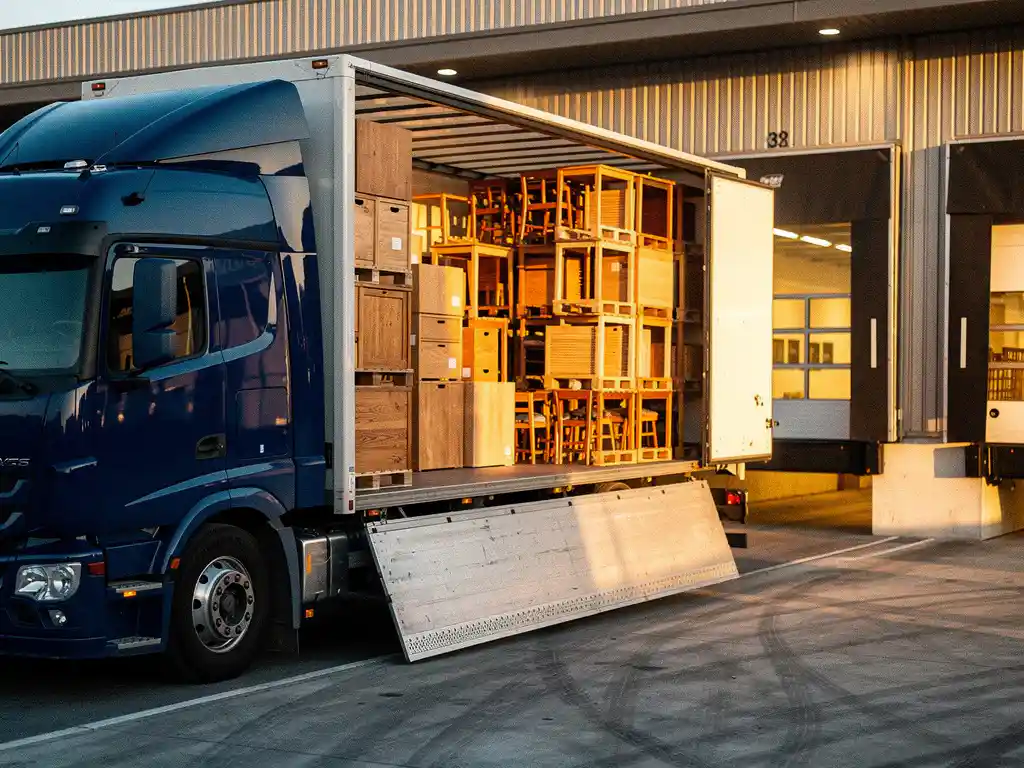
In the world of freight shipping, understanding the difference between partial-load and full-load options can significantly impact your logistics costs and delivery timelines. These two fundamental shipping methods, also known as Less-Than-Truckload (LTL) and Full Truckload (FTL), serve different business needs and offer distinct advantages depending on your cargo requirements.
Whether you’re shipping a single pallet or filling an entire trailer, choosing the right load type affects everything from pricing and transit times to cargo handling and security. Making an informed decision requires understanding how each option works and when to apply it to your specific shipping needs.
What is the difference between partial-load and full-load shipping?
Partial-load shipping, or LTL, involves sharing truck space with other shippers’ cargo, while full-load shipping, or FTL, dedicates an entire truck to your shipment alone. In partial-load shipping, your freight is consolidated with other shipments heading in similar directions, allowing you to pay only for the space you use.
Full-load shipping gives you exclusive use of the truck’s entire capacity, regardless of whether your cargo fills the trailer. This means you have control over the vehicle and its schedule, from pickup to delivery. Partial-load shipments typically weigh between 150 and 15,000 pounds and occupy 1 to 6 pallets, while full-load shipments usually exceed 15,000 pounds or require more than 10 pallets of space.
The cargo-handling process differs significantly between these methods. Partial loads are loaded and unloaded multiple times at various terminals as they move through the carrier’s network, while full loads travel directly from origin to destination with minimal handling. This fundamental difference affects transit times, costs, and the level of cargo protection each method provides.
When should you choose partial load over full load?
Choose partial-load shipping when your shipment is smaller than a full truckload—typically under 15,000 pounds or fewer than 10 pallets. This option is most cost-effective for businesses with smaller, regular shipments that don’t justify the expense of dedicating an entire truck.
Partial-load shipping works best for non-urgent shipments where you can accept longer transit times in exchange for lower costs. It’s ideal for businesses with predictable shipping patterns, such as retailers restocking inventory or manufacturers sending regular supply deliveries. Companies shipping to multiple destinations can also benefit from LTL services that offer consolidated shipping to various locations.
Consider partial-load shipping when your cargo is durable and can withstand multiple handling points without a high risk of damage. Standard packaged goods, non-fragile items, and products that don’t require special temperature or security considerations are well-suited for LTL shipping. Additionally, if your business operates on flexible timelines and doesn’t require guaranteed delivery dates, partial-load shipping offers significant cost savings over expedited full-load services.
How do costs compare between partial and full load shipping?
Partial-load shipping costs less for smaller shipments because you only pay for the space your cargo occupies, while full-load shipping provides better value when you have enough freight to justify the truck’s full capacity. LTL pricing is typically calculated based on weight, dimensions, freight class, and distance, making it economical for shipments under 10,000 pounds.
Full-load pricing operates on a flat rate for the entire truck, regardless of how much space you actually use. This makes FTL more expensive for small shipments but increasingly cost-effective as your freight volume approaches full truck capacity. The break-even point usually occurs around 12,000 to 15,000 pounds, depending on the specific route and cargo type.
Additional cost factors include fuel surcharges, accessorial services, and handling fees. Partial loads often incur extra charges for services like liftgate delivery, inside pickup, or residential delivery. Full loads may include detention fees if loading or unloading takes longer than the allocated time, but they generally involve fewer accessorial charges due to the direct nature of the service.
What are the transit time differences between LTL and FTL?
Full-load shipments are delivered faster than partial loads because they travel directly from pickup to destination without stops at consolidation terminals. FTL transit times typically range from 1 to 3 days for most regional routes, while LTL shipments usually take 2 to 6 days, depending on distance and the number of terminal transfers required.
LTL shipments move through a hub-and-spoke network where freight is sorted and consolidated at multiple terminals along the route. Each terminal stop adds time to the overall transit, as cargo must be unloaded, sorted, and reloaded onto different trucks heading toward the final destination. This process, while efficient for cost management, inherently extends delivery timeframes.
Seasonal factors and capacity constraints can affect both shipping methods, but LTL is generally more susceptible to delays during peak shipping periods. Full-load shipments maintain more consistent transit times because they bypass the terminal network entirely. However, FTL can experience delays due to driver availability or equipment shortages during high-demand periods, such as holiday seasons or harvest times in agricultural regions.
How does cargo handling differ between partial and full loads?
Partial-load cargo undergoes multiple handling events as it moves through the carrier’s terminal network, while full-load cargo typically experiences minimal handling from pickup to delivery. LTL freight is loaded and unloaded at each terminal, sorted with other shipments, and transferred between different trucks throughout its journey.
This increased handling in LTL shipping requires more robust packaging to protect goods from potential damage during multiple loading and unloading cycles. Freight must be properly palletized, wrapped, and labeled to withstand the sorting process at various terminals. Each handling point introduces a small risk of damage or loss, making proper packaging essential for LTL shipments.
Full-load cargo benefits from single-source handling, where the same driver and truck transport your freight from origin to destination. This reduces the risk of damage and provides better security for valuable or fragile items. FTL shipments can accommodate specialized handling requirements, such as temperature control, hazardous materials transport, or oversized cargo that wouldn’t be suitable for the multiple handling points in LTL networks.
How Jan Krediet helps with load optimization
We understand that choosing between partial- and full-load shipping can be complex, especially when managing multiple shipments or varying cargo volumes. Our logistics experts analyze your specific requirements to determine the most cost-effective and efficient shipping solution for each situation.
Our comprehensive approach includes:
- Load consolidation strategies to maximize efficiency and minimize costs
- Route optimization to reduce transit times and improve delivery reliability
- Flexible capacity management to accommodate both LTL and FTL requirements
- Advanced tracking and communication throughout the shipping process
- Specialized handling for fragile, valuable, or oversized cargo
Through our project logistics expertise and extensive network, we provide tailored solutions that optimize your shipping costs while meeting your delivery requirements. Whether you need regular LTL services or dedicated FTL capacity, our team ensures your cargo reaches its destination safely and on time. Contact us today to discuss how we can optimize your freight shipping strategy and reduce your logistics costs.