




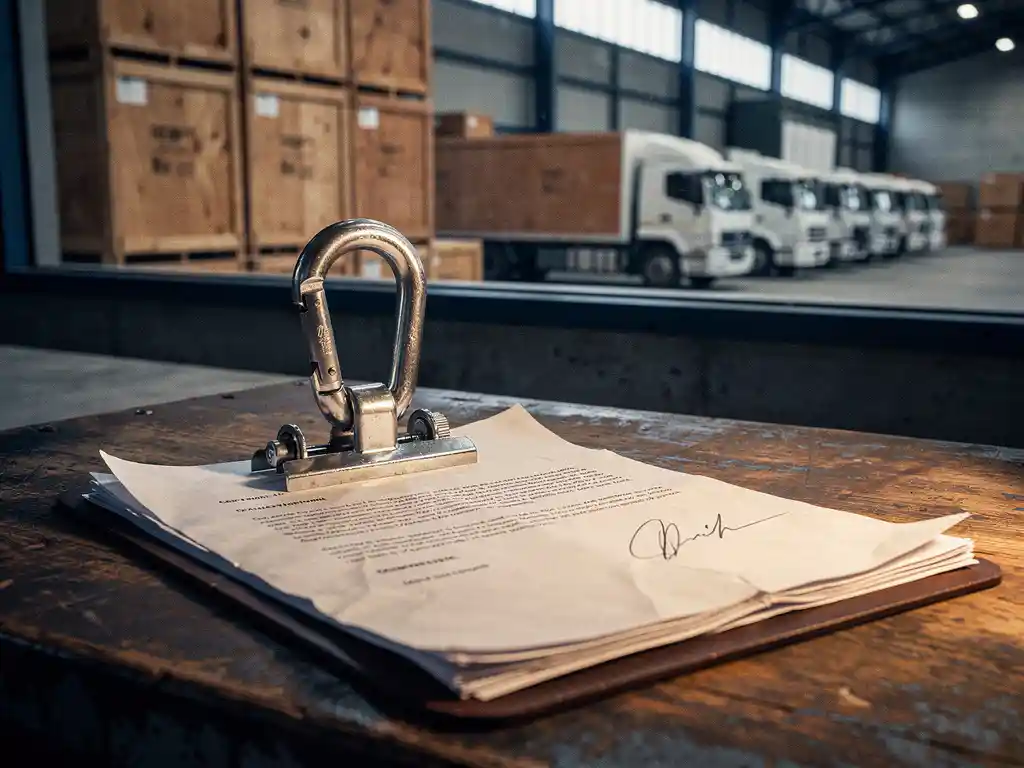
Every project logistics contract should include, at minimum: a clearly defined scope of work, service level agreements with measurable KPIs, liability and insurance terms, compliance and certification requirements, communication protocols, and dispute resolution procedures. These contractual requirements protect both parties and create a shared framework for accountability. The sections below break down each of these areas in practical detail so you know exactly what to look for before signing.
What clauses should every project logistics contract include?
A project logistics contract must include a defined scope of work, pricing and payment terms, service level agreements, liability limits, insurance obligations, compliance requirements, communication protocols, and termination conditions. These clauses form the legal and operational backbone of your logistics partner agreement and prevent ambiguity when things do not go as planned.
Beyond the basics, the scope of work clause deserves particular attention. It should describe exactly which services are covered, including transport, warehousing, last-mile delivery, installation, customs clearance, and any value-added services. Vague scope language is one of the most common sources of disputes in project logistics, so the more specific you can be, the better.
Pricing terms should distinguish between fixed fees and variable costs, and should specify what triggers additional charges. For complex projects spanning multiple locations or countries, it is worth including a change order process so that scope expansions are priced and approved before work begins rather than invoiced as a surprise afterward.
Termination clauses matter too. Define what constitutes a material breach, how much notice is required to exit the agreement, and what happens to goods in transit or storage if the relationship ends. Including a dispute resolution mechanism, such as mediation before litigation, can save both parties significant time and cost.
What service level agreements (SLAs) are standard in project logistics?
Standard SLAs in a project logistics contract typically cover on-time delivery rates, damage and loss thresholds, response times for issue resolution, and reporting frequency. These metrics give both parties a measurable basis for evaluating performance and are the foundation of any credible logistics partner agreement.
On-time delivery is usually expressed as a percentage target, for example 98% of deliveries completed within the agreed window. Damage rates are often set as a maximum acceptable percentage of total shipments, and anything above that threshold should trigger a formal review process.
For project logistics specifically, where installations in office buildings, hospitals, or hotels often follow tight construction schedules, time windows are critical. SLAs should specify not just delivery dates but also delivery time slots, particularly for urban locations or sites with restricted access. Missing a two-hour window on a high-rise installation can cascade into a full day of lost productivity for everyone on site.
Response time SLAs are equally important. Define how quickly your logistics partner must acknowledge an issue, provide a status update, and resolve it. A tiered structure works well here: critical issues resolved within four hours, standard issues within 24 hours, and minor issues within 48 hours, for example. Align these targets with your own operational needs before agreeing to them.
How should liability and insurance be defined in a logistics contract?
Liability in a project logistics contract should specify maximum financial exposure per incident, exclusions, and the process for filing claims. Insurance obligations should require the logistics partner to maintain cargo insurance, general liability coverage, and, where relevant, professional indemnity, with minimum coverage amounts stated in the contract.
Many standard logistics contracts default to international conventions such as the CMR Convention for road transport, which caps liability at a relatively low rate per kilogram of goods lost or damaged. For high-value project cargo, furniture, artwork, or specialist equipment, this standard limit is rarely sufficient. Negotiate a higher contractual liability cap that reflects the actual value of the goods being handled.
Require your logistics partner to provide certificates of insurance before work begins, and specify that you must be notified if coverage lapses or is materially changed. It is also worth clarifying who is responsible for insuring goods during warehousing versus transit, as these can sometimes fall into a coverage gap if not explicitly addressed.
Force majeure clauses are a related consideration. Define clearly what qualifies as a force majeure event and what obligations remain in place even during such events. Blanket force majeure language that excuses all liability for any unexpected event is too broad and should be pushed back on during negotiations.
What compliance and certification requirements should a logistics partner meet?
A project logistics partner should hold relevant industry certifications, comply with local and international transport regulations, and meet any sector-specific standards applicable to your cargo. Minimum requirements typically include valid operating licenses, customs authorization where applicable, and health and safety compliance. Certifications such as ISO 9001 for quality management are a strong indicator of operational maturity.
For cross-border project logistics, customs compliance is non-negotiable. Your partner should have demonstrable experience with import and export documentation, and ideally hold Authorised Economic Operator (AEO) status, which signals a high level of customs compliance and can speed up border clearance significantly.
Sector-specific requirements vary. Healthcare and pharmaceutical logistics demand stricter temperature and handling controls. Projects involving sensitive data environments, such as server room installations, may require security vetting. If your project involves hazardous materials, your partner must hold the appropriate ADR certification for dangerous goods transport.
Write these requirements into the contract explicitly rather than assuming they are in place. Include a clause requiring the logistics partner to notify you immediately if any certification lapses or a compliance issue arises. Our standards and certifications reflect the kind of documented compliance framework you should be looking for in any serious logistics partner.
How should communication and reporting obligations be written into the contract?
Communication and reporting obligations in a project logistics contract should define the frequency of updates, the format of reports, named points of contact on both sides, and escalation paths for issues. Clear communication protocols reduce misunderstandings and keep complex projects on track across multiple stakeholders and locations.
At a minimum, specify a dedicated account manager or project coordinator as the primary contact. For large or ongoing projects, weekly status reports covering delivery performance, open issues, and upcoming milestones are standard. For time-critical installations, daily briefings during active project phases are not unusual.
Define what information must be included in reports. Delivery confirmation data, proof of delivery documentation, damage reports, and exception logs should all be captured systematically. If your business requires real-time tracking visibility, write that into the contract as a technical requirement rather than assuming it will be provided as a courtesy.
Escalation procedures deserve their own clause. Specify who is contacted when an issue cannot be resolved at the account manager level, how quickly escalation must happen, and what authority the escalated contact has to make decisions. This is especially important for complex project logistics involving multiple countries or tight delivery windows where delays compound quickly.
When should you review or renegotiate a project logistics contract?
A project logistics contract should be reviewed at least annually, at the end of a project phase, when business volumes change significantly, or when either party’s operational circumstances shift materially. Renegotiation is appropriate when SLA performance consistently falls short, when pricing no longer reflects market conditions, or when the scope of services has evolved beyond what the original agreement covers.
Annual reviews are a baseline, but they should not be the only trigger. If your project pipeline grows substantially, if you expand into new markets, or if new regulatory requirements come into force, these are all valid reasons to revisit contractual terms before the scheduled review date.
Performance reviews are distinct from contract reviews. Schedule quarterly performance discussions to assess SLA compliance and address any recurring issues. If a pattern of underperformance emerges, document it formally and use it as the basis for a contractual conversation. A good logistics partner will welcome this kind of structured dialogue because it gives them the opportunity to improve before the relationship deteriorates.
When renegotiating, approach it as a collaborative process rather than an adversarial one. Bring data, be specific about what needs to change, and be open to hearing what the logistics partner needs from your side to deliver better results. Long-term partnerships built on clear, regularly updated agreements consistently outperform short-term transactional arrangements. If you want to understand how we approach long-term client relationships, our company values give a clear picture of the principles we work by.