




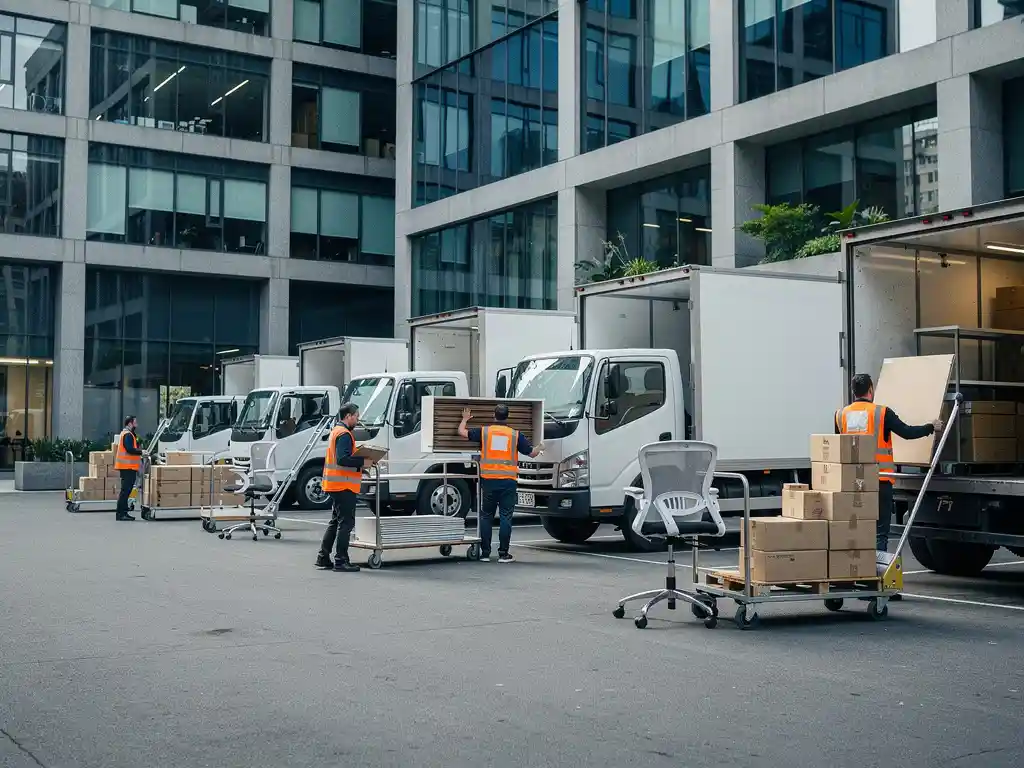
Rolling out furniture, workstations, and shared amenities across multiple co-working locations at the same time is a genuinely complex operation. Deliveries need to land at the right building on the right day, installation crews need to be in the right place, and nothing can sit in a corridor blocking a live workspace for longer than necessary. Get the sequencing wrong and you end up with costly delays, damaged pieces, and frustrated clients.
This guide walks you through the full process of managing multi-site co-working fit-out logistics from initial planning through to final clearance. Follow these steps in order and you will have a repeatable framework you can apply whether you are fitting out three locations or thirty.
Map your sites, timelines, and delivery windows first
Before a single item leaves a warehouse, you need a complete picture of every location involved in the fit-out. Co-working fit-out coordination breaks down most often at this stage because planners underestimate how different each site actually is. Access restrictions, lift dimensions, loading bay availability, and building management rules vary significantly from one address to the next.
- Create a site information sheet for each location covering the address, loading bay dimensions, lift capacity, floor level, and the name of the on-site contact.
- Confirm the permitted delivery windows with each building manager in writing, noting any blackout periods such as peak business hours or tenant move-in days.
- Map the project timeline backwards from each location’s handover date, identifying which sites are on the critical path and which have buffer time.
- Flag any sites with access challenges early, such as city-centre locations with restricted vehicle sizes or buildings without a goods lift.
After completing this step you should have a single master document that captures every site’s constraints and delivery windows. If any location cannot accommodate your standard delivery vehicle or timeline, you know now rather than on the day of delivery.
Consolidate freight into a single managed flow
Multi-site fit-outs typically involve multiple suppliers shipping furniture, partitioning, technology equipment, and soft furnishings from different origins. If each supplier manages their own delivery, you immediately lose control of sequencing and you multiply the risk of items arriving out of order. The solution is to consolidate everything through a single logistics flow before distribution begins.
Route all inbound goods to a central consolidation warehouse where stock can be checked, sorted by site, and staged for outbound delivery. This gives you a single point of quality control where damaged or incorrect items are identified before they reach a live fit-out site. It also means you can build complete site packs, grouping every item destined for one location together so that deliveries arrive complete rather than in fragments across several days.
- Instruct all suppliers to deliver to your consolidation point rather than direct to site, providing them with booking-in procedures and reference numbers.
- As goods arrive, check quantities and condition against purchase orders and flag any discrepancies immediately to the supplier.
- Sort and label stock by site and room or zone within each site, using a consistent labelling system that your installation crews will recognise on arrival.
- Stage outbound loads in delivery sequence so that the first site to receive goods is packed last in, first out.
With consolidated stock staged and labelled, you are ready to plan the outbound distribution. At this point you have full visibility of what is going where and you can confirm delivery schedules with confidence. Our warehousing solutions are built specifically to support this kind of pre-distribution staging for fit-out projects.
Coordinate last-mile delivery across all locations
Last-mile delivery in a co-working fit-out context means getting goods from the consolidation point into the correct room or zone on the correct floor at each site. This is where fit-out logistics most often creates friction with building operations, so precise coordination is essential.
Sequence your deliveries so that sites with the tightest access constraints or the earliest handover dates are prioritised. Avoid scheduling two complex deliveries on the same day if your crew and vehicle capacity cannot support both without one running late. Build a 10 to 15 percent time buffer into each delivery slot to absorb minor delays without cascading across the rest of the schedule.
- Share a confirmed delivery schedule with each site contact at least five working days in advance, including vehicle type, estimated arrival time, and crew size.
- Assign a single point of contact on your logistics team for each delivery day who can make real-time decisions if access is delayed or a delivery window shifts.
- Brief delivery crews on the specific access requirements for each site before they depart, including parking restrictions and any building sign-in procedures.
After each delivery, your site contact should sign off receipt of goods against the site pack manifest. This confirmation is your checkpoint that the correct items have arrived in acceptable condition before installation begins.
Manage assembly and installation on-site
Delivery and installation are two separate operations and treating them as one is a common source of delays. Furniture and workstation assembly requires skilled crews, the right tools, and a clear sequence that respects the fit-out programme. Pieces installed out of sequence can block access for other trades or require disassembly later.
Work with the principal contractor or project manager to understand the broader fit-out programme before scheduling your installation crews. Flooring, electrical first fix, and partition installation typically need to be complete before furniture installation begins. Confirm these predecessor activities are finished before committing your crew to a start date.
- Produce a room-by-room installation sequence for each site, working from the furthest point from the entrance inward so that completed areas are not used as a thoroughfare.
- Ensure crews have the manufacturer assembly instructions for every product type before arriving on site, not on the day.
- Assign a crew leader for each site who is responsible for quality checking completed installations against the client’s specification before moving to the next room.
- Photograph completed areas as you progress, creating a visual record that supports the client sign-off process.
Our project logistics team handles assembly and installation as part of an integrated service, which removes the coordination gap between delivery and fit-out. Whether you manage installation in-house or through a specialist partner, the key is that delivery and installation are sequenced together, not planned independently.
Handle returns, surplus stock, and packaging waste
Every fit-out generates reverse logistics. Surplus items, damaged goods that need returning to suppliers, and significant volumes of cardboard, foam, and pallet waste all need to be removed from site promptly. On a multi-site programme, this reverse flow can become substantial if it is not planned from the start.
Include a returns and waste removal plan in your logistics programme before the first delivery takes place. Co-working operators typically need sites cleared and operational quickly, so packaging waste left on site for several days after installation is not acceptable. Plan for waste removal to happen on the same day as or the day after each installation is completed.
- Identify which items from each site pack are likely to generate returns, such as items with a high damage-in-transit rate or bespoke pieces that may not fit as specified.
- Establish a returns process with each supplier in advance, including return authorisation numbers, collection arrangements, and credit timelines.
- Arrange for packaging waste to be collected and sorted for recycling at each site, keeping a record of volumes removed for sustainability reporting if required by the client.
- Return surplus stock to the consolidation warehouse rather than leaving it on site, where it can be reallocated to another location or returned to the supplier cleanly.
With returns and waste managed systematically, your sites remain clean and operational, and your supplier relationships stay in good order for the next project.
Keep visibility across every site with real-time tracking
Managing multi-site logistics without real-time visibility is like running a project with no status updates. You need to know where every delivery is, which installations are complete, and where exceptions are developing before they become problems. This is the final layer that holds the whole operation together.
Use a transport management system or logistics platform that provides live tracking on all outbound vehicles and sends automated notifications to site contacts when deliveries are approaching. Combine this with a simple daily status report that captures completed deliveries, outstanding items, and open issues across all sites. Share this report with the client’s project manager so they have confidence in progress without needing to chase individual updates.
- Set up a shared project tracker that lists every site, its delivery date, installation date, and current status, updated at least once per day during the active phase.
- Configure alerts for any delivery that falls outside its scheduled window so that your logistics coordinator can act immediately rather than discovering the delay after the fact.
- Hold a brief daily check-in with your site contacts and installation crews during the busiest delivery weeks to surface issues early.
- Conduct a formal close-out review at the end of the programme, documenting what worked and what would be done differently, so the next multi-site fit-out runs more smoothly.
When visibility is built into your process from day one, co-working space logistics becomes manageable even at scale. You spend less time firefighting and more time delivering a smooth handover that reflects well on everyone involved. If you are planning a complex multi-site programme and want to discuss how we can support it, get in touch with our team to talk through your requirements.