




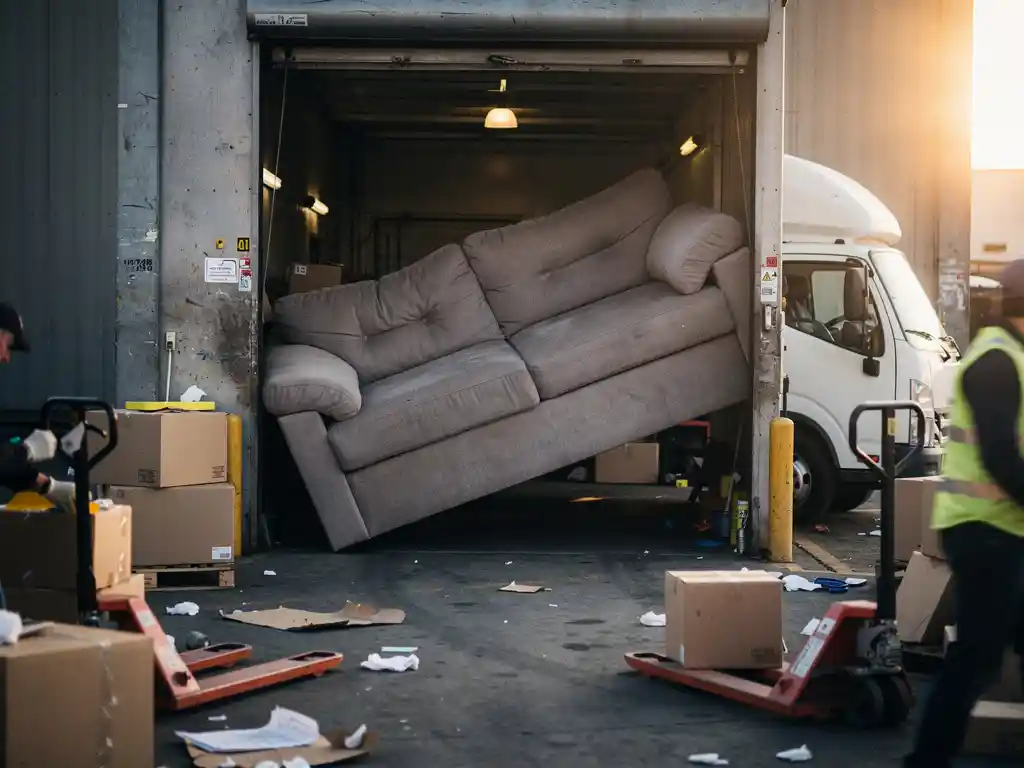
Standard forwarders fail on large furniture projects because they are built for moving boxes, not managing complexity. Furniture projects, especially at scale, involve coordinated deliveries, site-specific installation sequences, fragile oversized items, and tight contractor timelines that general freight forwarding simply is not designed to handle. The sections below break down exactly where and why those failures happen, and what a better approach looks like.
What makes large furniture projects different from standard freight?
Large furniture projects are fundamentally different from standard freight because they combine physical handling challenges with project management demands. You are not just moving goods from A to B. You are coordinating multi-item deliveries across a live construction or fit-out schedule, where every piece needs to arrive in the right sequence, in perfect condition, and at precisely the right time.
Standard freight is transactional. A forwarder books capacity, moves a consignment, and the job is done. Large furniture projects are relational and sequential. A single office fit-out might involve hundreds of individual items, multiple suppliers across different countries, phased delivery windows tied to a contractor’s schedule, and on-site assembly that cannot begin until the right pieces arrive in the right order.
The physical characteristics of furniture add another layer of difficulty. Many pieces are oversized, oddly shaped, or fragile. Flat-pack items need careful stacking to avoid damage. Upholstered goods require climate-appropriate storage. High-end pieces may need white-glove handling throughout. None of these requirements fit neatly into a standard freight workflow built around pallets and cartons.
Why do standard forwarders struggle with last-mile furniture delivery?
Standard forwarders struggle with last-mile furniture delivery because their networks and equipment are optimised for depot-to-depot movement, not room-by-room placement in a live building. The final stretch of a furniture project, getting pieces from a staging area into the right room on the right floor, requires specialist vehicles, trained crews, and site-specific coordination that general freight operators rarely provide.
Last-mile furniture delivery often means navigating service lifts, stairwells, and narrow corridors in office buildings, hotels, or hospitals. It means working around other trades on a construction site without causing delays. It means unpacking, inspecting, and placing items according to a floor plan, not simply dropping a pallet at a loading bay.
General forwarders also lack the local partner networks needed to scale this kind of delivery across multiple cities or countries. A project covering locations in several European capitals requires trusted local crews who understand site protocols, speak the language, and can handle unexpected complications on the ground. Building and maintaining that network is a specialism in itself, and one that project logistics specialists invest in deliberately.
What happens when furniture project timelines go wrong?
When furniture project timelines go wrong, the consequences ripple far beyond a delayed delivery. A missed window for a furniture installation can hold up an entire building handover, trigger penalty clauses in the main contractor’s agreement, and push back the client’s opening date by days or weeks. In commercial fit-out, time is directly tied to revenue, and delays cost real money.
The most common failure points are:
- Customs clearance delays on international shipments that were not anticipated or planned for
- Warehouse bottlenecks when goods arrive too early or too late and there is no flexible storage solution in place
- Sequencing errors where items arrive out of order and installation cannot proceed
- Damage in transit caused by inappropriate packaging or handling, requiring replacements that extend the timeline further
- Communication breakdowns between the forwarder, the site manager, and the supplier when no single party owns the coordination
Each of these failures has a root cause: a logistics partner that was not equipped to manage the full complexity of the project from the start. Standard forwarders often treat these situations as exceptions rather than foreseeable risks to be planned around.
How does specialist furniture logistics handle project complexity?
Specialist furniture logistics handles project complexity by treating coordination as a core service, not an add-on. Before a single item moves, a specialist team maps the entire project using floor plans, delivery schedules, and site access data. Every process, from supplier collection to final placement, is planned and sequenced so that the physical logistics match the realities on the ground.
This approach means that warehousing, transport, customs, assembly, and installation are managed under one roof rather than handed off between separate parties. When everything sits with one accountable partner, communication is faster, problems are caught earlier, and solutions are found without the delays that come from passing responsibility between providers.
We have built our furniture transport and project logistics capability specifically around this kind of end-to-end ownership. Our project team works with data and floor plans in advance so that by the time we arrive on site, every detail has been accounted for. When something unexpected does happen, as it sometimes will on complex projects, the team acts quickly and finds practical solutions based on years of experience across more than 150 locations worldwide.
Access to a global network of trusted local partners is another key differentiator. Specialist providers do not improvise local delivery. They work with vetted partners who understand local site conditions, regulations, and logistics infrastructure, which means consistent quality whether the project is in Amsterdam, Milan, or Johannesburg.
When should a project manager use a specialist instead of a forwarder?
A project manager should use a specialist instead of a standard forwarder whenever the logistics involve more than straightforward point-to-point freight movement. If the project requires sequenced delivery, on-site installation, multi-country coordination, customs management, or handling of fragile or oversized items, a general forwarder is the wrong tool for the job.
Practically speaking, the decision comes down to risk. Standard forwarders can handle furniture shipping when the volume is modest, the timeline is flexible, and the destination is a standard warehouse or loading dock. The moment any of those conditions change, the risk of failure increases significantly.
Consider using a specialist when:
- The project involves furnishing an entire building or floor rather than delivering individual items
- Installation must be coordinated with other trades or a contractor handover date
- Goods are crossing international borders and customs handling is required
- The items are high-value, fragile, or require white-glove handling
- The project spans multiple locations that need to be delivered and installed on a common schedule
- There is no internal logistics resource to manage coordination between suppliers, transport, and site
For project managers working on office fit-outs, hotel openings, healthcare facilities, or educational buildings, the cost of logistics failure far outweighs the cost difference between a standard forwarder and a specialist. Choosing the right partner from the start is one of the most effective ways to protect a project timeline. If you are planning a complex furniture project and want to understand how we can support it, get in touch with our team to discuss your requirements.