




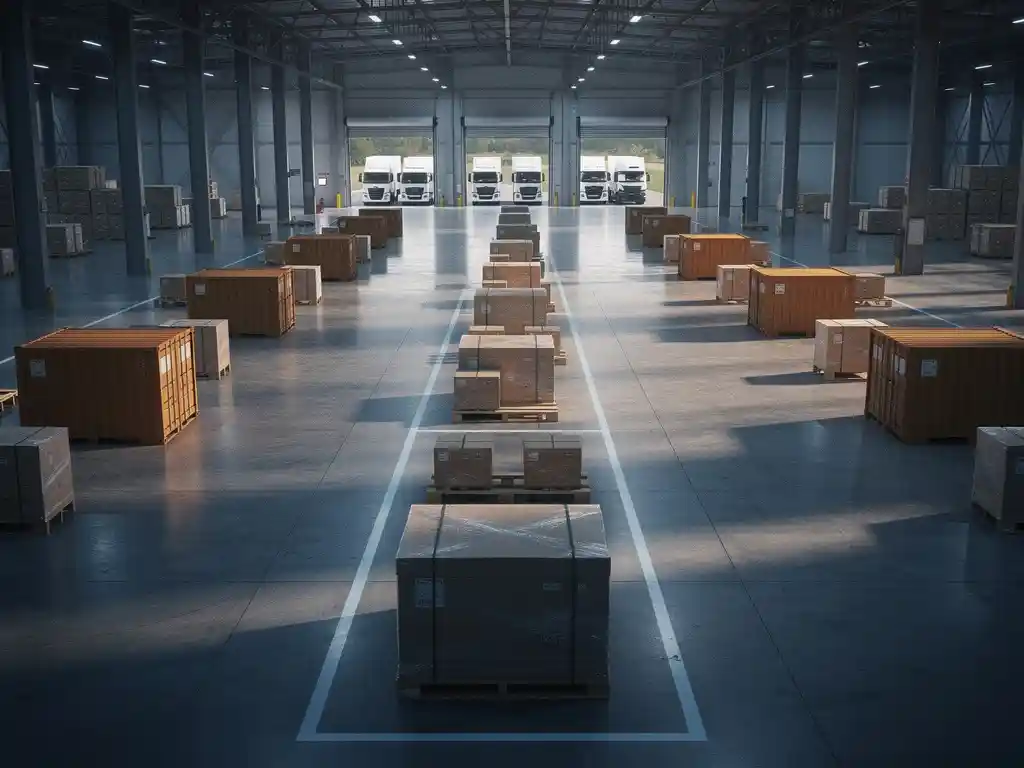
A project logistics timeline typically runs from several weeks to several months, depending on the scale and complexity of the project. It moves through five core phases: initial planning, procurement and sourcing, transportation and freight, on-site delivery and installation, and project close-out. Understanding each phase helps you anticipate lead times, allocate resources accurately, and avoid the costly surprises that derail even well-funded projects.
What are the key phases of a project logistics timeline?
A project logistics timeline is structured around five distinct phases: pre-project planning, procurement and sourcing, transportation and freight movement, on-site execution, and project close-out. Each phase builds on the previous one, and the transitions between them are where most scheduling risk lies. Missing a handoff between phases is one of the most common causes of project overruns.
- Pre-project planning: Defining scope, mapping routes, identifying stakeholders, and establishing a master schedule
- Procurement and sourcing: Ordering materials, coordinating suppliers, and confirming lead times
- Transportation and freight movement: Moving goods from origin to destination, including consolidation, freight forwarding, and customs
- On-site execution: Delivery, unloading, assembly, and installation at the project location
- Project close-out: Final inspections, documentation, waste removal, and handover to the client
These phases rarely run in a straight line. Procurement often overlaps with planning, and on-site execution may begin while freight is still in transit. A well-managed project logistics solution accounts for this overlap and builds buffer time into each phase transition.
How long does project logistics typically take from start to finish?
Project logistics timelines range from a few weeks for smaller, domestic projects to twelve months or more for large-scale international installations. The most important variable is not distance but complexity: the number of suppliers involved, the regulatory environment at the destination, and the precision required during on-site execution all have a greater impact on total duration than geography alone.
A straightforward office fit-out in a single European city might be completed in four to eight weeks. A multi-site hospital or hotel project spanning several countries can easily require six to twelve months of active logistics management. In our experience working across more than 150 locations worldwide, the projects that consistently finish on schedule are those where the logistics timeline was locked in before procurement began, not after.
As a rough guide, allocate at least twice as much time to the planning phase as you initially estimate. The hours invested in pre-project mapping directly reduce the risk of delays during transportation and on-site execution.
What happens during the planning stage of a project logistics timeline?
The planning stage of a project logistics timeline is where the entire project is mapped in detail before a single item is moved. This includes site surveys, floor plan analysis, route planning, supplier coordination, and the creation of a master logistics schedule. Every downstream phase depends on the accuracy of what is established here.
During planning, the logistics team works through a series of critical questions: What is being moved, and in what quantities? What are the access constraints at the destination site? What are the lead times from each supplier? Are there regulatory requirements at the destination, including permits or import documentation?
We always begin with data and floor plans before arriving on site. This allows us to identify potential bottlenecks, such as narrow corridors, restricted delivery windows, or elevator weight limits, well in advance. When those constraints are identified early, they become scheduling parameters rather than last-minute problems.
The planning stage also establishes communication protocols between all parties: the client, suppliers, freight partners, customs brokers, and on-site crews. A project logistics timeline is only as reliable as the information flowing through it, and clear communication structures are what keep that information accurate and timely.
How does customs clearance fit into a project logistics timeline?
Customs clearance sits between the transportation phase and on-site execution, and it is one of the most time-sensitive elements in an international project logistics timeline. Delays at customs do not simply push back delivery by a day or two — they can cascade through the entire schedule, stalling installation crews who are already on site and generating significant additional costs.
The key to managing customs within a project freight timeline is preparation. All required documentation, including commercial invoices, packing lists, certificates of origin, and any destination-specific import permits, must be prepared and verified before goods leave the origin country. Incomplete documentation is the single most common cause of customs delays, and it is entirely preventable.
For projects involving goods moving across multiple borders, a customs broker with knowledge of each destination country’s import regulations is essential. We handle customs clearance as an integrated part of our project logistics service, ensuring that documentation is in order and that any duties or compliance requirements are addressed proactively rather than reactively.
When building your project logistics timeline, treat customs clearance as a fixed time block rather than a variable. In most European countries, standard clearance takes one to three business days when documentation is complete. In more complex regulatory environments, allow five to ten business days as a minimum buffer.
What causes delays in a project logistics timeline?
The most common causes of delays in a project logistics timeline are incomplete planning, supplier lead time failures, documentation errors at customs, site access problems, and poor communication between parties. Most delays are not caused by a single catastrophic event but by a series of small coordination failures that compound over time.
Supplier delays are particularly disruptive because they affect every phase that follows. If goods arrive at the warehouse two weeks late, the entire freight and installation schedule shifts accordingly. This is why experienced logistics project managers build contingency buffers into the timeline at each phase transition, not just at the end.
Site access issues are another frequent source of delay that is often underestimated during planning. Restricted delivery hours, building management requirements, shared loading docks, and local permit requirements can all add days to an otherwise smooth delivery. A thorough site survey during the planning phase catches most of these constraints before they become problems.
Weather, strikes, and geopolitical disruptions are less predictable but can be mitigated through route diversification and flexible freight arrangements. The logistics teams that manage these situations most effectively are those with established networks of local partners who can adapt quickly when the original plan needs to change.
Who is responsible for managing a project logistics timeline?
A dedicated project logistics manager is responsible for overseeing the timeline from initial planning through project close-out. This person coordinates all parties involved, monitors progress against the master schedule, identifies emerging risks, and makes real-time decisions when adjustments are needed. Without a single point of accountability, project logistics timelines tend to fragment across departments and suppliers.
In practice, logistics project management involves close collaboration between the client’s internal team, the logistics provider, freight carriers, customs brokers, and on-site installation crews. The project logistics manager acts as the central coordinator, ensuring that each party has the information they need and that delays in one area are communicated immediately to all affected parties.
We assign a dedicated project team to every project we take on. Before work begins on site, that team has already mapped every detail using data and floor plans, with a clear understanding of how each process connects to the next. When something unexpected happens, and in complex projects something always does, having an experienced team that can act quickly and think creatively is what keeps the timeline on track.
If you are planning a project that requires precise logistics coordination, our project specialists are ready to help you build a timeline that works from day one. You are also welcome to get in touch to discuss the specifics of your project.