




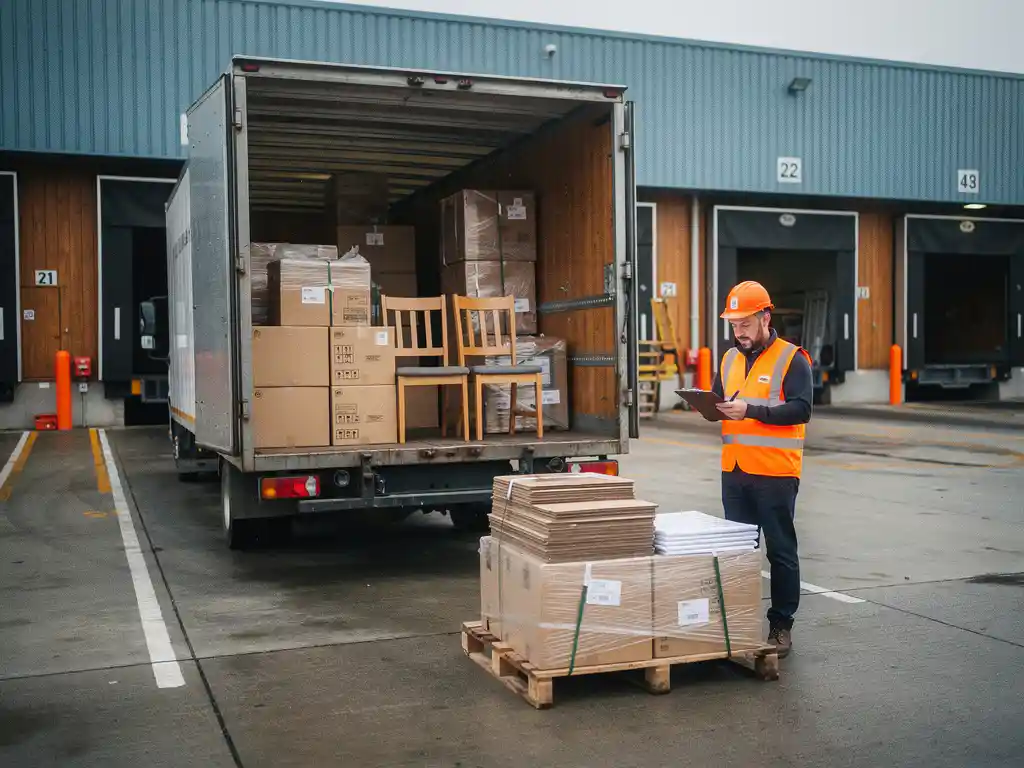
Supply chain management in the furniture industry refers to the end-to-end coordination of sourcing raw materials, manufacturing, warehousing, transportation, and delivery of furniture products to their final destination. It is more complex than many other sectors because furniture items are large, fragile, and often customised, requiring specialist handling at every stage. The sections below unpack the key questions businesses ask when navigating furniture supply chains.
How is supply chain management different in the furniture industry?
Supply chain management in the furniture industry is distinct because it combines the logistical challenges of bulky, high-value goods with the complexity of global sourcing, customisation, and last-mile delivery into homes, offices, and commercial spaces. Unlike fast-moving consumer goods, furniture cannot simply be stacked on a standard pallet and moved through a generic distribution network.
Several factors make furniture logistics uniquely demanding. Products range from flat-pack items to fully assembled sofas, dining tables, and modular kitchen units, each requiring different packaging, vehicle configurations, and handling procedures. Damage during transit is a significant commercial risk, so specialist equipment and trained personnel are essential rather than optional.
There is also the question of customer expectations. Whether a piece is destined for a retail store, a private home, or a large-scale commercial project, delivery windows are tight and the consequences of a missed or damaged delivery are immediate. This places pressure on every link in the supply chain, from the factory floor to the front door.
What are the key stages of a furniture supply chain?
The key stages of a furniture supply chain are raw material sourcing, manufacturing, quality control, warehousing, transportation, customs clearance (where applicable), and final delivery or installation. Each stage must be coordinated precisely because delays or errors at any point compound downstream.
Here is how those stages typically connect:
- Sourcing: Raw materials such as timber, metal, foam, and fabric are procured, often from multiple countries.
- Manufacturing: Products are assembled or produced, frequently in Asia or Eastern Europe, before being shipped to distribution hubs.
- Quality control: Inspections take place at the factory and again on arrival to catch damage or specification errors early.
- Warehousing: Goods are stored, consolidated, and prepared for outbound distribution.
- Transportation: Products move by sea, road, or air depending on urgency, volume, and destination.
- Customs clearance: Cross-border shipments require documentation, duty assessment, and regulatory compliance.
- Final delivery and installation: Products reach the end customer, often requiring two-person delivery teams, room-of-choice placement, or full assembly and installation.
The tighter the coordination between these stages, the more resilient and cost-efficient the overall supply chain becomes. Our furniture transport solutions are designed to connect these stages seamlessly, reducing handover friction and keeping goods moving on schedule.
What causes disruptions in furniture supply chains?
Furniture supply chain disruptions are most commonly caused by port congestion, raw material shortages, long lead times from overseas manufacturers, customs delays, and last-mile delivery failures. Because furniture supply chains are long and often span multiple continents, a problem at one stage can stall the entire chain.
Global events have underlined just how exposed furniture logistics can be. Shipping capacity fluctuations, rising freight costs, and unpredictable transit times from major manufacturing regions have forced many businesses to rethink their sourcing strategies and inventory buffers. The industry learned that lean, just-in-time models carry real risk when global networks are under stress.
On a more operational level, disruptions also arise from poor demand forecasting, inadequate warehouse capacity during peak periods, and insufficient communication between suppliers, logistics providers, and retailers. When data is not shared across the chain, each party makes decisions in isolation, which leads to misaligned stock levels and missed delivery commitments.
Damage and returns add another layer of complexity. Furniture is prone to transit damage if not packed and handled correctly, and managing returns or replacements is time-consuming and costly. Investing in robust packaging standards and specialist handling processes reduces this risk considerably.
How does warehousing support furniture supply chain management?
Warehousing supports furniture supply chain management by providing the buffer capacity needed to absorb demand fluctuations, consolidate inbound shipments, carry out value-added services, and stage goods for efficient outbound distribution. Without well-managed warehouse operations, the rest of the supply chain cannot function reliably.
In the furniture industry, warehousing is not simply a matter of storing boxes. It involves receiving oversized and fragile items, conducting quality inspections, managing product configurations and variants, and sometimes performing assembly or customisation before dispatch. This requires facilities with high ceilings, wide aisles, specialist racking, and trained staff who understand how to handle furniture without causing damage.
Value-added services carried out in the warehouse, such as labelling, repackaging, kitting, and pre-assembly, reduce the workload at the point of delivery and improve the end customer experience. Our warehousing solutions span more than 60,000 square metres and are specifically designed to support these requirements, giving furniture businesses the flexibility to scale their operations without investing in their own fixed infrastructure.
What role does customs clearance play in furniture logistics?
Customs clearance plays a critical role in furniture logistics because a significant proportion of furniture is manufactured outside Europe, meaning every shipment crossing an international border must meet import regulations, tariff classifications, and documentation requirements before it can enter the supply chain. Delays at customs can hold up entire container loads and disrupt project timelines.
Furniture products are subject to specific commodity codes, duty rates, and in some cases anti-dumping measures, which means accurate classification is essential. Errors in documentation, incorrect valuations, or missing certificates of origin can trigger inspections, fines, or extended holds that add cost and uncertainty to delivery schedules.
Working with a logistics partner that has in-house customs expertise removes this risk. Rather than relying on a freight forwarder who treats customs as a secondary service, businesses benefit from having clearance handled by specialists who understand the specific regulatory requirements for furniture and related products. This is particularly important for large-scale project deliveries where timing is non-negotiable.
How can furniture companies improve their supply chain performance?
Furniture companies can improve supply chain performance by increasing supply chain visibility, building strategic buffer stock, partnering with specialist logistics providers, investing in demand forecasting, and standardising processes across warehousing and transportation. The most impactful improvements tend to come from better data sharing and closer collaboration with logistics partners.
Visibility is the foundation of improvement. When a furniture business can track inventory levels, shipment status, and delivery performance in real time, it can make faster and more accurate decisions. This reduces the need for reactive firefighting and allows teams to address potential delays before they become customer-facing problems.
Choosing the right logistics partner matters enormously. A provider with deep experience in furniture logistics understands the specific handling requirements, the seasonal demand patterns, and the complexity of project-based deliveries. We have been active in this sector since 1924, and our expertise spans everything from standard furniture transport to complex project logistics across more than 150 locations worldwide.
Finally, process standardisation across the supply chain reduces variability and error rates. Clear packaging standards, consistent labelling, agreed handover protocols, and defined escalation procedures all contribute to a more predictable and reliable operation. These are not glamorous improvements, but they deliver measurable gains in on-time delivery performance and customer satisfaction over time.