




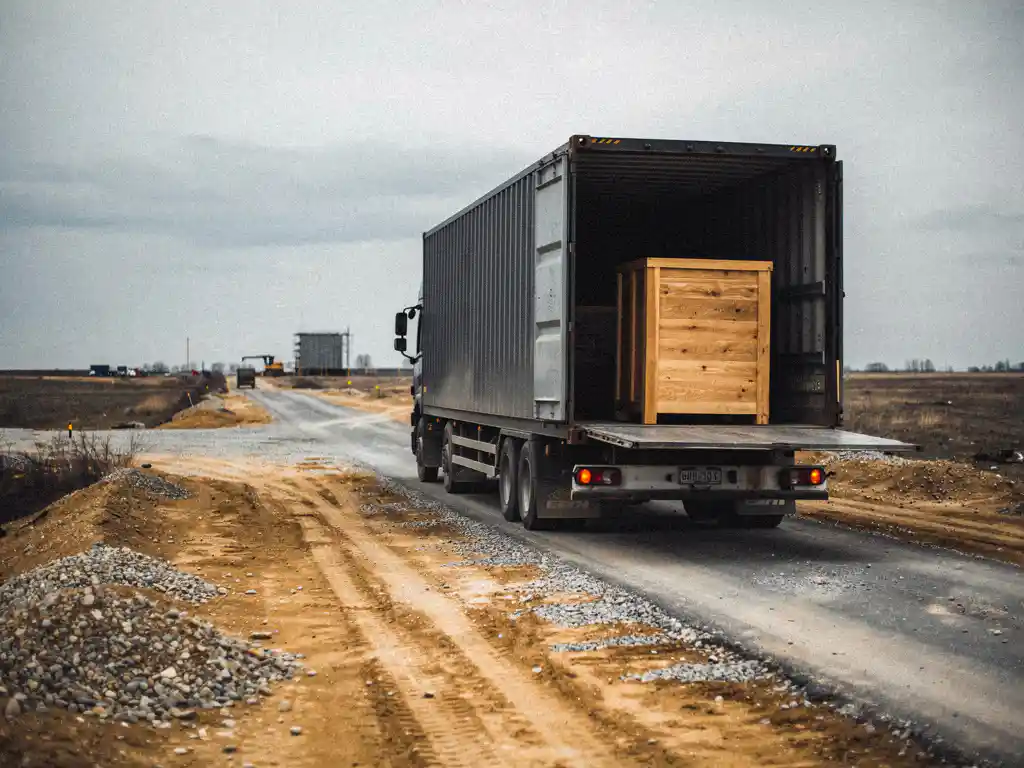
Secondary deliveries in project logistics are expensive because they duplicate the full cost of the original delivery without generating any new revenue. Every failed first attempt triggers a second mobilisation of transport, crew, equipment, and planning time, and in project logistics those resources are significantly more complex and costly than in standard parcel delivery. The sections below unpack each layer of that cost, from what causes failed deliveries in the first place to who ultimately pays for them.
What actually counts as a secondary delivery in project logistics?
A secondary delivery is any delivery attempt made after the first attempt could not be completed as planned. In project logistics, this means returning to a site with the same goods, crew, and equipment because the initial visit did not result in a successful handover or installation. This is distinct from a change order or a scheduled multi-phase delivery, both of which are planned from the start.
The definition matters because project logistics involves far more than dropping a parcel at a door. A project delivery typically includes coordinated transport of large or complex items, specialist installation crews, access bookings, and sometimes customs clearance. A secondary delivery means repeating all of that coordination, not just the driving. Common scenarios that qualify as a secondary delivery include:
- Arriving at a site that is not ready to receive goods (no lift access, no cleared floor space, no authorised contact present)
- Goods being refused because of damage discovered on arrival
- Incorrect items loaded due to a picking or documentation error
- Access restrictions not communicated in advance (height barriers, time windows, permit requirements)
- The recipient rescheduling at short notice after the vehicle has departed the warehouse
Each of these situations results in a full or partial return trip, which logistics providers treat as a separate billable event.
Why do secondary deliveries cost more than the original delivery?
Secondary deliveries cost more than the original delivery because the fixed costs of mobilisation are incurred twice while the efficiency gains of a planned route are lost. In project logistics, a single delivery often requires specialist vehicles, two-person or multi-person crews, pre-booked site access, and coordinated scheduling across multiple parties. Repeating that process at short notice removes any planning efficiency and adds urgency premiums on top.
The cost structure of a redelivery in project logistics typically includes several compounding factors. The vehicle and crew must travel back to the depot or holding location with undelivered goods, which means fuel, driver hours, and vehicle wear with zero productive output. Warehousing costs increase because goods must be restaged, re-inspected, and sometimes repackaged before the next attempt. If the original delivery was part of a multi-stop run, the failed stop may have disrupted the rest of the route, creating knock-on costs across the entire day’s plan.
There is also an administrative cost that is easy to underestimate. Rescheduling a project delivery involves communicating with the site, rebooking access, adjusting crew schedules, and updating documentation. In regulated environments or cross-border shipments, customs paperwork may need to be amended. These coordination costs accumulate quickly and are rarely visible in a simple redelivery surcharge.
What are the most common causes of failed first-attempt deliveries?
The most common causes of failed first-attempt deliveries in project logistics are site unreadiness, access issues, and communication breakdowns between the shipper, the logistics provider, and the end recipient. Unlike residential parcel delivery, project deliveries depend on a chain of conditions all being met simultaneously, and a failure in any one link breaks the entire delivery.
Industry experience consistently points to the following root causes:
- Site not ready: Construction or fit-out work still in progress, floors not protected, lifts not booked, or installation areas not cleared
- No authorised person present: The site contact who needs to sign off or direct the crew is absent or unavailable
- Access restrictions: Delivery time windows, vehicle height or weight limits, or permit requirements that were not communicated during planning
- Goods condition issues: Damage identified during unloading that causes the recipient to refuse acceptance
- Incorrect or incomplete shipment: Wrong items, missing components, or documentation errors that prevent completion
- Late rescheduling by the recipient: The end client changes the delivery date after the goods have already been loaded or dispatched
In project logistics, site readiness is the single biggest driver of failed deliveries. Unlike a warehouse receiving dock, a project site is often mid-construction or mid-refurbishment, and the readiness window can shift by days without notice. Strong pre-delivery communication protocols reduce this risk significantly, but they require active cooperation from the recipient.
How do logistics providers calculate secondary delivery surcharges?
Logistics providers calculate secondary delivery surcharges by combining the direct costs of the failed attempt with the full cost of the rescheduled delivery, then applying a margin to cover administrative overhead and planning disruption. The exact calculation varies by provider and contract, but the surcharge almost always covers more than just the extra fuel or mileage.
A typical secondary delivery surcharge in project logistics is built from these components:
- Return transport cost: The cost of bringing undelivered goods back to the depot or holding location, including driver time and fuel
- Restaging and storage: Labour and space costs for receiving, inspecting, and re-preparing goods for the next attempt
- Rescheduling administration: Internal coordination time, new booking fees, and any third-party costs such as site access rebooking
- Second delivery execution: The full cost of the next delivery attempt, including crew, vehicle, and any specialist equipment
- Urgency or priority premium: If the redelivery must happen quickly to meet a project deadline, an expedite fee may apply
Some providers publish a flat redelivery fee in their rate cards, while others calculate it on a case-by-case basis depending on the complexity of the original job. For high-value or large-scale project deliveries, the surcharge can easily reach the same level as the original delivery cost, and in some cases exceed it if the failed attempt caused disruption to other planned deliveries on the same route.
How can project shippers reduce secondary delivery rates?
Project shippers can reduce secondary delivery rates by investing in pre-delivery site verification, tightening communication with end recipients, and choosing a logistics partner with strong last-mile coordination capabilities. The majority of failed deliveries in project logistics are preventable, and most of the prevention happens before the vehicle leaves the depot.
Practical steps that consistently reduce redelivery rates include:
- Pre-delivery site checks: Confirm site readiness, access requirements, and the presence of an authorised contact at least 48 hours before delivery
- Detailed access briefings: Provide the logistics provider with accurate information about vehicle restrictions, time windows, lift availability, and floor protection requirements
- Recipient confirmation protocols: Require the end recipient to actively confirm readiness rather than assuming no news means the site is ready
- Accurate goods documentation: Ensure packing lists, delivery notes, and customs documents are correct before dispatch to avoid refusals on arrival
- Flexible scheduling buffers: Build realistic time buffers into project timelines so that a rescheduled delivery does not cascade into a programme delay
- Post-failed-delivery analysis: Track the cause of every failed attempt to identify patterns and address systemic issues with specific clients or site types
Working with a logistics partner that handles complex project deliveries as a core specialism, rather than as an extension of standard freight, also makes a measurable difference. Providers with dedicated project teams and established site coordination processes catch potential failure points during planning rather than discovering them on delivery day.
Who is responsible for secondary delivery costs — shipper or recipient?
Responsibility for secondary delivery costs depends on the cause of the failed delivery and the terms agreed in the contract between the shipper and the recipient. When the failure is caused by the recipient (site not ready, no contact present, late cancellation), the recipient is generally liable. When the failure is caused by the shipper or logistics provider (wrong goods, damaged items, late arrival), the cost typically falls on the responsible party.
In practice, the logistics provider invoices the shipper for the redelivery surcharge in almost all cases, because the shipper is the direct contracting party. The shipper then has the option to pass that cost on to the recipient if the contract supports it. This is why clear contractual terms around delivery conditions, cancellation windows, and site readiness obligations are essential in project logistics agreements.
A few principles that help allocate responsibility fairly:
- Define what constitutes a “ready site” in the contract and what notice period is required to reschedule without penalty
- Document the delivery attempt thoroughly, including time of arrival, who was present, and the specific reason for failure
- Agree in advance whether redelivery costs are passed through at cost or at a fixed rate
- Include escalation clauses for repeat failed deliveries by the same recipient
For project shippers managing multiple sites across a programme, these terms are worth standardising across all recipient agreements rather than negotiating case by case. The administrative cost of disputed redelivery invoices often exceeds the surcharge itself, making upfront clarity the most efficient approach. If you want to discuss how we structure project delivery agreements to minimise these disputes, get in touch with our team directly.