




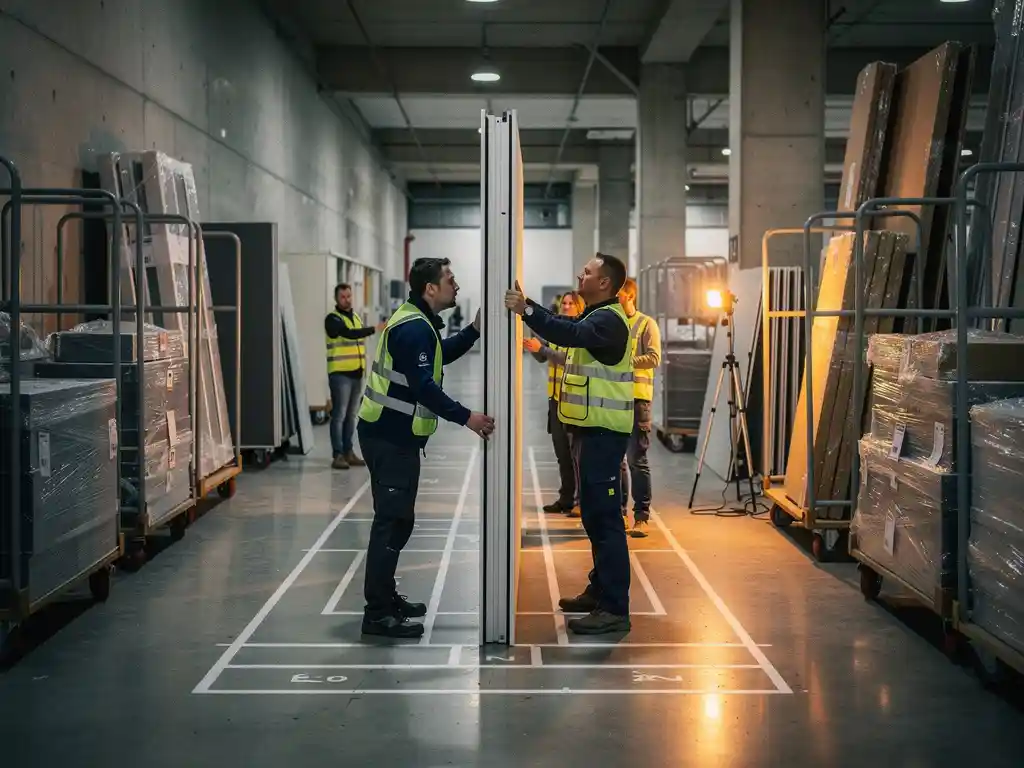
Large fit-out projects are logistically complex. Whether you are furnishing a new hotel, fitting out a corporate headquarters, or equipping a hospital across borders, the gap between placing an order and completing installation involves dozens of moving parts. A missed delivery window, a customs delay, or a single damaged item can hold up an entire floor of work.
This guide walks you through every stage of end to end delivery for large fit-out projects, from scoping your requirements to resolving last-mile issues on site. Follow these steps in sequence and you will have a clear, repeatable framework for managing fit-out logistics with confidence.
Map out your fit-out project scope and logistics requirements
Before a single item moves, you need a complete picture of what the project involves. Skipping this stage is the most common reason fit-out deliveries go wrong. Start by gathering all available documentation: floor plans, furniture schedules, supplier lists, and the construction programme. These will form the foundation of your logistics plan.
- List every product category involved, including furniture, kitchen units, fixtures, and loose equipment, along with their dimensions and weights.
- Identify all origin countries for your suppliers and flag any items that will cross international borders.
- Map the project site: access routes, lift dimensions, loading bay restrictions, and any noise or working hour limitations.
- Establish your critical milestones, including handover dates for each floor or zone, and work backwards to set delivery windows.
Once you have this information documented, you can match each product category to the right transport and handling method. Items that require specialist handling, such as oversized furniture or fragile installations, should be flagged at this stage so they can be routed appropriately. A clear scope document also gives your logistics partner everything they need to plan effectively from day one. You can explore the range of project logistics solutions available to support this kind of planning.
Coordinate warehousing and consolidation before transport
Large fit-out projects rarely receive all goods from a single supplier at the same time. Coordinating inbound shipments from multiple vendors, potentially across several countries, requires a consolidation strategy. This is where warehousing becomes a critical part of your project delivery plan rather than just a storage function.
- Designate a consolidation warehouse close to the project site or in a location that simplifies customs clearance for international goods.
- Arrange inbound delivery schedules with each supplier, aligned to your consolidation window rather than their preferred despatch dates.
- Inspect and check all goods on arrival at the warehouse, recording any damage or shortages before they reach the site.
- Organise items by installation zone or floor so that outbound loads can be assembled in the correct sequence for phased delivery.
A well-run consolidation stage prevents the chaos of multiple suppliers arriving at a live construction site on different days. It also gives you a buffer to resolve any product issues, such as incorrect items or damaged goods, before they affect the installation programme. Our warehousing services are built specifically to support this kind of project-based consolidation, with space and processes designed for fit-out workflows.
Plan and execute phased delivery to the project site
With goods consolidated and checked, the next step is planning how and when they reach the site. Phased delivery means releasing goods in the order they are needed, zone by zone or floor by floor, so that installation teams always have what they need without the site becoming overcrowded with materials.
- Confirm the installation sequence with the fit-out contractor and build your delivery schedule around it.
- Book delivery slots in advance with the site manager, specifying vehicle type, load size, and unloading time required for each delivery.
- Brief drivers on site access requirements, including any permit-to-work processes or escort procedures.
- Use a delivery tracking system so that all stakeholders, including the client, contractor, and logistics team, can see the status of each load in real time.
After each delivery, confirm receipt with the site team and update your delivery schedule accordingly. If a zone is running ahead of or behind programme, adjust subsequent delivery windows immediately rather than waiting for a problem to escalate. Phased delivery only works when communication between the logistics team and the site is continuous and proactive.
Manage on-site installation and assembly as part of delivery
For many large fit-out projects, delivery does not end at the loading bay. Furniture and equipment often needs to be assembled, positioned, and installed as part of the service. Treating installation as a separate workstream from delivery creates gaps in accountability and increases the risk of damage or delays.
- Agree in advance which items require assembly or installation and who is responsible for each category.
- Schedule installation crews to arrive in line with the delivery programme, not ahead of it, to avoid teams waiting on site without materials.
- Protect floors, walls, and completed areas during the movement and installation of heavy or bulky items.
- Conduct a room-by-room sign-off with the site manager as each zone is completed, documenting any snagging items immediately.
Integrating assembly and installation into the delivery process means one team is accountable for the end result, not just the drop-off. This is particularly important for complex items such as kitchen units, modular furniture systems, or bespoke joinery, where incorrect assembly can only be identified once the item is in position. Our furniture transport and installation teams are experienced in managing exactly this kind of integrated delivery.
Handle customs clearance for international fit-out shipments
If any part of your fit-out supply chain crosses an international border, customs clearance becomes a critical path item. Delays at customs can hold up an entire project, particularly if goods are being delivered directly to site rather than through a consolidation warehouse. Getting this right requires preparation well before goods are ready to ship.
- Classify all goods correctly using the appropriate commodity codes and confirm whether any items are subject to import duties or restrictions in the destination country.
- Prepare a complete set of shipping documentation for each consignment, including commercial invoices, packing lists, and certificates of origin where required.
- Appoint a customs broker or ensure your logistics partner has in-house clearance capability in the destination country.
- Build a customs clearance buffer into your project programme, typically a minimum of three to five working days for standard shipments, more for complex or high-value goods.
One of the most common mistakes in international fit-out logistics is treating customs as an afterthought. If documentation is incomplete or commodity codes are incorrect, goods can be held indefinitely. Working with a logistics partner that has established customs expertise across multiple countries reduces this risk significantly. Jan Krediet operates across more than 150 locations worldwide and handles international clearance as a standard part of general cargo transport and project delivery.
Verify completion and resolve last-mile delivery issues
The final stage of end to end delivery is confirming that everything has been delivered, installed, and accepted to the agreed standard. Last-mile issues, whether a missing item, a damaged panel, or an incorrectly assembled unit, are far easier to resolve while your team is still on site and your supplier relationships are active.
- Conduct a full walk-through of the completed fit-out against the original furniture schedule, checking every item has been delivered and installed correctly.
- Document all snagging items with photographs and reference numbers, and assign each one to the responsible party with a resolution deadline.
- Chase outstanding items immediately rather than waiting for the client to raise them, as late snagging resolution is one of the most common sources of client dissatisfaction on fit-out projects.
- Obtain formal sign-off from the client or their representative once all snagging items are resolved.
A structured completion process also gives you valuable data for future projects. Recording where delays, damages, or shortages occurred, and at which stage of the logistics chain, allows you to refine your planning process and supplier briefings next time. If you want to understand how a specialist logistics partner approaches this kind of project from start to finish, take a look at our project case studies for real examples of fit-out logistics in action.