




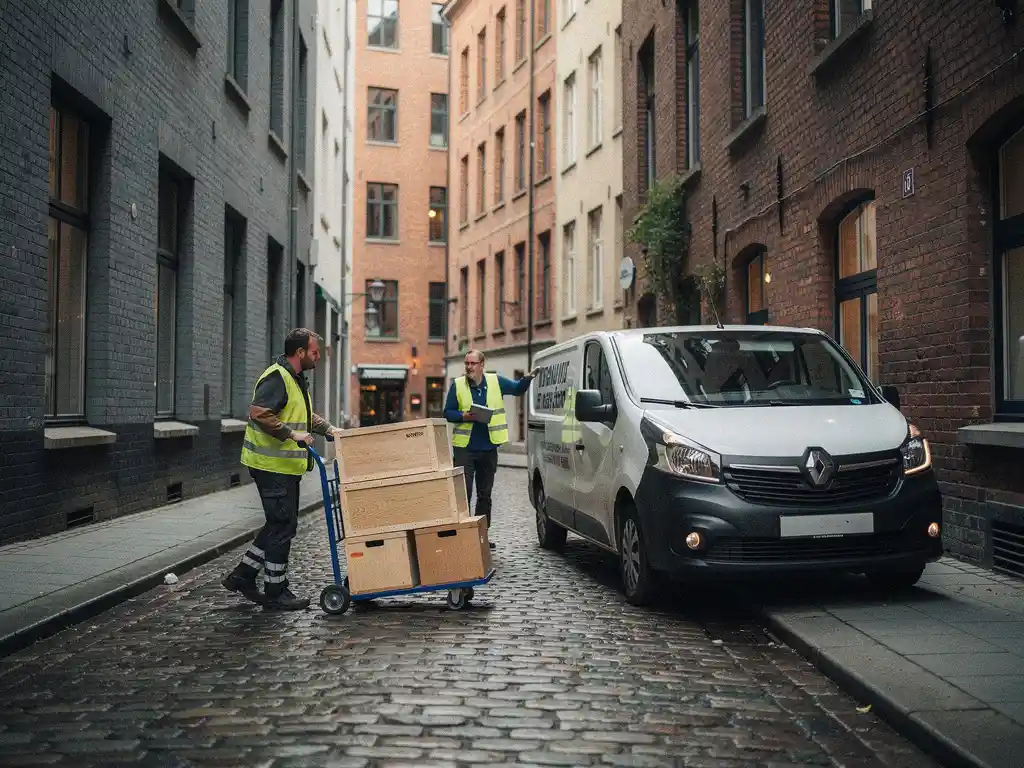
Urban project logistics is rarely straightforward, and delivering to a city-centre location without a loading bay adds a layer of complexity that can derail even the most carefully planned project. Narrow streets, strict municipal regulations, limited parking, and buildings designed without freight access in mind all create real operational challenges that demand proactive thinking rather than reactive problem-solving.
This guide walks you through exactly how to manage urban project logistics when no loading bay is available, from the first site assessment through to delivery day execution. Follow each step in sequence and you will have a clear, workable plan before a single vehicle leaves the depot.
Assess site constraints before the delivery date
Start your planning process with a thorough site survey. Visiting the location in person, or commissioning a detailed remote assessment using floor plans, satellite imagery, and street-level data, is non-negotiable for urban project logistics. What looks manageable on paper often reveals significant obstacles on the ground.
- Measure the width of the access street and note any fixed obstacles such as bollards, trees, or parked vehicles that reduce usable road width.
- Identify the nearest point a vehicle can realistically stop or park, and calculate the distance from that point to the building entrance.
- Check ceiling heights in corridors, stairwells, and lifts if goods need to travel through the building once inside.
- Note the floor surface type between the drop-off point and the final installation location, as this affects equipment selection.
- Confirm whether the building has a goods lift, a passenger lift that can be used temporarily, or stairs only.
After completing this assessment, you should have a clear picture of the physical constraints you are working within. Document everything with photographs and measurements. This data drives every subsequent decision in your plan, from vehicle selection to crew size.
Secure the right permits and time slots
City authorities across Europe increasingly regulate when and how freight vehicles can access urban areas. In 2026, low-emission zones, time-window restrictions, and dedicated loading zones are standard in most major cities. Attempting to operate without the correct permits is not just a legal risk; it can result in your vehicle being turned away entirely on delivery day.
- Contact the relevant municipal authority or check their online portal to identify which permits apply to your delivery address and vehicle type.
- Apply for a temporary loading permit or traffic management order if you need to occupy part of the road or pavement during unloading.
- Book a specific time window that aligns with both the permit conditions and the building’s own access rules, which may restrict freight deliveries to certain hours.
- Confirm whether the city operates a low-emission zone and verify that your vehicles comply, or arrange compliant alternatives in advance.
Once permits are secured, share the confirmed time window with your client, the building manager, and your delivery crew. A permit only has value if everyone involved knows when and where it applies. Keep digital and printed copies accessible on delivery day.
Choose equipment suited for loadingless access
Without a loading bay, the standard approach of reversing a curtainsider to a raised dock simply does not apply. Your equipment choices need to compensate for the absence of that infrastructure. This is where city logistics without a loading bay demands real operational creativity.
Consider the following equipment options based on your site assessment findings:
- Tail-lift vehicles: Essential for lowering goods from truck bed height to street level safely and without manual lifting risk.
- Stair-climbing trolleys and powered stair climbers: Invaluable when lifts are unavailable or too small for the items being delivered.
- Skates and rollers: Allow heavy items to be moved across flat surfaces with minimal crew effort and reduced floor damage risk.
- Compact electric pallet trucks: Useful for moving goods across longer internal distances once inside the building.
- Smaller distribution vehicles: A single large trailer may need to be replaced by two or three smaller vehicles that can access narrow streets and park closer to the entrance.
Match your equipment list directly to the constraints identified in your site assessment. Bringing the wrong tools to a loadingless urban delivery is one of the most common and most avoidable causes of delay. Our project logistics solutions include access to specialist equipment and experienced crews who regularly handle exactly these scenarios.
Plan the delivery route and crew size
With your equipment confirmed and permits in place, map the complete delivery route from the depot to the final installation point inside the building. Urban delivery challenges multiply when the route has not been thought through end to end.
- Plot the driving route using real-time mapping tools and check for any height barriers, weight-restricted roads, or low bridges between the depot and the site.
- Identify an alternative route in case of road closures or unexpected obstructions on delivery day.
- Walk the internal route from the building entrance to the final room, noting every turn, doorway width, and level change.
- Calculate the number of crew members needed based on item weights, the internal carry distance, and the number of floors involved.
- Assign specific roles to each crew member before arrival: vehicle management, goods handling, building protection, and client liaison.
A well-planned route and a correctly sized crew reduce delivery time significantly and lower the risk of damage to goods or the building. Understaffing a complex urban delivery is a false economy. Build in a small buffer of time between vehicle arrival and the start of unloading to allow for street-level setup.
Coordinate with all on-site stakeholders
Urban project delivery failures are often not logistical failures; they are communication failures. Multiple parties share responsibility for a smooth delivery, and each one needs to know their role before the day begins.
Reach out to the following stakeholders in advance and confirm arrangements in writing:
- The building manager or facilities team: Confirm access times, lift availability, floor protection requirements, and any building-specific rules for freight movement.
- The end client or project manager: Ensure someone with decision-making authority will be present on delivery day to resolve any on-site questions quickly.
- Neighbouring businesses or residents: If your delivery will temporarily restrict access to adjacent properties, a brief advance notice prevents conflict and builds goodwill.
- Local authority contacts: Keep a direct contact number for the team that issued your permit in case any enforcement questions arise on the day.
Send a written delivery brief to all parties at least 48 hours before the scheduled delivery. Include the vehicle arrival time, the expected duration of unloading, the contact number for the crew leader on the day, and any actions required from the building side such as reserving lift access or clearing corridors.
Handle unexpected obstacles on delivery day
Even the most thorough preparation cannot eliminate every variable in an urban environment. Parked vehicles blocking your planned stop point, a lift that is out of service, or a corridor that turns out to be narrower than the floor plans suggested are all real scenarios that experienced project logistics teams encounter. The difference between a successful and a failed delivery often comes down to how quickly and calmly the crew responds.
- Arrive early enough to assess the street situation before the main vehicle arrives, ideally sending a crew member ahead to check conditions.
- If your planned stop point is blocked, identify the next best option immediately rather than waiting for the obstruction to clear.
- Contact your permit authority contact if you need to adjust your position on the street to ensure you remain compliant.
- If an internal route is impassable, reassess whether items can be disassembled, repackaged, or routed differently through the building.
- Keep the client informed of any changes in real time so that expectations remain aligned and decisions can be made quickly.
Experience is the most valuable asset in these moments. Teams that have handled urban delivery challenges across many cities and building types develop an instinct for fast, practical problem-solving that keeps projects on track. If you regularly face complex city deliveries, working with a specialist partner who operates across multiple urban environments gives you access to that depth of experience directly. You can explore how we approach these challenges across a range of industries on our industries page, or get in touch to discuss a specific project.