




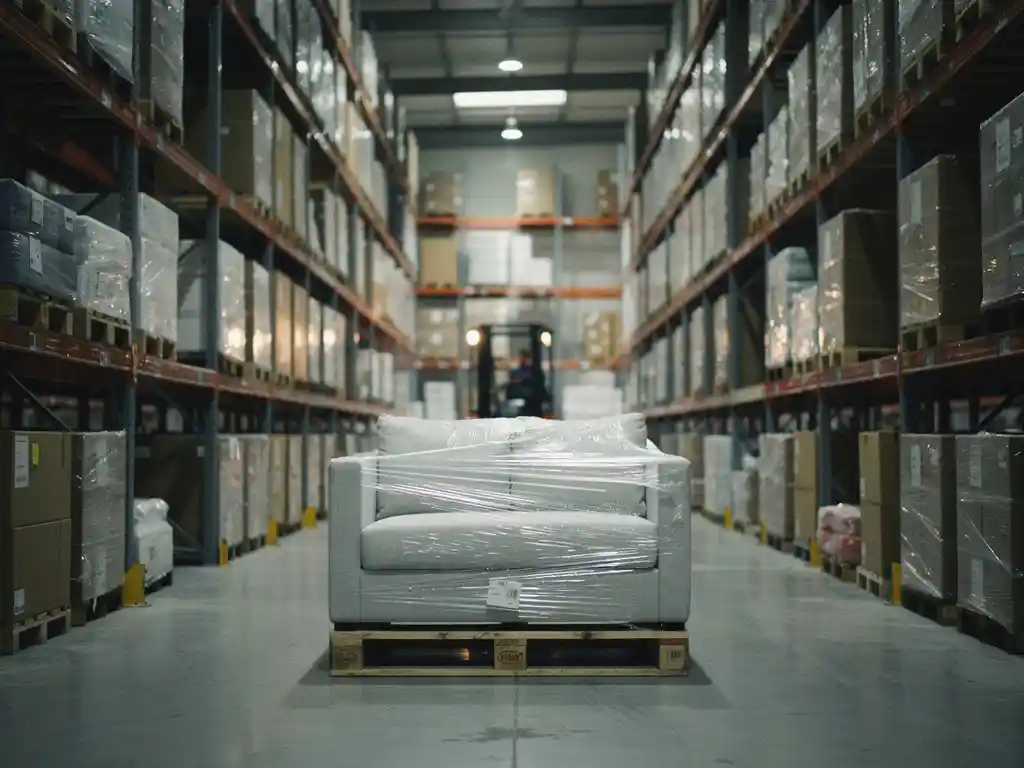
Furniture businesses face a recurring challenge: transport and warehousing are often managed as two separate operations, which creates gaps, delays, and unnecessary handling of fragile goods. When you combine furniture transport and warehousing under a single coordinated system, you reduce the risk of damage, cut down on transit time, and give your customers a smoother delivery experience.
This guide walks you through exactly how to set up a combined furniture logistics operation, from the groundwork you need to lay before you start, to verifying that everything runs as it should once it is live.
What you need before combining transport and warehousing
Before you bring transport and warehousing together, take stock of your current operation. Understanding your existing flows, volumes, and pain points will determine every decision that follows. Rushing into a combined setup without this clarity often means rebuilding it later.
Gather the following information before moving to the next step:
- Your average monthly inbound and outbound furniture volumes, broken down by product type and size
- Your current lead times from goods receipt to final delivery
- Any value-added services you require, such as assembly, installation, or quality inspection
- Your geographic delivery coverage, including whether you ship nationally, across Europe, or globally
- Your peak season patterns and how much buffer stock you typically need
- Any existing contracts with transport or storage providers and their end dates
Once you have this picture, you are ready to evaluate whether your current setup can be consolidated or whether you need a new logistics partner entirely. Most furniture businesses discover at this stage that their transport and warehousing operations are poorly synchronized, which is exactly the problem a combined approach solves.
Choose a logistics partner that handles both services
The most important decision in this process is selecting a logistics solutions furniture partner that genuinely operates both warehousing and transport under one roof, rather than subcontracting one to a third party. A partner that controls both sides of the operation can coordinate them in real time, which is what makes the combined model work.
Evaluate potential partners against these criteria:
- Confirm they have dedicated furniture transport capacity, including vehicles and handling equipment suited to fragile and oversized items
- Verify their warehouse facilities are designed for furniture storage, with appropriate racking, floor space, and climate controls where needed
- Ask specifically how transport planning and warehouse management communicate internally, and whether they share a single system
- Check whether they offer value-added services such as assembly, product inspection, or last-mile installation, since these often need to happen between storage and delivery
- Assess their network reach, particularly if you deliver across multiple countries or regions
A partner that ticks all of these boxes removes the coordination burden from your team. We operate across more than 150 locations worldwide through the Mach 3000 network, which gives furniture businesses access to a genuinely integrated transport and storage infrastructure. Once you have selected your partner, move directly into setting up the warehousing flow.
Set up your warehousing and inventory flow
With your partner confirmed, the next step is configuring how furniture moves into and through the warehouse. This is where furniture warehousing becomes an active part of your logistics chain rather than just a holding area.
Define your inbound process
Work with your partner to establish a clear inbound protocol. Decide how goods arrive, how they are checked in, and how they are allocated to storage locations. For furniture, this typically includes a quality inspection on receipt, labelling for traceability, and placement in a zone that matches the item’s outbound priority.
- Agree on an advance shipment notification process so the warehouse knows what is arriving before it does
- Define inspection criteria for inbound furniture, including what constitutes a damage claim
- Set up SKU or product codes that match your order management system
- Establish storage zone logic, for example, fast-moving items closer to the dispatch area
Configure your inventory management
Establish how inventory data flows between your systems and your partner’s warehouse management system. At minimum, you need real-time visibility of stock levels, location, and status. Many furniture businesses also track assembly status here, particularly if items arrive flat-packed and are built out before dispatch.
After completing this setup, you should be able to log into your system at any point and see exactly what stock is held, where it sits in the warehouse, and what stage of processing it is in. If you cannot do that, the integration is incomplete and needs to be resolved before you move forward.
Plan and coordinate outbound furniture transport
With warehousing configured, the focus shifts to the outbound side: getting furniture from storage to the end destination efficiently and without damage. This is where combining furniture transport with warehousing pays off most visibly, because dispatch can be triggered directly from warehouse status rather than relying on manual communication between separate teams.
- Define your outbound triggers: what event initiates a pick, pack, and dispatch instruction? This could be a confirmed customer order, a project delivery date, or a replenishment threshold
- Agree on packaging and protection standards for each furniture category before the first shipment goes out
- Set delivery time windows for each route or customer type and confirm these are built into the transport planning system
- Establish a process for handling special delivery requirements, such as white-glove delivery, room-of-choice placement, or on-site installation
- Confirm how proof of delivery is captured and shared back to your team and your customers
For project-based deliveries, such as furnishing a hotel, office, or residential development, coordinate the transport schedule against the site’s readiness timeline. Delivering too early creates storage problems on-site; delivering too late disrupts the project. Your logistics partner should be able to stage goods in the warehouse and release them in phases aligned to the installation schedule. Our project logistics team handles exactly this kind of phased, coordinated delivery for large-scale furniture installations.
Verify your combined logistics operation is running smoothly
Once your combined furniture storage and transport setup is live, the final step is building a rhythm of performance checks that keep it running well. A combined operation creates efficiency, but it also means that a problem in one area can affect the other quickly, so early detection matters.
Review these indicators regularly, ideally weekly in the first month and monthly thereafter:
- Order-to-dispatch lead time: is furniture leaving the warehouse within the agreed window after an order is placed?
- Damage rate: are you seeing fewer damage claims now that handling is consolidated?
- Inventory accuracy: does the system stock count match physical stock during spot checks?
- On-time delivery rate: are end customers receiving furniture within the promised timeframe?
- Exception frequency: how often are orders held up, and what is the most common reason?
If any of these metrics fall below your target, trace the issue back to the specific step in the process where it originates. A high damage rate often points to a packaging or handling issue in the warehouse. A poor on-time rate usually signals a disconnect between warehouse dispatch timing and transport planning. Address root causes rather than symptoms, and loop in your logistics partner to adjust the process together.
A well-functioning combined operation should feel almost invisible: orders flow in, furniture moves through the warehouse, and deliveries arrive on time with no manual chasing required. If you are still spending significant time coordinating between transport and storage, the integration has more work to do. Reach out to our team if you want to discuss how to close those gaps.