




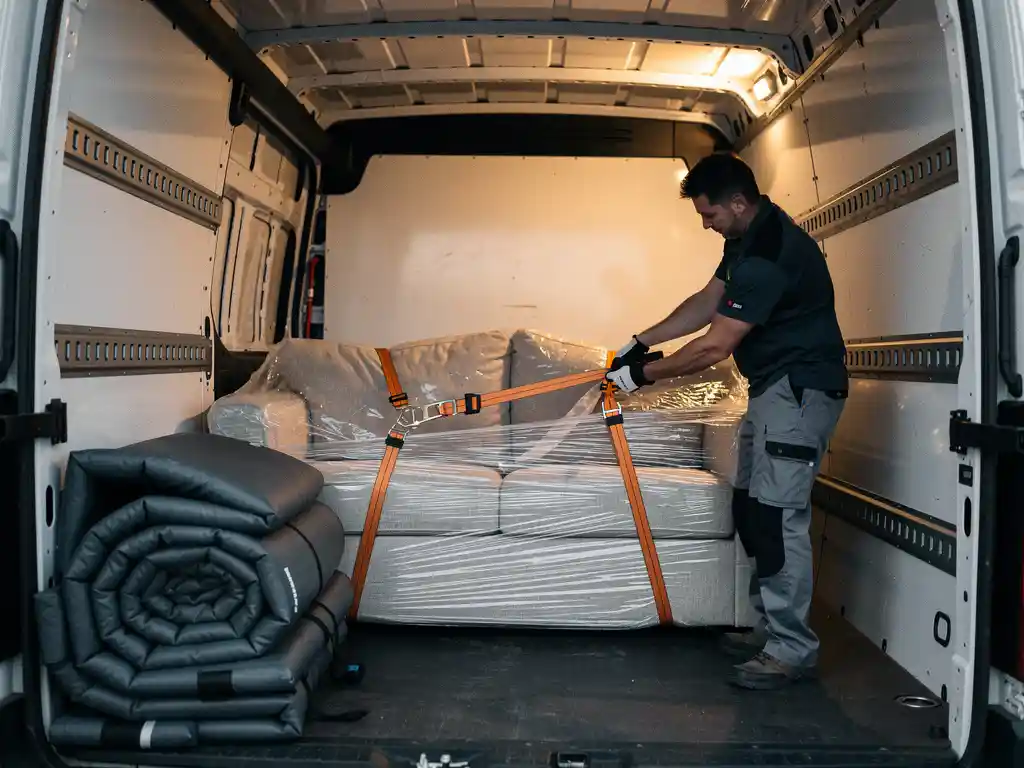
Whether you are moving house, delivering a sofa to a customer, or transporting a full room of furniture across the country, how you load and secure your cargo makes all the difference. A poorly secured piece of furniture can shift, tip, or collide with other items during transit, resulting in scratches, broken legs, or structural damage that is costly to repair and frustrating to explain. The good news is that with the right preparation and technique, you can transport furniture safely every time.
This guide walks you through exactly how to secure furniture in a truck to prevent damage, from gathering your materials to checking your load mid-journey. Follow each step and you will arrive at your destination with everything intact.
Gather the right materials before loading
Before a single piece of furniture goes near the truck, make sure you have the right supplies on hand. Rushing the loading process without proper materials is one of the most common causes of furniture damage during transport. Taking ten minutes to gather everything upfront saves hours of dealing with damaged goods later.
Here is what you will need for a safe furniture transport job:
- Moving blankets or furniture pads to wrap and cushion surfaces
- Ratchet straps or tie-down straps to anchor items to the truck walls or floor
- Stretch wrap or shrink wrap to bundle loose parts and protect upholstery
- Corner protectors for sharp edges on wooden or glass furniture
- Bubble wrap or foam padding for fragile components such as glass shelves or mirrors
- Packing tape to secure wrapping materials in place
- Non-slip mats or rubber padding to place under heavy items on the truck floor
- A dolly or furniture trolley to move heavy pieces without dragging them
Once you have confirmed everything is ready, you are set to start loading. Never substitute ratchet straps with bungee cords or rope for heavy furniture; they do not provide the consistent tension needed to prevent movement during transit.
Load and position furniture correctly in the truck
Correct positioning inside the truck is the foundation of damage-free furniture transport. Even the best strapping cannot compensate for a badly loaded truck. The goal is to distribute weight evenly, keep the centre of gravity low, and ensure that items cannot slide or topple during acceleration, braking, or cornering.
- Place the heaviest items, such as wardrobes, cabinets, and sofas, at the front of the truck nearest the cab. This keeps weight over the axles and improves vehicle stability.
- Position heavy items against the truck walls rather than in the centre of the floor, so they have a solid surface to brace against.
- Stand tall items like wardrobes upright whenever possible. If a piece must be laid flat, make sure it is in the manufacturer-recommended orientation and that the surface is padded.
- Fill gaps between large items with smaller boxes, cushions, or rolled blankets. Empty space allows furniture to shift during the journey.
- Place lighter, more fragile items on top of or behind heavier pieces, never underneath them.
After positioning each piece, step back and assess the overall layout. The load should look balanced from side to side and front to back. If one side of the truck is noticeably heavier, redistribute before moving on to strapping.
Strap and anchor furniture to prevent movement
With your furniture positioned correctly, the next step is to anchor everything so it cannot move during transit. Furniture strapping is the most critical part of the entire process. Even a short journey involves braking, acceleration, and road vibration, all of which create forces that can shift unsecured items.
- Attach ratchet straps to the anchor points or D-rings built into the truck walls or floor. Never wrap straps around fragile parts of furniture such as chair legs or thin shelf edges.
- Run straps over and across large items at their widest, most stable points. For a sofa, this typically means across the seat and back cushion area.
- Tighten each strap using the ratchet mechanism until there is no slack. The furniture should feel completely immovable when you push it firmly by hand.
- Use at least two straps per large item, crossing them in an X-pattern where possible for maximum stability.
- For stacked items, strap each layer independently rather than running a single strap over the entire stack.
Once all straps are in place, do a firm push test on each major item. If anything shifts even slightly, tighten the relevant strap or add an additional one. At Jan Krediet furniture transport, our team uses professional-grade securing systems on every load, but the same principles apply whether you are working with a hired van or a full trailer.
Protect surfaces and fragile components
Strapping prevents movement, but it does not protect surfaces from scratches, scuffs, or pressure marks. This step focuses on wrapping and padding every piece before or during loading to ensure surfaces arrive in the same condition they left in.
- Wrap wooden surfaces, upholstered pieces, and painted finishes in moving blankets and secure the blankets with packing tape or stretch wrap. Do not apply tape directly to wood or fabric.
- Use stretch wrap around drawer units and cabinet doors to prevent them from swinging open during transit. Wrap several times to create a firm hold.
- Apply corner protectors to all sharp wooden or metal edges before wrapping. These are the points most likely to cause damage to surrounding items if contact occurs.
- Remove glass shelves, mirrors, and other fragile inserts from furniture wherever possible. Wrap them individually in bubble wrap and store them vertically in padded slots or between mattresses.
- Disassemble legs, arms, or other removable components from large pieces. Wrap them separately and tape them to the main item so nothing gets lost.
Pay special attention to upholstered furniture. Fabric and leather surfaces are vulnerable to dirt, moisture, and abrasion during loading furniture into a truck. A layer of stretch wrap over the moving blanket adds an extra barrier against both friction and damp conditions.
Check your load before and during the journey
With everything loaded, wrapped, and strapped, your final responsibility is to verify the load before you set off and check it again during the journey. Road conditions, temperature changes, and vibration can all cause straps to loosen or items to shift slightly over time.
Before you drive away, run through this final checklist:
- Walk the full length of the truck and visually confirm every strap is taut and properly fastened
- Push each major item firmly to confirm zero movement
- Check that no furniture is pressing against the truck doors in a way that could cause damage when the doors are opened at the destination
- Confirm that fragile items are fully padded and not bearing any weight from items placed on top of them
- Close and secure the truck doors before moving the vehicle
During longer journeys, stop every 90 to 120 minutes to open the truck and inspect the load. Straps can loosen as vibration causes minor settling. Re-tighten any straps that have lost tension and reposition anything that has shifted before continuing. This simple habit is one of the most effective furniture moving tips for preventing damage on longer routes.
If you are managing high-volume deliveries or transporting valuable furniture collections and want professional support, our project logistics solutions are built to handle complex, large-scale furniture transport with the same care and precision described in this guide. For everyday moves, following these five steps consistently will keep your furniture safe from the loading bay to the final destination.