




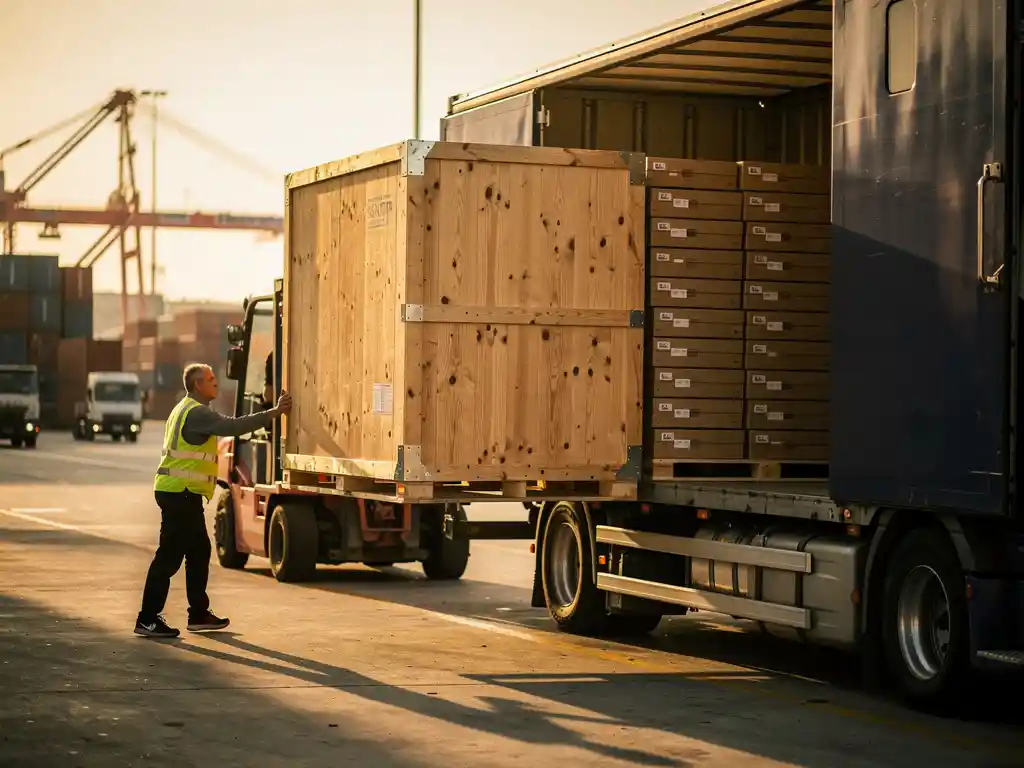
International furniture deliveries involve more moving parts than most shipments. You are coordinating fragile, oversized goods across borders, through customs, and into the hands of end customers who expect precision. One missed document, one miscommunicated lead time, or one untracked delay can unravel an entire project. The good news is that most delays are preventable when you follow a structured approach from the start.
This guide walks you through five practical steps to prevent delays on international furniture deliveries, from mapping your route to building a contingency plan. Whether you are managing a single container or a complex multi-site project, these steps give you a reliable framework to keep shipments on schedule.
Map your shipment route and key risk points
Before a single piece of furniture leaves the warehouse, map the full journey from origin to final destination. Understanding the route in detail reveals where delays are most likely to occur and gives you the information you need to plan around them.
- Identify every leg of the journey, including origin pickup, port handling, ocean or road transit, destination port or border crossing, and last-mile delivery.
- Research known bottlenecks on each leg, such as congested ports, border crossings with long processing times, or regions with seasonal weather disruptions.
- Note the transit time for each leg and add realistic buffer time at each handover point.
- Flag any legs that involve multiple carriers or modes of transport, as these transitions are where coordination failures most commonly occur.
Once your route is mapped, you should have a clear timeline with identified risk windows. If any single leg accounts for more than half the total transit time, that leg deserves the most attention in your planning. A well-mapped route also makes it much easier to communicate realistic delivery windows to your clients.
Get customs documentation right the first time
Customs clearance is one of the most common causes of international shipping delays for furniture, and almost all customs problems trace back to incomplete or incorrect documentation. Getting this right before the shipment departs saves significant time and cost.
Prepare the following documents for every international furniture shipment:
- Commercial invoice with accurate product descriptions, values, and country of origin
- Packing list with item counts, dimensions, and weights
- Bill of lading or airway bill
- Certificate of origin where required by the destination country
- Any product-specific certificates, such as wood treatment declarations (ISPM 15) for wooden packaging or furniture
- Import permits or licenses if the destination country requires them for specific materials
- Verify the correct HS (Harmonized System) tariff codes for each product category you are shipping. Incorrect codes are a leading cause of customs holds.
- Check the import regulations of the destination country well in advance, as requirements change and vary significantly between markets.
- Submit documentation to your customs broker or freight forwarder at least 48 to 72 hours before the shipment arrives at the border or port.
After submitting your documents, confirm receipt with your customs contact and ask for a preliminary review. Catching errors at this stage, rather than at the border, is the difference between a smooth clearance and a week-long hold. Working with a logistics partner experienced in furniture transport can also help ensure documentation meets country-specific requirements you may not be aware of.
Set clear lead times with suppliers and carriers
Supply chain delays in furniture logistics often originate not at the border but weeks earlier, when lead times between suppliers and carriers are assumed rather than confirmed. Vague agreements create gaps that compound into missed delivery windows.
- Agree on a production-ready date with your supplier and build in a buffer of at least five to seven business days before the required loading date.
- Confirm booking deadlines with your carrier or freight forwarder, as many shipping lines and road carriers require bookings well in advance, particularly for oversized or heavy furniture.
- Establish a written schedule with all parties that includes production completion, quality inspection, pickup, loading, departure, and estimated arrival dates.
- Define escalation contacts at each supplier and carrier so that if a date is at risk, the right person is notified immediately rather than discovering it at the last moment.
With your lead time schedule confirmed in writing, review it with all parties at least once before the shipment begins. A brief alignment call or email confirmation at this stage prevents the most common source of furniture transport delays: each party assuming someone else is managing the timeline.
Use real-time tracking to catch delays early
With your route mapped and your schedule in place, the next step is monitoring the shipment actively throughout its journey. Real-time tracking transforms your response from reactive to proactive, giving you time to act before a small delay becomes a missed delivery.
- Ensure your carrier or logistics partner provides a tracking system with live updates, not just estimated milestones.
- Set up automated alerts for key events: departure from origin, arrival at port, customs clearance confirmation, and departure for final delivery.
- Assign a team member to review tracking status at least once per day during active transit, particularly around border crossings and port arrivals.
- If a shipment misses a milestone by more than 12 hours, contact the relevant carrier immediately to understand the cause and revised timeline.
Tracking works best when it is tied directly to your customer communication process. If you can see a delay forming two days before it impacts the delivery date, you have time to notify the end customer, reschedule installation crews, or arrange temporary storage. That kind of proactive communication protects client relationships even when disruptions occur. Our warehousing solutions can also provide a buffer location if a delivery window shifts unexpectedly.
Build a contingency plan for common disruptions
Even well-planned international furniture deliveries encounter disruptions. Port strikes, extreme weather, carrier capacity shortages, and customs audits are all events that no amount of preparation can fully eliminate. What you can control is how quickly and effectively you respond when they happen.
Build a contingency plan that covers the following scenarios before your shipment departs:
- Port congestion or closure: Identify an alternative port or routing option in advance and confirm with your freight forwarder how quickly a reroute can be executed.
- Customs hold: Have a customs broker on standby who can respond within hours, and keep a complete copy of all documentation accessible digitally.
- Carrier failure or capacity loss: Maintain a short list of backup carriers for each lane you use regularly, with current contact details and rate agreements.
- Supplier production delay: Build production buffer time into your schedule from the start, and agree with your supplier on a maximum delay threshold before escalation is required.
- Last-mile access issues: For large furniture deliveries, confirm site access requirements, elevator dimensions, and installation crew availability well before the delivery date.
- Document your contingency plan and share it with all key stakeholders, including your supplier, freight forwarder, customs broker, and internal project manager.
- Review and update the plan before each major shipment, particularly if you are entering a new market or using a new carrier.
- After each completed shipment, note any disruptions that occurred and update the plan to reflect what worked and what did not.
A contingency plan does not need to be complex to be effective. The goal is to ensure that when a disruption occurs, your team knows exactly who to call and what options are available, without having to figure it out under pressure. Teams with documented response plans consistently recover from disruptions faster and with less impact on the end customer.
Preventing delays on international furniture deliveries comes down to preparation, communication, and active monitoring. Map your route, get your documentation right, align your supply chain partners on lead times, track your shipment in real time, and have a plan ready for when things do not go as expected. Follow these five steps consistently and you will significantly reduce the risk of costly delays on every shipment you manage. If you want to explore how an experienced logistics partner can support your supply chain, get in touch with our team to discuss your requirements.