




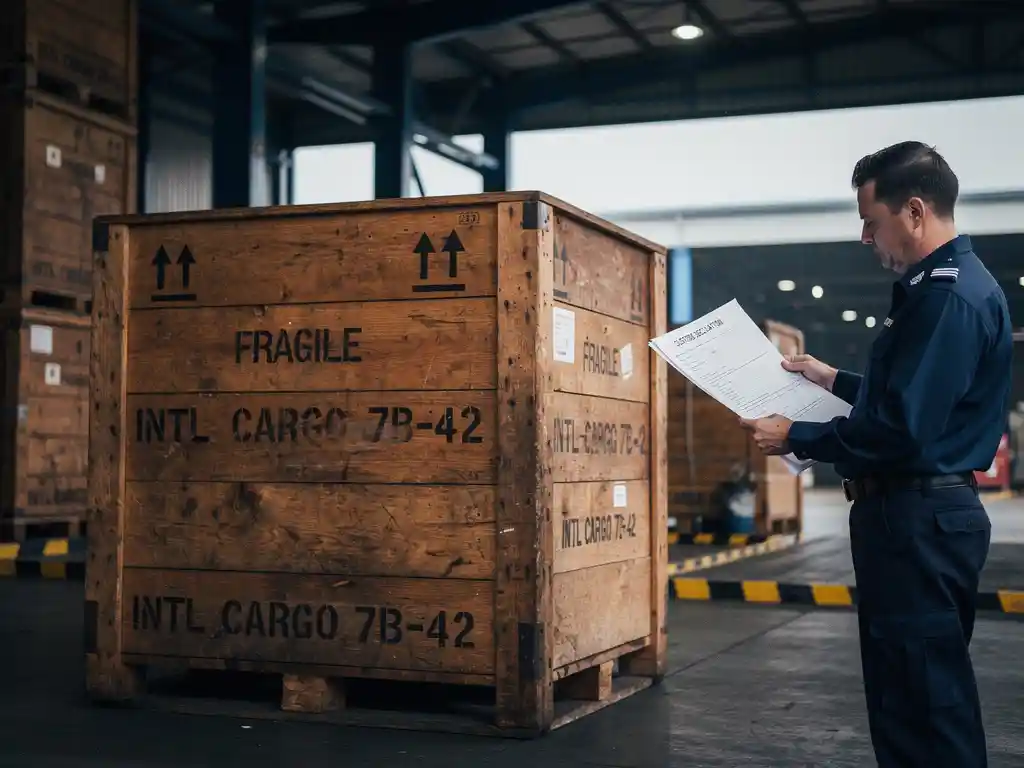
Furniture shipments are most commonly delayed at customs due to incomplete or incorrect documentation, incorrect HS code classification, and compliance failures with destination-country import regulations. These issues trigger holds that can last anywhere from a few hours to several weeks. The sections below break down the most common causes and what you can do to avoid them.
Which documents are most often missing from furniture shipments?
The documents most often missing from furniture shipments are the commercial invoice, packing list, bill of lading or airway bill, and certificate of origin. When any of these are absent, inaccurate, or inconsistent with each other, customs authorities will place the shipment on hold until the discrepancy is resolved.
Beyond the core set of shipping documents, furniture shipments frequently run into trouble because of missing or inadequate supporting paperwork. Common gaps include:
- Fumigation or phytosanitary certificates for shipments containing solid wood, which many countries require to prevent the spread of pests
- Material safety data sheets for upholstered furniture containing foam or chemical treatments
- Certificates of conformity required by the destination country’s product safety standards
- Proof of purchase or valuation documents when the declared customs value appears inconsistent with the goods described
A surprisingly common source of delay is a mismatch between documents rather than a missing document entirely. For example, if the commercial invoice lists a different quantity or description than the packing list, customs will flag the shipment for review even if both documents are physically present. Consistency across all paperwork is just as important as completeness.
How does incorrect HS code classification delay furniture clearance?
Incorrect HS code classification delays furniture customs clearance because it determines the applicable duty rate, import restrictions, and regulatory requirements for a shipment. When the wrong code is used, the shipment may be assessed the wrong tariff, flagged for inspection under the wrong commodity rules, or rejected outright until reclassification is completed.
Furniture spans a wide range of HS chapters, most commonly Chapter 94, but sub-classifications depend on material composition, intended use, and whether the item is sold assembled or in parts. A wooden dining table, a metal office chair, and a flat-pack wardrobe all fall under different codes with different duty implications. Misclassifying any of them can trigger a customs query that halts the entire consignment.
The consequences of incorrect classification go beyond the immediate delay. Customs authorities may issue a penalty for deliberate or repeated misclassification, and in some jurisdictions the goods can be seized pending a formal review. For repeat importers, a pattern of classification errors can also result in increased scrutiny on future shipments, making every subsequent clearance slower.
What customs regulations apply specifically to furniture imports?
Furniture imports are subject to a combination of general trade regulations and product-specific rules that vary by destination country. The most consistently applied requirements include tariff duties under the correct HS code, wood and material certification, product safety compliance, and in some cases anti-dumping measures on furniture originating from specific countries.
Wood and material regulations
Many major markets, including the European Union and the United States, have timber trade regulations that require importers to verify the legal origin of wood used in furniture. In the EU, the European Union Timber Regulation (EUTR) and its successor, the EU Deforestation Regulation, place due diligence obligations on importers of wooden furniture. Failure to provide adequate documentation of wood sourcing is a direct cause of customs holds.
Product safety and chemical compliance
Upholstered furniture, children’s furniture, and items containing surface treatments may need to comply with chemical regulations such as REACH in the EU or similar frameworks in other markets. These regulations restrict the use of certain substances in consumer products, and customs authorities can request test reports or declarations of conformity to verify compliance before releasing a shipment.
Why do furniture shipments get selected for physical inspection?
Furniture shipments get selected for physical inspection when customs risk assessment systems flag them based on factors such as the country of origin, the declared value relative to the goods described, inconsistencies in documentation, or random selection as part of routine compliance checks. Inspections can also be triggered by intelligence on specific importers or trade routes.
Furniture is a category that customs authorities pay close attention to for several reasons. Large, bulky consignments are sometimes used to conceal prohibited goods, which means furniture shipments attract a higher baseline level of scrutiny than some other cargo types. Additionally, declared customs values for furniture are frequently queried because the range of legitimate values is extremely wide, from flat-pack budget items to high-end designer pieces.
Shipments originating from countries subject to anti-dumping duties or trade restrictions are more likely to be inspected to verify origin claims. If a shipment is routed through a third country in a way that appears designed to obscure its true origin, customs authorities will typically escalate to a full physical examination and document audit.
How long can a furniture shipment be held at customs?
A furniture shipment can be held at customs for anywhere from a few hours to several months, depending on the reason for the hold. Minor documentation issues are often resolved within one to three business days once the correct paperwork is submitted. More complex holds involving physical inspection, valuation disputes, or regulatory non-compliance can extend to several weeks or longer.
The duration of a customs hold is largely determined by how quickly the importer or their customs broker can respond to the authority’s queries. Delays on the importer’s side, such as difficulty obtaining a missing certificate or reaching the original supplier for documentation, directly extend the hold period. In cases where goods are found to be non-compliant with product safety or chemical regulations, the shipment may be held until independent testing is completed, which can add weeks to the timeline.
Storage costs accumulate during any customs hold, and for furniture, which is often bulky and occupies significant warehouse space at the port or border facility, these costs can become substantial. In some cases, if a hold extends beyond a certain period and the importer does not resolve the issue, authorities have the power to auction or destroy the goods.
What can be done to prevent customs delays on future furniture shipments?
The most effective way to prevent customs delays on furniture shipments is to prepare complete, consistent documentation before the shipment departs, verify HS code classification with a qualified customs broker, and confirm the destination country’s specific import requirements well in advance of shipping. Proactive compliance eliminates the majority of causes for holds.
Practical steps that consistently reduce the risk of furniture customs clearance delays include:
- Conduct a pre-shipment document audit to ensure the commercial invoice, packing list, certificate of origin, and any required product certificates are complete and consistent with each other
- Verify HS code classification with a licensed customs broker who has experience in furniture and home goods, not just general cargo
- Obtain wood and material certificates at the point of manufacture, before the goods are shipped, rather than trying to source them after a hold has been placed
- Declare accurate customs values supported by documentation, as undervaluation is one of the most common triggers for inspection
- Work with a logistics partner experienced in furniture transport who understands the regulatory landscape in your destination markets
For businesses shipping furniture internationally on a regular basis, partnering with a specialist is one of the highest-impact decisions you can make. At Jan Krediet, our furniture transport solutions are built around exactly these challenges. With decades of experience moving furniture across European and global markets, we understand the documentation requirements, HS code nuances, and country-specific regulations that catch less experienced shippers off guard.
For complex or high-volume furniture import programmes, it is also worth exploring contract logistics arrangements that embed customs compliance into a managed, repeatable process rather than treating each shipment as a one-off event. Systematic compliance is far more reliable than reactive problem-solving once a hold has already been placed.