




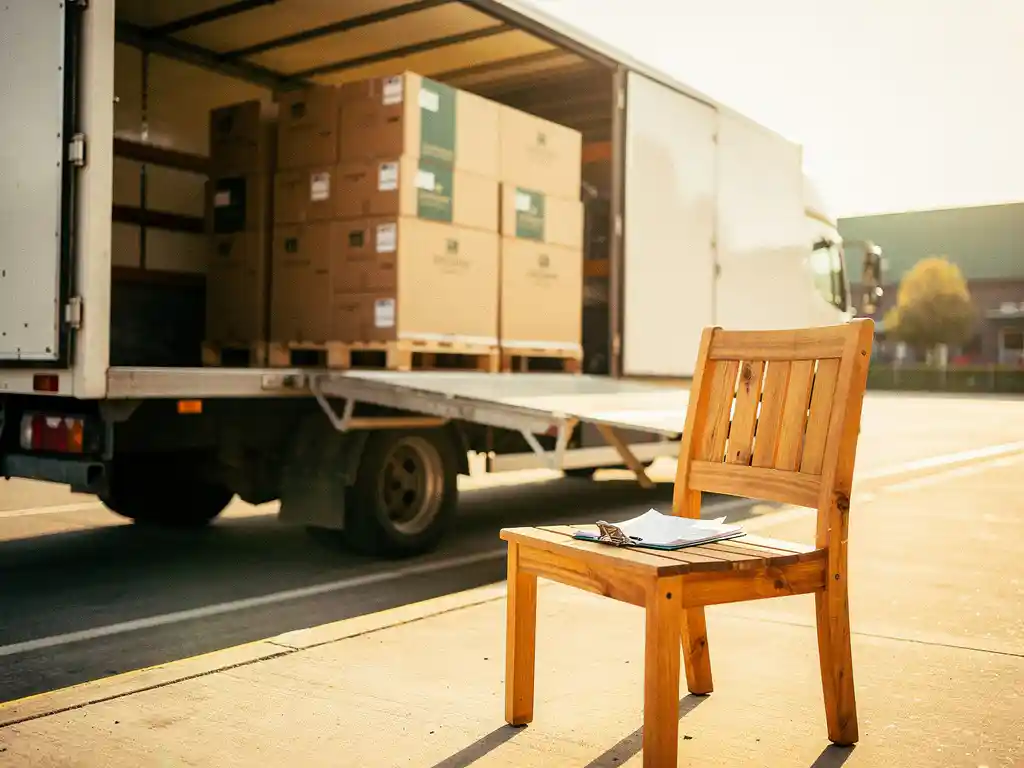
Summer is the peak season for outdoor living, and garden furniture retailers, importers, and distributors who wait too long to plan their logistics end up scrambling. Delayed shipments, overloaded warehouses, and missed delivery windows can cost you customers and margin at exactly the moment demand is highest. Getting your garden furniture logistics right means starting earlier than feels necessary and building a plan that accounts for every link in the chain.
This guide walks you through five practical steps to plan your summer logistics for outdoor furniture on time, from mapping your calendar to protecting yourself against disruptions. Follow these steps in sequence and you will be ready well before the season peaks.
Map your peak season timeline and key deadlines
Start by anchoring your entire plan to a clear seasonal calendar. Garden furniture demand typically accelerates from late March and peaks through May and June, which means your goods need to be in-country and ready to distribute well before that window opens. Working backwards from your target in-store or delivery date is the most reliable way to identify where your deadlines actually fall.
- Set your customer-facing deadline: the date by which all orders must be available for delivery or collection.
- Subtract your last-mile and regional distribution lead time to find your warehouse dispatch deadline.
- Subtract your transit time from origin to destination to find your latest loading or departure date.
- Subtract production and supplier lead times to find your latest purchase order date.
- Add buffer time at each stage, typically one to two weeks, to absorb delays without missing the season.
Once you have mapped these dates, document them in a shared planning calendar and distribute it to every stakeholder: suppliers, freight partners, warehouse teams, and your commercial team. A timeline that only lives in one person’s inbox is not a plan. Verify this step by confirming that every party has acknowledged the key dates and that no deadlines conflict with each other.
Align warehouse capacity with seasonal demand spikes
Outdoor furniture is bulky, fragile, and often arrives in high volumes over a short window. Your warehouse needs to be ready to receive, process, and dispatch that volume without becoming a bottleneck. Capacity planning for seasonal logistics is not just about square metres, it is about staffing, equipment, and workflow design.
Assess your current warehouse footprint against your projected inbound volume for the season. Consider whether you need temporary overflow storage, additional racking, or dedicated staging areas for assembled versus flatpack items. Outdoor furniture often requires pre-delivery quality checks, assembly, or repackaging, all of which consume floor space and labour time.
- Review last season’s inbound volumes and compare them against your 2026 order book to estimate peak stock levels.
- Identify any pinch points in your current layout, such as narrow receiving docks or insufficient staging space.
- Confirm staffing levels for the peak intake period and arrange temporary labour well in advance.
- Schedule any racking installation, equipment maintenance, or layout changes before the first inbound shipments arrive.
If your own warehouse capacity is insufficient to absorb the seasonal spike, dedicated warehousing solutions can provide the flexible space and specialist handling your operation needs without long-term fixed costs. After completing this step, you should be able to confirm the maximum inbound volume your facility can handle per week and know exactly when you would hit capacity.
Coordinate transport and carrier capacity early
Carrier capacity tightens significantly in the run-up to summer. Every retailer and importer in the outdoor living sector is competing for the same trucks, ferry slots, and delivery crews at the same time. Securing your outdoor furniture transport capacity early is not optional, it is a competitive advantage.
Reach out to your transport partners in January or February at the latest for a peak season that runs from April to June. Confirm volumes, lanes, and service levels in writing. If you rely on spot market freight, build your budget around the reality that rates will be higher during peak periods, not lower.
- Identify all transport lanes you will need: international inbound, cross-dock movements, and last-mile delivery routes.
- Contact your primary carriers and request capacity reservations for your peak weeks.
- Confirm service level agreements, including delivery windows, handling requirements for fragile items, and escalation contacts.
- Identify at least one backup carrier per lane in case your primary partner cannot fulfil at short notice.
For specialist furniture delivery planning, it is worth working with a partner who understands the handling requirements of large, fragile outdoor pieces. Our furniture transport service is built around exactly this kind of seasonal, high-care logistics. Once this step is complete, you should have written confirmation of capacity from your carriers across all key lanes for your peak period.
Handle customs and import documentation for outdoor furniture
A large share of garden furniture sold in Europe is manufactured in Asia, which means customs clearance is a critical part of the supply chain. Errors or delays in documentation at this stage can hold your entire season’s stock at the port while your competitors’ shelves fill up.
Prepare your import documentation well before your first shipment departs. Work with your supplier to ensure product classifications, country of origin certificates, and commercial invoices are accurate and consistent. Incorrect tariff codes are one of the most common causes of customs delays and can result in unexpected duty costs.
- Confirm the correct HS (Harmonised System) tariff codes for each product category in your range, as codes vary between material types such as metal, wood, rattan, and plastic.
- Obtain certificates of origin from your supplier for each shipment, as these may be required to claim preferential duty rates under trade agreements.
- Prepare commercial invoices, packing lists, and any required product compliance documentation such as material safety data sheets before goods are loaded.
- Engage a licensed customs broker or freight forwarder early so they can review your documentation before shipment rather than after arrival.
If your business is new to importing outdoor furniture or expanding into new sourcing countries, working with a logistics partner who offers integrated customs handling removes significant risk from this step. Verify completion by having your customs broker sign off on a full documentation checklist for your first shipment before it leaves the origin port.
Build in contingency for weather and supply chain disruptions
Even the most carefully planned seasonal logistics operation will face unexpected events. Port congestion, supplier delays, extreme weather affecting transit routes, and last-minute volume changes are all real risks in outdoor furniture logistics. The difference between a resilient operation and a chaotic one is whether you planned for these scenarios before they happened.
Build contingency into your timeline, your budget, and your operational processes. A buffer of one to two weeks at each major stage, as mentioned in your timeline mapping, is a minimum. Beyond time buffers, think through what you would actually do if a specific disruption occurred.
- Identify your top three most likely disruption scenarios based on your supply chain structure and past experience.
- For each scenario, define a specific response: which alternative carrier, which backup supplier, which overflow warehouse you would activate.
- Set trigger points, such as a shipment delayed by more than five days, that automatically initiate your contingency response without waiting for escalation.
- Communicate your contingency plan to your key partners so they know their role if a disruption occurs.
With your contingency framework in place, you have completed the core structure of a robust summer logistics plan. Review the full plan as a team at least once before your first inbound shipments depart, and schedule a mid-season check-in to assess whether any adjustments are needed. If you want to understand how we approach complex, seasonal logistics challenges, you can explore our client cases or get in touch directly to discuss your specific situation.