




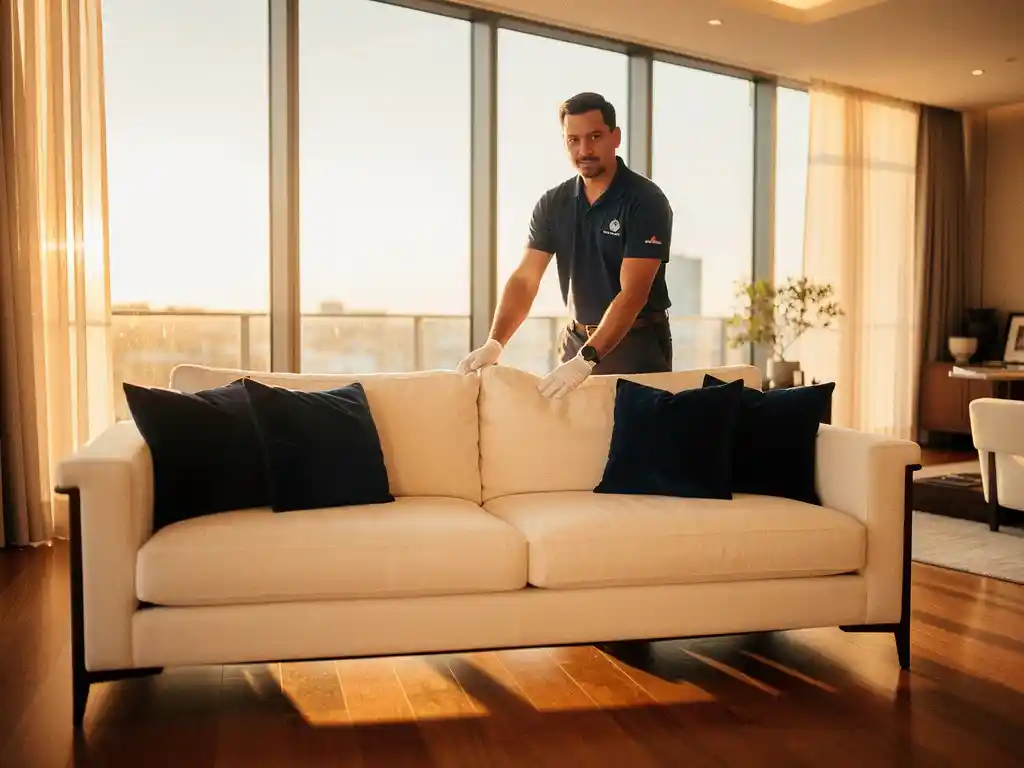
Furniture is one of the most tactile, personal purchases a customer makes. By the time a sofa or dining table arrives at someone’s home, they have already spent weeks imagining it in their space. That means the delivery moment carries enormous emotional weight, and the brands that recognize this turn last-mile furniture delivery into a powerful loyalty driver. Those that treat it as a purely operational task leave money and reputation on the table.
This guide walks you through five concrete steps to transform your furniture delivery into a genuine brand experience. Whether you sell direct-to-consumer or manage large project logistics, each step builds on the last to create a consistent, memorable customer journey from warehouse to living room.
Define what a branded delivery experience looks like
Before you can build a great delivery experience, you need to know what “great” looks like for your specific brand. A luxury furniture brand and a flat-pack retailer have very different customer expectations, and your delivery experience should reflect that gap deliberately.
- Write down three to five words that describe your brand personality (for example: premium, warm, reliable, effortless).
- Map those words to delivery touchpoints: packaging, communication tone, driver behavior, installation quality, and follow-up.
- Identify where your current delivery process contradicts those words. These gaps are your starting points.
- Set measurable standards for each touchpoint, such as a specific delivery window, a required greeting script, or branded packaging materials.
After completing this step, you should have a one-page delivery brand brief that any logistics partner or internal team can reference. If you cannot summarize it clearly on one page, the brief needs more focus before you move forward.
Align your logistics partner with your brand standards
Your logistics partner is the face of your brand at the most critical moment of the customer journey. A driver who arrives unprepared, in an unmarked vehicle, without product knowledge, will undo every investment you made in marketing and product quality. Choosing and briefing the right furniture transport partner is not a procurement decision alone; it is a brand decision.
- Share your delivery brand brief with every logistics partner during the onboarding process, not after problems arise.
- Specify non-negotiable standards in your service agreement: uniform requirements, vehicle presentation, handling protocols for fragile items, and communication expectations.
- Conduct a joint trial delivery and evaluate it against your brand brief. Walk through the experience as if you were the customer.
- Build a feedback loop between your customer service team and your logistics partner so that delivery complaints trigger operational reviews, not just apologies.
With your partner aligned to your standards, you have the foundation in place. The next step is to make sure customers feel looked after before the van even leaves the depot.
Design the pre-delivery communication flow
Anxiety peaks in the hours before a large furniture delivery. Customers wonder whether they need to clear space, whether someone needs to be home, and whether the item will actually arrive on time. A well-designed pre-delivery communication flow removes that anxiety and replaces it with anticipation, which is a very different emotional state to hand off to your delivery team.
Confirmation and scheduling
Send an order confirmation immediately after purchase that includes a realistic delivery window and a clear explanation of what will happen next. Avoid vague language like “within a few weeks.” Give a specific date range and explain how the customer will be notified as it approaches.
Day-before and day-of notifications
- Send a day-before message that confirms the delivery date, provides a narrower time window, and includes practical preparation tips (clearing the route, measuring doorways).
- Send a morning-of notification with the driver’s estimated arrival time and, where possible, a live tracking link.
- Make it easy for the customer to reschedule or contact support directly from the notification, without having to search for a phone number.
After implementing this flow, measure the volume of inbound “where is my delivery” calls. A well-designed communication sequence typically reduces these significantly because customers already have the information they need. If call volume stays high, review whether your notifications are reaching customers through their preferred channel.
Elevate the in-home delivery moment
The in-home delivery moment is where the customer experience becomes physical and irreversible. Everything up to this point has been digital or verbal. Now your brand is literally inside someone’s home, and the impression made in those minutes will shape how the customer remembers the entire purchase.
- Ensure delivery teams introduce themselves by name and confirm the delivery details before bringing anything inside.
- Protect the customer’s home throughout the process: use floor protection, remove packaging before bringing items through narrow spaces, and never drag furniture across floors.
- Place items exactly where the customer requests, not where it is most convenient for the delivery team.
- If assembly or installation is included, complete it fully before leaving and walk the customer through any relevant product features or care instructions.
- Remove all packaging materials unless the customer explicitly wants to keep them.
For complex project deliveries involving multiple items or commercial spaces, consider a dedicated project logistics approach. We manage full-scale installations across more than 150 locations worldwide, handling everything from furniture placement to wall decoration, which ensures consistency across every room and every site.
After the delivery team leaves, the customer should feel that nothing was left for them to sort out. If they are immediately moving furniture, hunting for missing hardware, or sweeping up packaging debris, the experience has fallen short regardless of how smooth the earlier steps were.
Capture feedback and close the delivery loop
Feedback is the mechanism that turns a one-time delivery experience into a continuously improving one. Without structured feedback, you are relying on complaints to identify problems, which means you only hear from the most frustrated customers and miss the patterns that affect the majority.
- Send a short post-delivery survey within 24 hours of delivery, while the experience is still fresh. Limit it to three to five questions maximum.
- Include one open-text question that asks specifically about the delivery team and the in-home experience, not just the product itself.
- Route negative responses directly to a customer service team member who can follow up personally within 48 hours.
- Aggregate delivery-specific scores separately from product scores so you can distinguish between a product quality issue and a logistics quality issue.
- Share delivery feedback scores with your logistics partner on a regular cadence, monthly at minimum, and use them as the basis for operational reviews.
Closing the loop also means communicating back to customers who raised issues. A follow-up message that acknowledges a problem and explains what has changed demonstrates that feedback leads to action, which builds the kind of trust that drives repeat purchases. Over time, a structured feedback process transforms your contract logistics relationship from a transactional arrangement into a genuine performance partnership.
Turning furniture delivery into a brand experience is not a single initiative. It is a system of connected decisions, from how you brief your logistics partner to how you respond to a negative review. Each step in this guide reinforces the others. Get all five working together, and your last-mile furniture delivery stops being a cost center and starts being a competitive advantage.