




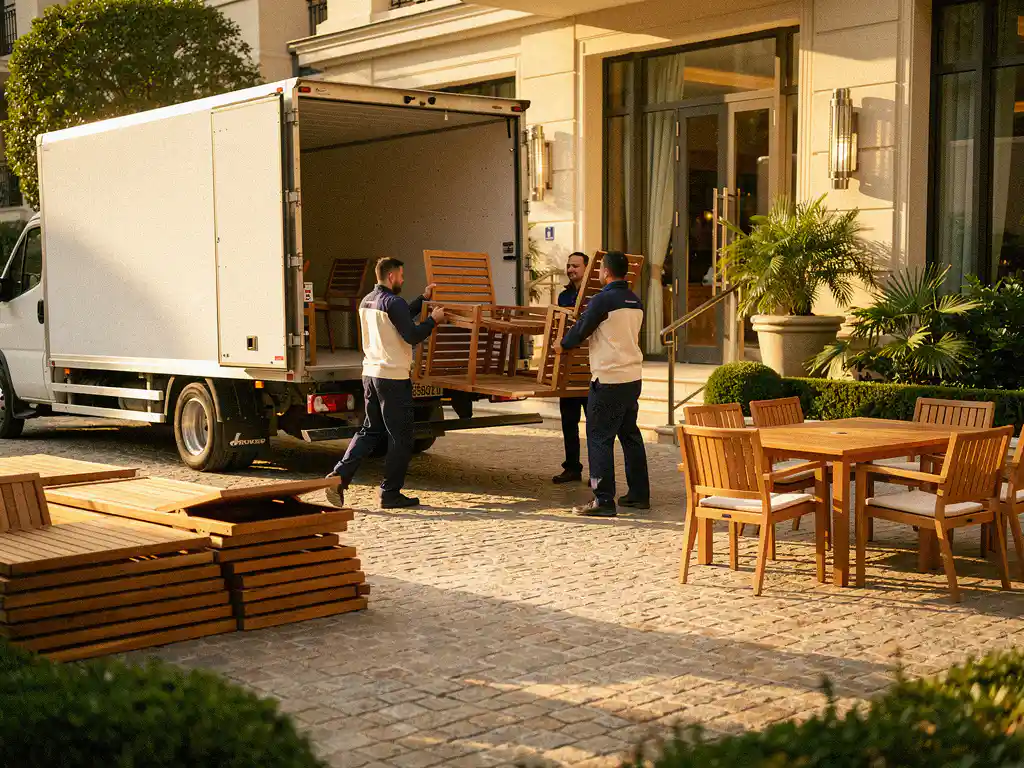
Outdoor spaces are increasingly central to the hospitality experience. Whether you’re equipping a hotel terrace, a restaurant garden, or a resort poolside area, getting garden furniture delivered and installed without disrupting your guests or operations takes careful planning. The stakes are real: a delayed delivery during peak season or damaged furniture on arrival can set back an entire opening schedule.
This guide walks you through every stage of structuring garden furniture delivery for hospitality, from defining your requirements before you place an order to verifying completion and preparing for future procurement cycles. Follow these steps and you’ll have a clear, repeatable process that protects your investment and keeps your venue running smoothly.
Map out your delivery requirements before ordering
Before you contact any supplier or logistics provider, define exactly what a successful delivery looks like for your venue. Hospitality environments vary enormously, and a beach resort has very different access conditions than an urban rooftop bar. Getting specific at this stage prevents costly surprises later.
- List every item being delivered, including dimensions, weight, and quantity. Oversized loungers or large parasol bases often require specialist handling equipment.
- Document your venue’s access constraints: gate widths, loading bay availability, stairwells, lifts, and any restrictions on delivery hours imposed by local regulations or your landlord.
- Identify the final placement locations within your outdoor space and note any floor surfaces that could be damaged during transport (decking, tiles, artificial grass).
- Confirm whether furniture arrives flat-packed or pre-assembled, as this directly affects the time and labour needed on delivery day.
Once this information is documented, you have a clear delivery brief you can share with any logistics partner or supplier. You should be able to answer, without hesitation, how many items are coming, where they need to go, and what physical constraints exist at your venue. If any of those answers are unclear, resolve them before moving forward.
Choose a logistics partner with hospitality experience
Not every freight carrier is equipped to handle outdoor furniture logistics for hospitality. Standard pallet delivery services are built for warehouse-to-warehouse movement, not white-glove placement in an occupied venue. Choosing the right partner at this stage is one of the most important decisions in the entire process.
Look for a provider that specialises in furniture transport and has demonstrable experience working within hospitality environments. The key qualities to evaluate are:
- Experience handling large-format, fragile, or high-value outdoor furniture pieces
- Ability to coordinate multi-drop deliveries across a single venue or across multiple locations
- Flexibility to work within restricted delivery windows that protect the guest experience
- On-site assembly and placement capabilities, so furniture arrives ready to use
- Clear communication protocols so your operations team always knows what to expect
We work with hospitality clients across Europe and understand that a restaurant or hotel cannot simply pause operations for a delivery. Our project logistics team is experienced in coordinating large-scale furniture installations at live venues, managing everything from route planning to on-site placement. Ask any prospective partner for examples of comparable hospitality projects before committing.
Plan delivery timing around hospitality operations
Timing a hotel outdoor furniture or restaurant terrace delivery is not simply about choosing a convenient date. It requires aligning the delivery schedule with your operational calendar, your staff availability, and the realistic lead times your logistics partner needs to execute safely.
- Identify your venue’s low-traffic windows. Early morning deliveries before service begins or mid-week slots during quieter trading periods are typically the least disruptive.
- Build a buffer between the delivery date and your target opening date. Allow at least two to three days to account for minor delays, missing items, or assembly issues.
- Confirm with your logistics partner how long the unloading and placement process will realistically take, based on the item count and venue access you documented in step one.
- Communicate the delivery schedule to your entire operations team, including front-of-house managers who may need to redirect guests temporarily.
A well-timed delivery is one where your team is prepared, the right staff are present to guide placement, and guests are not inconvenienced. If your venue is already open, treat the delivery as an operational event that requires the same planning as a private function or a kitchen refit.
Coordinate assembly and placement on-site
With your delivery timing confirmed, shift your focus to what happens the moment the vehicle arrives. On-site coordination is where many hospitality deliveries lose efficiency, particularly when it is unclear who is responsible for directing the logistics team and making placement decisions.
Assign a single point of contact
Designate one person from your venue team to be present for the entire delivery and to act as the decision-maker on the ground. This person should have a copy of the placement plan, know where every item is going, and have the authority to make minor adjustments if something does not fit as expected.
Prepare the space in advance
Clear the delivery route and final placement areas before the logistics team arrives. Remove any existing furniture, temporary barriers, or equipment that could slow movement. If floor protection is needed, lay it in advance rather than scrambling once the truck is at the gate.
- Walk the delivery route with your on-site contact the day before to identify any last-minute obstacles.
- Confirm assembly requirements with your logistics partner: some pieces require specialist tools or a two-person team to assemble safely.
- Have a checklist of every item ready so pieces can be ticked off as they are placed, making it easy to identify anything missing before the vehicle departs.
After assembly, walk through the space with the logistics team lead before signing off. Every item should be in its designated position, structurally sound, and free from transit damage. Do not release the delivery team until this walkthrough is complete.
Handle last-mile challenges at hospitality venues
The last mile of restaurant garden furniture delivery is often the most complex part of the entire process. Urban venues face parking restrictions and narrow access routes. Rural or resort properties may involve long distances from the delivery vehicle to the final placement point. Anticipating these challenges in advance prevents them from becoming delays on the day.
Common last-mile obstacles in hospitality settings include:
- No dedicated loading bay, requiring street-level unloading with time restrictions
- Multiple floors or levels without lift access, requiring stair carries for heavy items
- Outdoor spaces only accessible through the main guest areas of the venue
- Gravel paths, uneven terrain, or steps that make trolley-based movement impractical
- Local authority restrictions on delivery vehicle size or operating hours
Share your access documentation from step one with your logistics partner well in advance, not on the morning of delivery. A specialist in hospitality furniture transport will use this information to plan the right vehicle size, crew size, and equipment. If your venue has particularly complex access, request a site visit from the logistics team before the delivery date so they can plan accordingly.
Verify delivery completion and prepare for future orders
Once the furniture is in place and the logistics team has departed, your job is not quite finished. A structured completion process protects you if issues emerge later and builds the foundation for a smoother procurement cycle next time.
- Photograph every item in its final position immediately after the delivery team leaves. This creates a timestamped record of condition at the point of handover.
- Cross-reference the delivery against your original order and the checklist completed during placement. Note any discrepancies in writing and report them to your supplier and logistics partner within 24 hours.
- Test any functional elements: chairs that fold, tables with adjustable bases, parasols with opening mechanisms. Identify any defects before the furniture enters regular use.
- File all delivery documentation, including the signed delivery note, photographs, and any written communications, in a single project folder for future reference.
After the delivery is complete and verified, take 30 minutes to document what worked and what you would do differently. Note the logistics partner’s performance, the timing of the delivery, any access issues that arose, and how long assembly took compared to the estimate. This debrief becomes your starting point for the next order, whether that is a seasonal refresh, an expansion, or a replacement cycle. Building this institutional knowledge within your operations team is what turns a one-off delivery into a repeatable, efficient process.
If you are planning a larger project or a multi-site rollout, get in touch with our team to discuss how we can support your outdoor furniture logistics from initial planning through to on-site installation.