




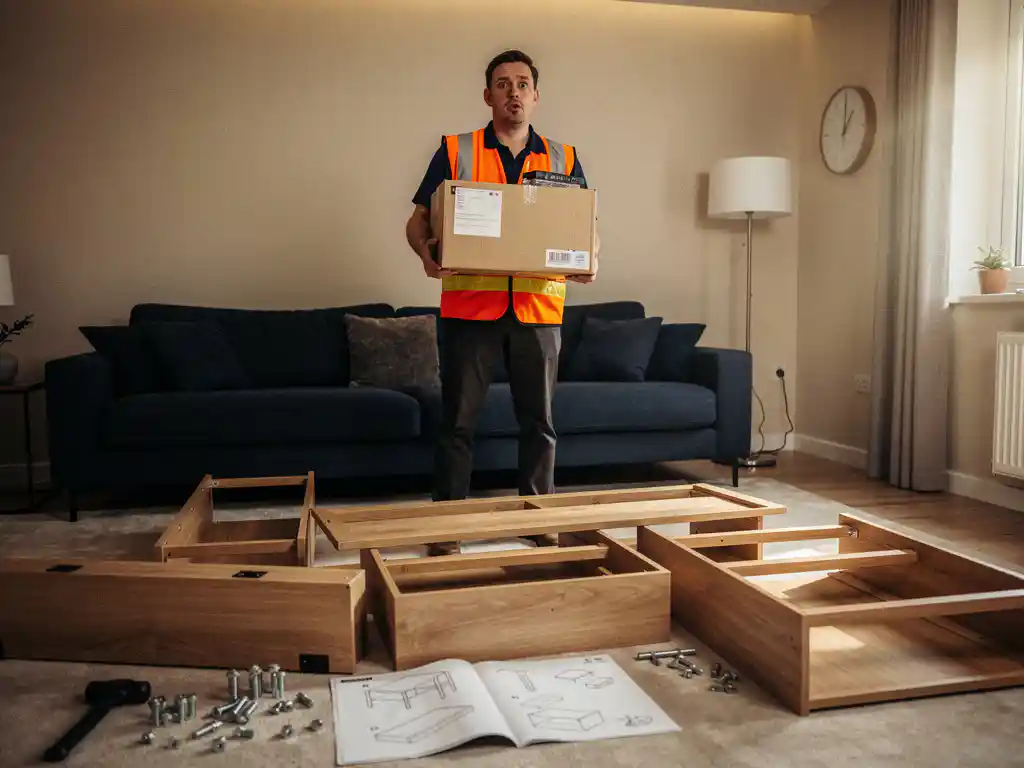
Delivery drivers are not the right people for furniture assembly because driving and assembling are fundamentally different skill sets. A driver’s expertise lies in safe transport, route planning, and timely delivery — not in reading technical assembly instructions, handling precision tools, or ensuring structural integrity. Assigning assembly tasks to drivers creates quality risks, liability gaps, and customer dissatisfaction. The sections below break down exactly why this separation matters and what a proper furniture assembly service looks like.
What skills does professional furniture assembly actually require?
Professional furniture assembly requires a combination of technical knowledge, manual dexterity, and problem-solving ability that goes well beyond general handyman skills. An experienced assembler must read and interpret manufacturer instructions across multiple languages and formats, use the correct tools with precision, and understand how different materials — wood, metal, glass, upholstery — respond under tension and load.
Beyond the mechanical side, professional furniture installation demands spatial awareness and an eye for detail. A wardrobe that is not perfectly level, a bed frame with overtightened bolts, or a sofa with reversed brackets may look acceptable on the surface but will fail prematurely or pose a safety risk. Trained assemblers also know how to identify damaged or missing components before assembly begins, preventing costly rework later.
In commercial and project settings, the complexity increases further. Installing office workstations, hotel room furniture, or retail fixtures often involves coordinating multiple product types, following brand-specific configuration guidelines, and working within tight on-site schedules. These are skills developed through dedicated training and repetition, not tasks that can be picked up during a delivery round.
What is a delivery driver’s core job responsibility?
A delivery driver’s core responsibility is to transport goods safely from one location to another, on time and in the condition they were loaded. This includes route planning, vehicle management, safe loading and unloading, proof-of-delivery documentation, and customer communication at the door. The role is demanding and requires its own professional expertise.
When drivers are asked to also assemble furniture, they are being pulled away from what they do best. A driver mid-assembly is a driver who is running late for the next stop. Time pressure is a constant in furniture transport, and rushing through assembly to stay on schedule is a direct path to errors. The incentive structure of a delivery job simply does not support the patience and precision that proper assembly demands.
There is also a practical capacity issue. Drivers typically carry the tools and equipment needed for safe transport, not a professional assembly toolkit. Without the right equipment, even a willing and capable driver cannot do the job properly.
What can go wrong when delivery drivers attempt furniture assembly?
When delivery drivers attempt furniture assembly, the most common problems are structural failures, cosmetic damage, and incomplete builds. Without specialist training, drivers may overtighten fixings and crack panel materials, undertighten joints that later collapse, misread assembly sequences, or skip steps under time pressure. The result is furniture that looks assembled but is not safe or durable.
Cosmetic damage is also a frequent outcome. Drivers handling assembly tools without the right technique can scratch surfaces, strip screw heads, or dent panels. For high-value furniture pieces, this kind of damage is costly to repair and difficult to reverse.
There is also the issue of incomplete assembly. A driver who runs out of time may leave components partially fitted, hand over furniture that still requires finishing, or simply move on without confirming the piece is safe to use. For the end customer, this creates frustration, follow-up service calls, and a damaged impression of the brand that supplied the furniture.
Who is actually responsible when assembled furniture fails?
When assembled furniture fails, responsibility typically falls on whoever carried out the assembly. If a delivery driver assembled a piece incorrectly and it subsequently collapses or causes injury, the liability question becomes complex. The retailer or logistics provider who assigned the assembly task to an unqualified person carries significant exposure, regardless of whether the driver acted in good faith.
This is a serious commercial and legal concern for furniture retailers, interior designers, and project developers. Using untrained personnel for assembly does not just risk customer dissatisfaction; it creates potential liability for property damage, personal injury, and warranty disputes. Most furniture manufacturers specify that warranty coverage applies only when assembly is carried out correctly and, in some cases, by qualified installers.
A dedicated furniture installation service provides a clear chain of responsibility. When specialist assemblers carry out the work, there is accountability, documentation, and professional standards behind every completed job. That clarity protects everyone in the supply chain.
What does a dedicated furniture assembly service include?
A dedicated furniture assembly service includes trained specialists who handle the complete installation process from unpacking to final quality check. This covers interpreting manufacturer instructions, assembling all components in the correct sequence, securing fixings to specification, levelling and positioning the finished piece, removing packaging waste, and confirming the item is safe and ready to use.
At Jan Krediet, our assembly service goes further than the basics. We handle furniture assembly in our warehouses under controlled conditions as well as on-site installation at the final destination. For large-scale projects, we carry out the full installation of furniture, wall decoration, plants, and related goods across commercial spaces including offices, hotels, and retail environments. Our team operates across more than 150 locations worldwide through our membership of the MACH-3000 network.
A professional furniture assembly service also includes the handling of exceptions. When a component is missing, damaged, or does not match the specification, a trained team knows how to escalate, document, and resolve the issue without leaving the customer in a difficult position. This level of service is simply not achievable when assembly is treated as an add-on to a delivery task.
When should businesses use a specialist furniture logistics partner?
Businesses should use a specialist furniture logistics partner whenever the value, complexity, or volume of furniture delivery and assembly exceeds what a standard courier or general haulier can reliably handle. This applies to furniture retailers managing last-mile delivery to end consumers, developers fitting out commercial spaces, and brands running multi-site rollouts where consistency and quality control are non-negotiable.
The case for specialist support becomes especially clear in project environments. Fitting out a hotel, a co-working space, or a chain of retail stores involves coordinating dozens of product lines, meeting strict site access windows, and delivering a finished result that reflects the client’s brand. A generalist logistics provider is not equipped for this level of coordination.
- High-value furniture: Premium or bespoke pieces require careful handling and precise assembly to protect their value and appearance.
- Commercial fit-outs: Large-scale projects demand project management capability alongside physical installation skills.
- Consumer home delivery: End customers expect a complete, professional service that leaves their home tidy and their furniture ready to use.
- International supply chains: When goods move across borders, specialist partners handle customs, compliance, and last-mile delivery in a single chain.
Working with a specialist also protects the business relationship. When a customer receives furniture that is correctly assembled, on time, and without damage, the retailer or developer behind that delivery earns trust. When something goes wrong because the wrong people handled the job, that trust is difficult to recover. Choosing the right logistics partner is not just an operational decision; it is a brand decision. If you would like to learn more about how we approach furniture logistics, you are welcome to get in touch with our team.