




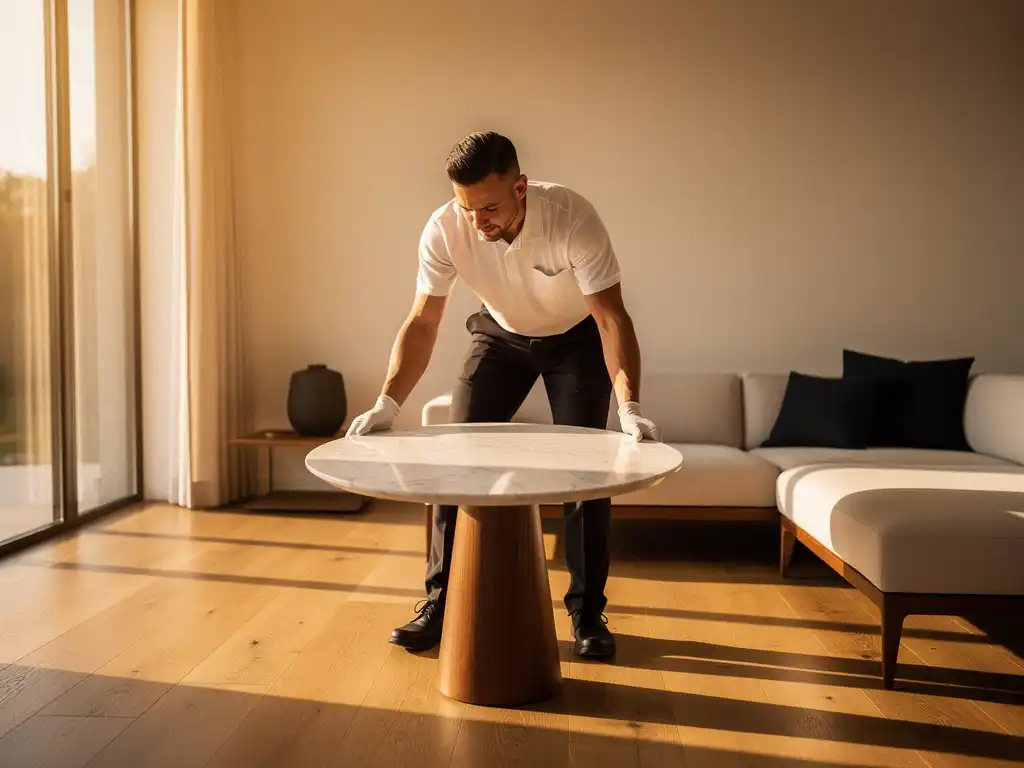
A luxury furniture delivery goes beyond simply getting a piece from point A to point B. It is a carefully managed, end-to-end service experience where the item arrives in perfect condition, on a confirmed schedule, with professional handling at every stage. For customers investing in high-end furniture, the delivery itself is part of the premium experience they have paid for.
The expectations that come with premium furniture service are specific and consistent across markets: white glove delivery, expert installation, proactive communication, and a clear process for resolving any issues. The sections below unpack each of these expectations in detail.
What makes a furniture delivery ‘luxury’ in the first place?
A luxury furniture delivery is defined by the level of care, professionalism, and service wrapped around the physical transport of high-value items. It is not simply faster or more expensive delivery. It means trained specialists handle the piece throughout, packaging is removed with care, and the customer receives a service that matches the quality of the product itself.
The term white glove delivery is often used to describe this standard. It typically includes pre-scheduled delivery windows, two-person handling teams, protective wrapping and padding during transit, in-room placement, and debris removal after delivery. Every touchpoint is designed to protect both the item and the customer experience.
What separates a luxury delivery from a standard one is accountability. In a premium furniture service, the logistics provider takes ownership of the item from the moment it leaves the warehouse to the moment it is placed exactly where the customer wants it. Nothing is left to chance, and nothing is left for the customer to sort out themselves.
What level of care do customers expect for high-end furniture pieces?
Customers expecting a luxury furniture delivery anticipate that their piece will be treated as irreplaceable. That means purpose-built protective packaging, climate-aware transport where relevant, and handlers who understand the fragility and value of what they are carrying. Rough handling, transit damage, or poor placement are simply not acceptable at this level.
In practical terms, the care expected covers several areas:
- Protective materials: Custom padding, blanket wrapping, and corner protection tailored to the specific piece
- Specialist vehicles: Trucks equipped with load-securing systems and suspension designed to reduce vibration during transit
- Trained personnel: Delivery teams who know how to carry, maneuver, and position large or fragile items without causing damage
- In-home protection: Floor coverings, door frame protection, and staircase guards used during the delivery itself
Customers also expect that the people delivering their furniture are knowledgeable about the product. A team that clearly understands the item builds confidence. One that seems unfamiliar with it does not, regardless of how carefully they move it.
We at Jan Krediet have built our furniture transport service around exactly this standard, combining specialist vehicles, experienced teams, and a network that spans across Europe and beyond.
How does communication differ in a luxury delivery experience?
In a luxury delivery experience, communication is proactive, precise, and personal. Customers are not chasing updates. Instead, they receive confirmed delivery windows in advance, timely notifications if anything changes, and a direct point of contact they can reach if they have questions. The communication standard reflects the same quality as the product being delivered.
This stands in clear contrast to standard delivery models where customers receive a broad time window and are expected to wait. For high-end furniture, that approach is not appropriate. Customers have often planned around the delivery, sometimes taking time off work or coordinating with interior designers or contractors.
Strong communication in a premium furniture service includes:
- A confirmed delivery appointment, not just an estimated window
- A reminder notification the day before delivery
- A real-time update or call on the day of delivery
- A named contact who can answer questions about the delivery status
- A follow-up after delivery to confirm satisfaction
The follow-up step is often overlooked but matters significantly. It signals that the logistics provider sees the relationship as ongoing, not transactional. For luxury brands and retailers, this kind of service continuity directly reflects on their own reputation.
What do customers expect when it comes to assembly and installation?
Customers receiving luxury furniture expect full assembly and installation to be included as part of the delivery service. They do not expect to assemble anything themselves, interpret instruction manuals, or deal with leftover packaging. A complete furniture installation service means the piece is fully set up, positioned correctly, and ready to use before the delivery team leaves.
For high-end furniture, assembly is often complex. Pieces may arrive in multiple components that require careful sequencing to assemble correctly. Wardrobes, modular sofas, dining sets, and bespoke storage units all require skilled hands and the right tools. Customers paying a premium expect that expertise to come with the delivery.
Beyond the physical assembly, placement matters. Customers expect the team to position the item exactly where they want it, make adjustments if needed, and take away all packaging materials. Leaving boxes, foam inserts, or plastic wrapping behind is a failure at this service level.
For large-scale projects such as office fit-outs, hotel furnishing, or residential developments, the installation expectation scales accordingly. Our project logistics team regularly handles full installations across more than 150 locations worldwide, covering everything from workstations and seating to decorative elements and bespoke joinery.
How should a logistics provider handle damage or delivery issues for luxury items?
When damage or a delivery issue occurs with a luxury item, the logistics provider must respond immediately, take full ownership, and resolve the situation without placing any burden on the customer. Speed and accountability are non-negotiable. Customers should never be left to navigate a claims process alone or wait weeks for a resolution on a high-value piece.
The way a provider handles problems is often what defines whether a customer relationship survives a difficult moment. A fast, honest, and proactive response can preserve trust even after a genuine mistake. A slow or defensive response, on the other hand, causes lasting damage to both the logistics provider and the brand whose product was delivered.
Best practice for handling damage or issues in a premium furniture service includes:
- Acknowledge immediately: Contact the customer as soon as the issue is identified, before they raise it themselves if possible
- Document thoroughly: Photograph the damage and log it with full detail to support a swift resolution
- Offer a clear next step: Whether that is a replacement delivery, repair, or compensation, the customer should know what happens next within 24 hours
- Follow through without reminders: The customer should not need to chase for updates on the resolution
- Review internally: Understand what caused the issue and adjust handling procedures to prevent recurrence
Transparency throughout this process is essential. Customers at the luxury end of the market are not necessarily unforgiving when things go wrong. What they are unforgiving of is being ignored, misled, or left without answers. A logistics provider that handles issues with the same professionalism it brings to a smooth delivery earns long-term trust.
If you want to learn more about how we approach furniture delivery at every stage, from transport and warehousing to installation and after-care, visit our about us page or get in touch with our team directly.