




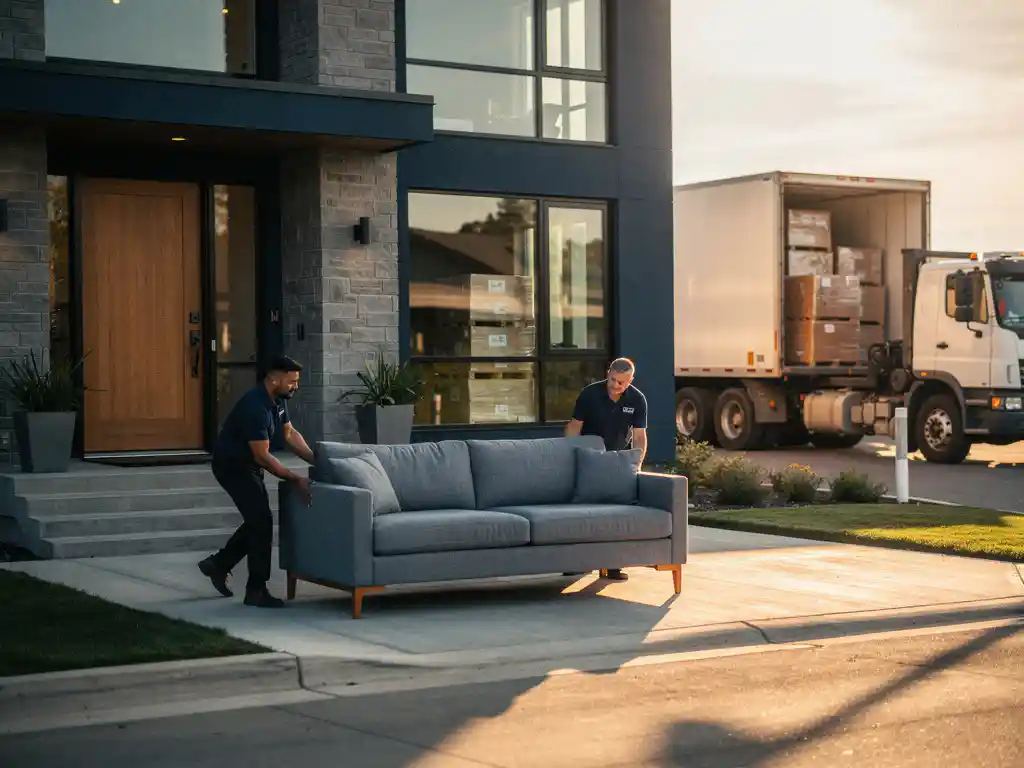
Direct delivery beats cross docking for furniture when shipments are large, go to a single destination, and require careful handling of bulky or fragile pieces. Cross docking wins when you need to consolidate smaller loads from multiple suppliers and distribute them efficiently across many locations. The right choice depends on your shipment size, destination count, product fragility, and the speed you need to deliver to end customers. The sections below break down each scenario in detail.
What are the main differences between direct delivery and cross docking?
Direct delivery moves furniture from origin to a single end destination without stopping at an intermediate facility. Cross docking routes shipments through a transit hub where goods from multiple suppliers are sorted, consolidated, and redistributed to multiple destinations, typically within 24 hours, without long-term storage. The core distinction is whether your freight touches a sorting facility between pickup and delivery.
In a direct delivery model, a truck is loaded at the supplier or warehouse and drives straight to the retailer, project site, or end customer. There is no rehandling, no sorting, and no consolidation at a hub. This keeps transit times short and reduces the risk of damage from repeated loading and unloading, which matters enormously for furniture.
Cross docking, by contrast, is built for distribution networks. Inbound shipments arrive at a hub, are broken down by destination, matched with outbound loads, and sent out on different vehicles. The efficiency gain comes from combining freight from many sources into optimally loaded outbound trucks rather than running multiple half-empty vehicles to the same area. For furniture transport, this means more coordination but potentially lower cost per unit when volumes are spread across many delivery points.
When does direct delivery work best for furniture shipments?
Direct delivery works best for furniture when you are shipping large, full-load quantities to a single location, when the items are particularly fragile or high-value, or when speed to a specific destination is the top priority. It eliminates intermediate handling, which is the biggest source of damage risk for upholstered pieces, glass components, and assembled furniture.
Project deliveries are a strong fit for direct delivery. When a developer needs an entire floor of office furniture installed on a specific date, routing that shipment through a cross docking hub introduces unnecessary risk and complexity. A dedicated vehicle goes directly to the site, the crew unloads and installs, and the job is done cleanly. We regularly handle exactly this kind of project logistics for large-scale fit-outs across Europe.
Direct delivery also makes sense when the supplier relationship is straightforward: one manufacturer, one buyer, consistent volume. If your supply chain does not require consolidation from multiple sources, adding a cross docking step creates cost and handling without adding value.
When is cross docking the smarter choice for furniture distribution?
Cross docking is the smarter choice for furniture distribution when you are sourcing from multiple suppliers and delivering to many retail locations or end customers across a wide geography. It reduces the number of vehicles needed, cuts empty running, and allows you to build optimally loaded outbound routes rather than managing dozens of small, separate shipments.
Retailers with regional store networks benefit significantly from cross docking. Rather than each supplier sending individual trucks to every store, all inbound freight converges at a hub, gets sorted by store, and leaves on consolidated outbound vehicles. This approach reduces total transport cost and simplifies supplier coordination because each supplier only needs to deliver to one point.
Cross docking also suits seasonal peaks and promotional campaigns, where volumes spike and the distribution network needs to absorb a large number of SKUs moving to many destinations simultaneously. The hub acts as a buffer that absorbs supply-side variability and smooths out the outbound delivery flow.
How does product type affect the choice between these two methods?
Product type is one of the most decisive factors when choosing between direct delivery and cross docking for furniture. Fragile, bulky, or assembled items favour direct delivery because each additional handling event increases damage risk. Flat-pack or boxed furniture is far more suited to cross docking because standardised packaging protects the product through the sorting and transfer process.
Fragile and assembled furniture
Upholstered sofas, glass-topped tables, and fully assembled pieces are vulnerable to scratching, compression, and impact damage every time they are moved. Direct delivery minimises the number of times these items change hands. When cross docking is unavoidable for these product types, specialised equipment, careful wrapping, and trained handlers are non-negotiable to maintain product integrity.
Flat-pack and boxed furniture
Flat-pack furniture travels well through cross docking hubs because it is designed for stacking, standardised pallet dimensions, and repeated handling. The packaging absorbs the stresses of sorting and transfer. For this product type, cross docking unlocks real efficiency gains without meaningfully increasing damage rates, making it the preferred method for high-volume flat-pack distribution networks.
What cost factors should be weighed when choosing a delivery model?
The key cost factors to weigh are vehicle utilisation, handling costs, transit time, and damage rates. Direct delivery tends to have higher transport cost per unit when loads are not full, but lower handling and damage costs. Cross docking lowers transport cost per unit through consolidation but adds hub handling fees and requires tight operational coordination to avoid delays.
Empty running is a significant cost driver in direct delivery. If a truck delivers a full load to one location and returns empty, the round-trip cost sits entirely on that shipment. Cross docking reduces empty running by building outbound loads from consolidated inbound freight, improving vehicle fill rates across the network.
Damage costs are often underestimated in the cross docking calculation. Every additional handling event carries a small probability of damage, and for high-value furniture, the cost of a single damaged piece can offset the consolidation savings from several shipments. Factor your product’s damage sensitivity and average unit value into the model before assuming cross docking is cheaper overall.
Warehousing costs also play a role. If your operation requires holding stock between inbound and outbound movements, a cross docking model that extends to short-term storage shifts into a different cost category. Understanding whether you need pure cross docking or a hybrid with warehousing support will significantly change the cost picture.
Can direct delivery and cross docking be combined in one furniture supply chain?
Yes, direct delivery and cross docking can absolutely be combined in a single furniture supply chain, and for many businesses this hybrid approach delivers the best overall result. High-value or fragile items move direct to destination, while standardised, boxed products flow through a cross docking hub for efficient regional distribution. The two models are not mutually exclusive.
A practical example is a furniture retailer that sources from both a premium upholstery manufacturer and a flat-pack supplier. The upholstered pieces ship direct to flagship stores or end customers to protect quality. The flat-pack range consolidates at a regional hub and distributes to a broader store network on optimised outbound routes. Both streams run in parallel under a single logistics plan.
The key to making a hybrid model work is clear segmentation rules. Define upfront which product categories, order sizes, or destination types trigger each method. Without that clarity, decisions get made inconsistently and the cost and service benefits of each model are diluted. A logistics partner with experience across both methods, and the flexibility to manage both within one operation, makes this kind of segmented approach far more practical to execute.
If you want to explore which combination of delivery methods suits your furniture supply chain, get in touch with us and we will work through the options with you.