




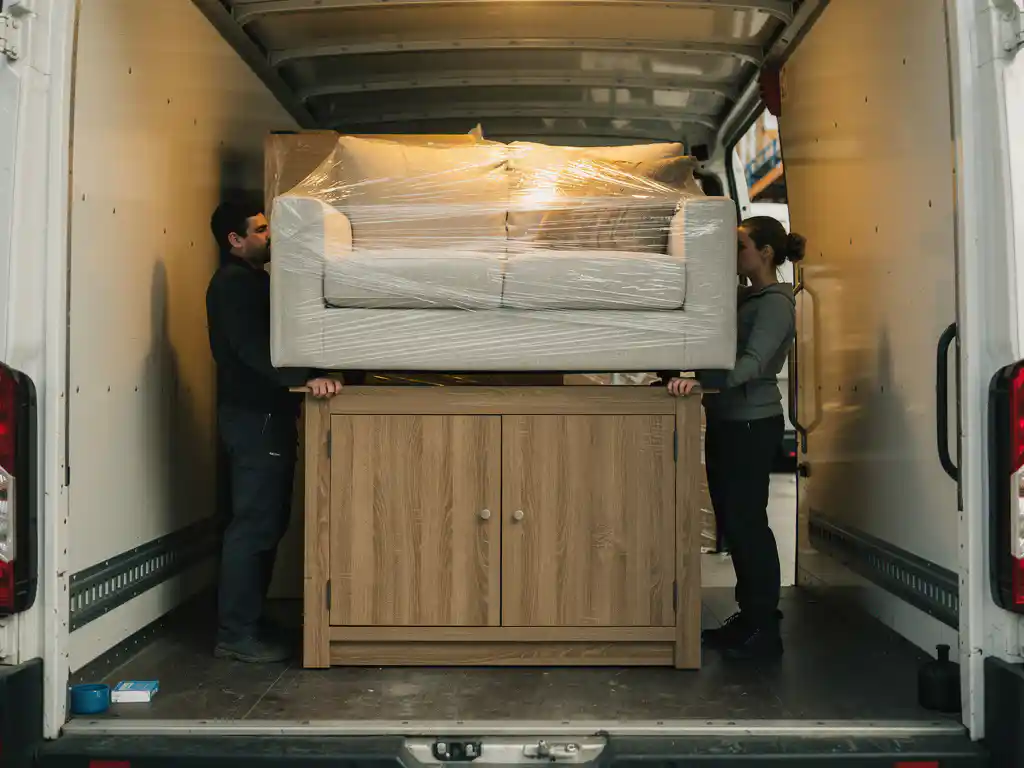
Load sequence in furniture transport is critical because it directly determines whether deliveries are completed efficiently, safely, and in the correct order. When furniture is loaded without a planned sequence, drivers face unnecessary unloading and reloading at stops, fragile items risk damage, and entire routes can fall apart. The sections below unpack the most important questions around load planning so you can understand exactly what goes into getting furniture from the warehouse to the final destination without problems.
What happens when furniture is loaded in the wrong order?
When furniture is loaded in the wrong order, the consequences ripple through the entire delivery route. Items destined for the first stop end up buried behind freight for later stops, forcing drivers to unload and reload at every location. This wastes time, increases the risk of damage to fragile pieces, and can cause delays that affect every customer on the route.
Furniture is among the most damage-sensitive freight in transport logistics. Upholstered sofas, glass cabinet doors, and flat-pack components all respond poorly to being shifted, stacked incorrectly, or wedged against items they were never meant to touch. When the loading order for furniture delivery ignores the sequence of stops, pieces get moved repeatedly, and each unnecessary movement is an opportunity for scratches, dents, or structural damage.
Beyond physical damage, an incorrect load sequence creates a knock-on effect for customer experience. If a delivery driver arrives at a home or project site and cannot access the correct items without first unloading half the truck, appointment windows get missed. In residential furniture delivery, this is frustrating. In large-scale project logistics, it can stall an entire installation schedule.
How does load sequence affect delivery route planning?
Load sequence and route planning are inseparable in furniture transport logistics. The loading order must mirror the delivery route in reverse, meaning the last stop on the route is loaded first and the first stop is loaded last. This reverse-loading principle ensures that each item is accessible when the driver arrives at each location, without disturbing freight for subsequent stops.
Effective furniture transport planning begins long before a vehicle leaves the warehouse. Route optimisation software calculates the most efficient sequence of stops based on geography, time windows, and access requirements. Once the route is confirmed, the load plan is built around it. Changing the route after loading has started can invalidate the entire sequence, which is why both plans must be locked in together.
Multi-stop routes add another layer of complexity. A vehicle making eight residential deliveries in a single day needs a load plan that accounts for the size and fragility of each item at each stop, not just the order of addresses. A large dining table destined for stop three cannot be placed where it blocks access to smaller items for stops one and two, even if the table is heavier and would normally be positioned at the front of the load for stability reasons. These competing priorities are exactly what professional load planning is designed to resolve.
What factors determine the correct loading order for furniture?
The correct loading order for furniture is determined by a combination of route sequence, item weight and fragility, packaging type, and the physical dimensions of the vehicle. No single factor overrides the others. Load planning furniture effectively means balancing all of them simultaneously to produce a sequence that is both operationally logical and physically safe.
The most important factors include:
- Delivery sequence: Items for the first stop must be the last loaded and positioned nearest the vehicle doors for easy access.
- Weight distribution: Heavier items such as solid wood frames and wardrobes are loaded low and towards the front of the cargo area to maintain vehicle stability.
- Fragility: Glass components, upholstered pieces, and finished surfaces require protective positioning away from hard edges and heavy freight.
- Packaging format: Flat-pack items stack differently from assembled furniture, and the two often need to be separated within the load to prevent compression damage.
- Item dimensions: Oversized pieces dictate placement options and can limit where smaller items can be positioned around them.
- Access constraints at delivery sites: If a site has restricted access or requires specific equipment, the items for that stop may need to be positioned for quicker unloading regardless of other factors.
Experienced logistics teams treat these factors as a checklist that is worked through systematically for every vehicle, every day. The result is a load plan that looks straightforward from the outside but represents a significant amount of pre-departure coordination.
How does load sequencing differ for project logistics versus standard deliveries?
Load sequencing for project logistics is considerably more complex than for standard residential furniture deliveries. In a standard delivery, the goal is to get the right item to the right address in the right condition. In project logistics, the goal is to deliver and install an entire furnished environment, often across multiple floors or zones, in a sequence that matches the installation schedule on site.
For large-scale projects such as office fit-outs, hotel furnishings, or residential developments, the load sequence must align with the installation order room by room or floor by floor. Items needed on the top floor may need to arrive first if elevator access is limited, or last if they are the most fragile and need to be protected during transit. The logistics team must coordinate with the installation crew to understand exactly what is needed where and when.
Our project logistics approach accounts for these variables by treating each project as its own logistics plan. This includes pre-delivery site surveys, coordination with project managers, and load plans that are built specifically around the installation sequence rather than a standard route. Through our membership of the MACH-3000 network, we deliver project furnishing solutions across more than 150 locations worldwide, which means load sequencing must also account for international transport legs, customs clearance timings, and local delivery conditions.
What role does warehouse preparation play in load sequence?
Warehouse preparation is the foundation of effective load sequencing. Before a single item reaches the vehicle, the warehouse team must have picked, checked, and staged every piece in the correct order for loading. If warehouse preparation is disorganised or incomplete, the load sequence breaks down at the source, and no amount of careful in-vehicle planning can compensate for items that are in the wrong location or not ready on time.
Good warehouse preparation for furniture shipping order begins with a pick list that reflects the confirmed load plan. Items are pulled from storage in the reverse order they will be loaded, so the first items to be loaded are the last to be staged at the loading dock. This requires clear labelling, accurate inventory positioning, and a warehouse layout that supports efficient movement of large, awkward pieces without creating bottlenecks.
Our warehousing operations are designed specifically to support this kind of sequence-driven preparation. With over 60,000 square metres of warehouse space, our teams can stage complex multi-stop loads and project deliveries without the congestion that undermines load planning in smaller facilities. Assembly work, quality checks, and protective wrapping all take place in the warehouse before departure, so vehicles leave with a load that is already prepared for the sequence ahead.
The connection between warehouse readiness and transport efficiency is direct. A well-prepared load leaves on time, follows its planned route without interruption, and arrives at each stop with the right items accessible and undamaged. That outcome starts not at the loading dock, but hours earlier when the warehouse team begins staging for the next day’s deliveries.