


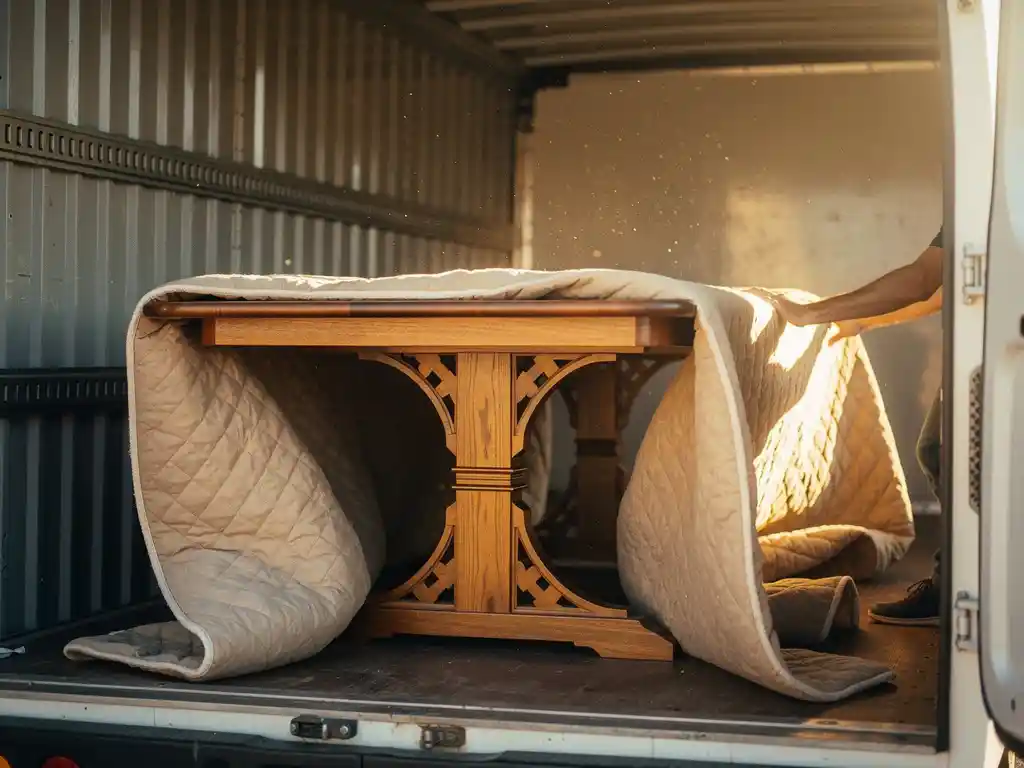
Standard logistics fails custom-made furniture because the entire system is built around speed, volume, and uniformity — not fragility, uniqueness, or precision. Bespoke pieces are one-of-a-kind, often oversized, and built to exact specifications that standard carriers have no framework to protect. The sections below break down exactly where the system fails and what a proper alternative looks like.
What makes custom-made furniture so difficult to transport?
Custom-made furniture is difficult to transport because each piece is unique in size, weight, material, and structural vulnerability. Unlike mass-produced items designed around standard pallet dimensions and box formats, bespoke furniture rarely fits neatly into conventional freight systems. There are no off-the-shelf packaging solutions, no standard handling protocols, and no room for the rough treatment that general cargo routinely absorbs.
The challenges begin before the truck even arrives. Bespoke pieces are often large, asymmetrical, or made from materials that react badly to temperature changes, humidity, or pressure. A handcrafted hardwood dining table, a custom upholstered sofa, or a made-to-measure wardrobe all have different load-bearing points, different wrapping requirements, and different risk profiles. Treating them as interchangeable freight units is where the problems start.
There is also the matter of lead time and expectations. Customers who commission custom furniture have waited weeks or months for their order. They expect delivery to feel like the final step in a premium experience, not a standard drop-off. That expectation alone sets bespoke furniture logistics apart from ordinary freight.
Why do standard carriers damage bespoke furniture more often?
Standard carriers damage bespoke furniture more often because their operations are optimised for throughput, not care. Freight moves quickly through sorting hubs, gets stacked with unrelated cargo, and is handled by teams with no specific training in fragile or high-value goods. A custom piece that took skilled craftspeople weeks to produce can be scratched, dented, or structurally compromised in minutes.
The core issue is that standard logistics is a volume game. Carriers move thousands of shipments daily, and the handling speed required to sustain that volume is fundamentally incompatible with the careful, considered movement that bespoke furniture demands. Soft furnishings get compressed under heavier loads. Veneer surfaces get abraded by inadequate wrapping. Legs and protruding elements snap under lateral pressure.
Packaging is another critical failure point. Standard carriers typically accept items already packaged by the sender, with no assessment of whether that packaging is appropriate for the journey ahead. Bespoke furniture often arrives from makers in basic protective wrapping that is simply not designed to survive a multi-stop freight network. Without specialist repacking or blanket wrapping at the point of collection, damage is almost inevitable.
There is also the claims process to consider. When a standard carrier damages a bespoke item, the replacement cost is rarely recoverable in full. Standard freight insurance is calculated on weight or declared value, not on the true cost of remaking a one-of-a-kind piece or the reputational damage to the furniture brand that commissioned the delivery.
How does standard warehousing fail custom furniture orders?
Standard warehousing fails custom furniture orders because it is designed for fast-moving stock, not careful storage of high-value, fragile, or made-to-measure pieces. Generic warehouses prioritise density and turnover. Furniture gets stacked in ways that cause surface damage, stored in environments that are not climate-controlled, and retrieved by teams unfamiliar with the specific handling requirements of each piece.
For custom furniture brands, warehousing is rarely just a holding function. Pieces often need to be received, inspected, assembled, or paired with other items before they go out for delivery. Standard warehouses are not equipped for any of that. There are no assembly areas, no quality control processes for fragile goods, and no systems for tracking individual bespoke items through a pick-and-pack workflow.
Order accuracy is also a persistent problem. In a standard warehouse environment, a custom sofa in colour A and a custom sofa in colour B look almost identical to a generic picker. Without specialist processes and trained staff, the wrong items get dispatched, and the consequences for a bespoke furniture brand are severe: a missed installation window, a disappointed customer, and a costly return journey for a piece that may not survive the round trip.
Our dedicated warehousing solutions are built specifically around the needs of furniture and interior brands, with proper storage conditions, assembly capabilities, and item-level tracking that generic logistics providers simply cannot match.
What does specialist furniture logistics actually include?
Specialist furniture logistics includes the full chain of services needed to move bespoke pieces safely from manufacturer to end customer: dedicated transport with trained crews, appropriate packaging and blanket wrapping, specialist warehousing, in-home delivery, assembly, installation, and debris removal. It is a fundamentally different service model from standard freight, designed around the product and the customer experience rather than operational throughput.
At the transport level, specialist carriers use vehicles configured for furniture: padded interiors, load restraint systems designed for irregular shapes, and tail lifts appropriate for heavy or oversized pieces. Drivers and delivery teams are trained in furniture handling, not just general freight movement. They know how to navigate tight stairwells, protect door frames, and position pieces without dragging them across floors.
White glove delivery is a core component of specialist furniture logistics. This means delivery to the room of choice, unpacking, assembly where required, and removal of all packaging materials. For customers who have invested significantly in bespoke pieces, this level of service is not a luxury — it is the expected standard.
Beyond delivery, specialist logistics providers handle the complexity of furniture supply chains: coordinating deliveries across multiple suppliers, managing project installations for hospitality or commercial interiors, and providing the kind of real-time visibility that allows brands to communicate confidently with their customers. Our furniture transport services cover all of these elements, including global reach through the MACH-3000 network of specialist furniture carriers.
When should a furniture brand switch to a specialist logistics partner?
A furniture brand should switch to a specialist logistics partner when damage rates are rising, customer complaints about delivery are increasing, or the brand’s growth is being held back by logistics that cannot scale with the complexity of the product range. If your current carrier cannot handle white glove delivery, assembly, or project installations, you have already outgrown standard logistics.
There are several clear signals that the switch is overdue:
- Damage claims are frequent and difficult to resolve through standard freight insurance
- Customer satisfaction scores drop specifically around the delivery experience
- Your team spends significant time managing logistics exceptions and complaints
- You are losing commercial or hospitality project contracts because you cannot guarantee installation-ready delivery
- International growth is stalled because your carrier has no specialist furniture network abroad
The timing of the switch also matters. Brands that wait until logistics failures become a reputational crisis have a harder recovery. Switching proactively, ideally before entering a new market or scaling a product line, allows the specialist partner to design the right solution from the start rather than patching problems in an existing broken setup.
For brands operating in the furniture, kitchen, or interior design space, the question is rarely whether to switch but when. The longer bespoke furniture moves through a system not built for it, the greater the cumulative cost in damaged goods, lost customers, and missed opportunities. If you are ready to explore what a purpose-built solution looks like, get in touch with our team to discuss your specific logistics needs.