




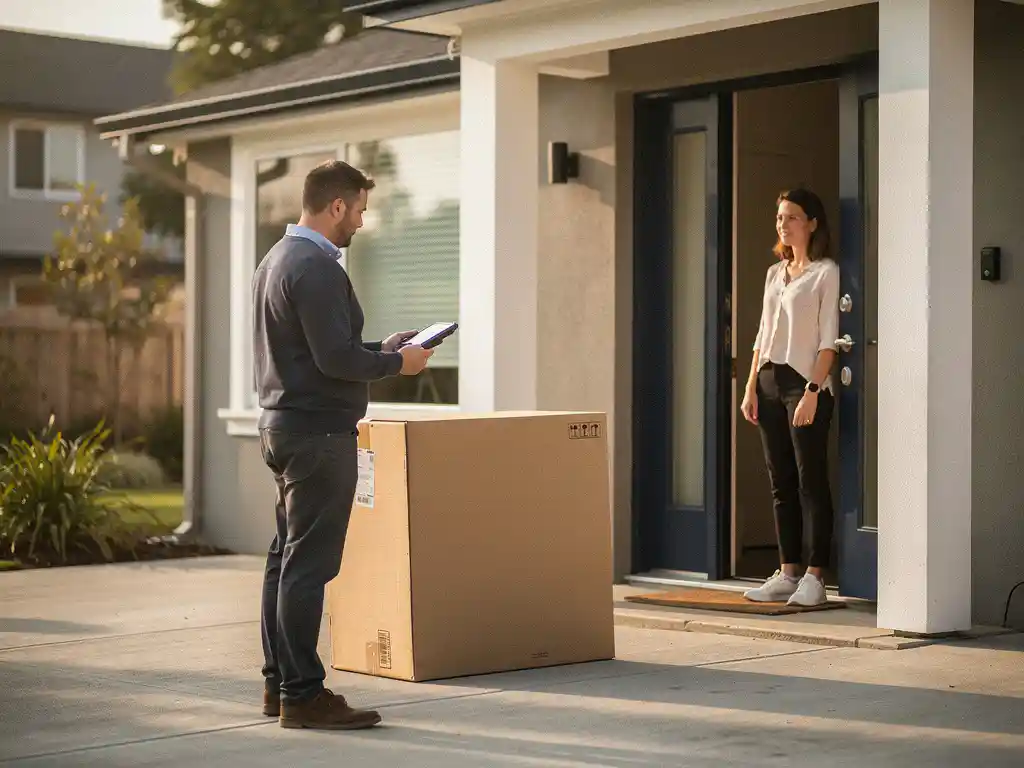
Customers expect furniture delivery tracking to give them a precise delivery window, real-time location updates, and proactive communication when anything changes. Unlike standard parcel tracking, furniture delivery involves larger, more complex items that often require assembly or installation, so the stakes around timing and coordination are much higher. The sections below break down exactly what good track and trace looks like in furniture logistics and what happens when it falls short.
How does track and trace actually work in furniture delivery?
Track and trace in furniture delivery works by assigning a unique shipment reference to each order, then using GPS-enabled vehicles, warehouse scanning, and driver apps to update the order’s status at every stage of the journey. Customers receive these updates through SMS, email, or a branded tracking portal, giving them visibility from warehouse dispatch to doorstep delivery.
The process typically moves through several stages: order confirmation, warehouse pick and pack, loading onto the delivery vehicle, en-route status updates, and a final estimated time of arrival notification. In furniture transport, these stages carry more weight than in standard parcel delivery because the delivery often requires someone to be home, furniture to be moved, or an installation team to be ready.
Modern furniture logistics providers use telematics systems that pull GPS data from vehicles and feed it directly into customer-facing portals. When a driver completes a delivery stop, the system automatically moves the next customer’s order to active status and recalculates the estimated arrival time. This dynamic adjustment is what separates a genuinely useful tracking system from one that simply shows a static “out for delivery” message.
What real-time information do customers want during furniture delivery?
Customers want three core pieces of real-time information during furniture delivery: a precise delivery window (ideally a two-hour slot rather than an all-day estimate), live or frequently refreshed location data showing where the driver is, and immediate notification if anything causes a delay. These expectations have risen significantly as same-day parcel tracking has become the norm.
Beyond the basics, customers also value:
- Confirmation of the delivery crew’s name and contact number
- A clear indication of whether assembly or installation is included
- The ability to reschedule or adjust the delivery window without calling a contact centre
- Proof of delivery, including a photo or digital signature confirmation
The desire for a named contact is particularly relevant in furniture logistics. When a large sofa or a full kitchen is being delivered, customers feel more comfortable knowing who will be arriving and that the crew is experienced with the specific items being delivered. Delivery transparency is not just about location data; it is about building confidence that the right people are handling valuable, often fragile goods.
Why do customers abandon furniture retailers with poor delivery tracking?
Customers abandon furniture retailers with poor delivery tracking because uncertainty around a large, high-value purchase creates anxiety that damages brand trust. When a customer has taken a day off work, moved old furniture, or booked an installer, a vague or unreliable tracking experience feels like a broken promise, not just an inconvenience.
The cost of poor delivery tracking goes beyond a single lost sale. Customers who experience a frustrating delivery are far more likely to leave negative reviews, warn friends and family, and avoid the retailer entirely for future purchases. In furniture retail, where items are expensive and repeat purchases happen over years rather than weeks, the long-term revenue impact of one bad delivery experience is substantial.
Poor tracking also drives unnecessary contact centre volume. When customers cannot find out where their delivery is, they call. Each inbound call costs the retailer time and money, and the interaction rarely leaves the customer feeling reassured. Investing in robust furniture delivery tracking is therefore not just a customer experience decision; it is a direct cost-reduction strategy.
What’s the difference between track and trace for furniture versus standard parcels?
The key difference between furniture delivery tracking and standard parcel tracking is complexity. Standard parcels move through automated sorting hubs and are delivered by a single driver in high volumes. Furniture shipments often involve two-person crews, specialist vehicles, pre-booked time slots, and on-site services like assembly or room placement, all of which require a more detailed and communicative tracking approach.
A standard parcel tracking system only needs to confirm whether a box has arrived. Furniture tracking needs to communicate:
- Whether the delivery includes carry-in or room-of-choice service
- How many crew members will attend
- Whether packaging removal is part of the service
- Any access requirements the crew needs to know in advance
Furniture items are also more likely to require a signature, a damage inspection on delivery, or a scheduled return visit if something is wrong. The tracking system needs to support these outcomes rather than simply confirming a drop-off. This is why specialist contract logistics providers build bespoke tracking workflows for furniture clients rather than applying a generic parcel model.
How should furniture logistics providers communicate delivery updates?
Furniture logistics providers should communicate delivery updates through a combination of automated SMS and email notifications at key milestones, a self-service tracking portal for on-demand status checks, and proactive outreach by call or message when a delay is confirmed. The communication should be timely, specific, and easy to act on without requiring the customer to contact anyone.
Timing matters as much as channel. A delivery confirmation the evening before, followed by a two-hour window notification on the morning of delivery, followed by a “driver is next” alert when the crew is close, covers the moments customers actually need information. Sending a single notification at the point of dispatch and then going silent until the driver rings the doorbell is one of the most common failures in furniture delivery communication.
Language and tone also play a role. Updates should be clear and jargon-free, confirming what is happening and what, if anything, the customer needs to do. If a delay occurs, the message should acknowledge the inconvenience, provide a revised window, and offer a simple way to reschedule if the new time does not work. Customers respond far better to honest, early communication than to silence followed by a missed delivery.
What track and trace features should furniture retailers prioritise?
Furniture retailers should prioritise track and trace features that directly reduce customer uncertainty and minimise the need for inbound contact. The most impactful features are dynamic estimated time of arrival updates, proactive delay notifications, a self-service rescheduling option, and proof of delivery with photographic confirmation.
When building or selecting a tracking solution, the following features deliver the greatest return:
- Dynamic ETA: A delivery window that updates in real time as the driver’s route progresses, not a static time set the night before
- Proactive delay alerts: Automatic customer notification the moment a delay is identified, with a revised window included
- Self-service rescheduling: A link in the tracking notification that lets customers change their delivery slot without calling
- Crew identification: The names of the delivery crew and a direct contact number for the day of delivery
- Digital proof of delivery: A photo and signature confirmation sent to the customer immediately after delivery
- Damage reporting flow: A simple process within the tracking portal for flagging damage at the point of delivery
Retailers who work with an experienced logistics partner gain access to these capabilities without building them from scratch. We have developed tracking and communication workflows specifically for furniture and interior deliveries, where the complexity of the shipment demands more than a standard parcel solution. If you want to understand how we approach delivery transparency for furniture clients, our client cases offer a practical starting point, or you are welcome to get in touch directly to discuss your requirements.