




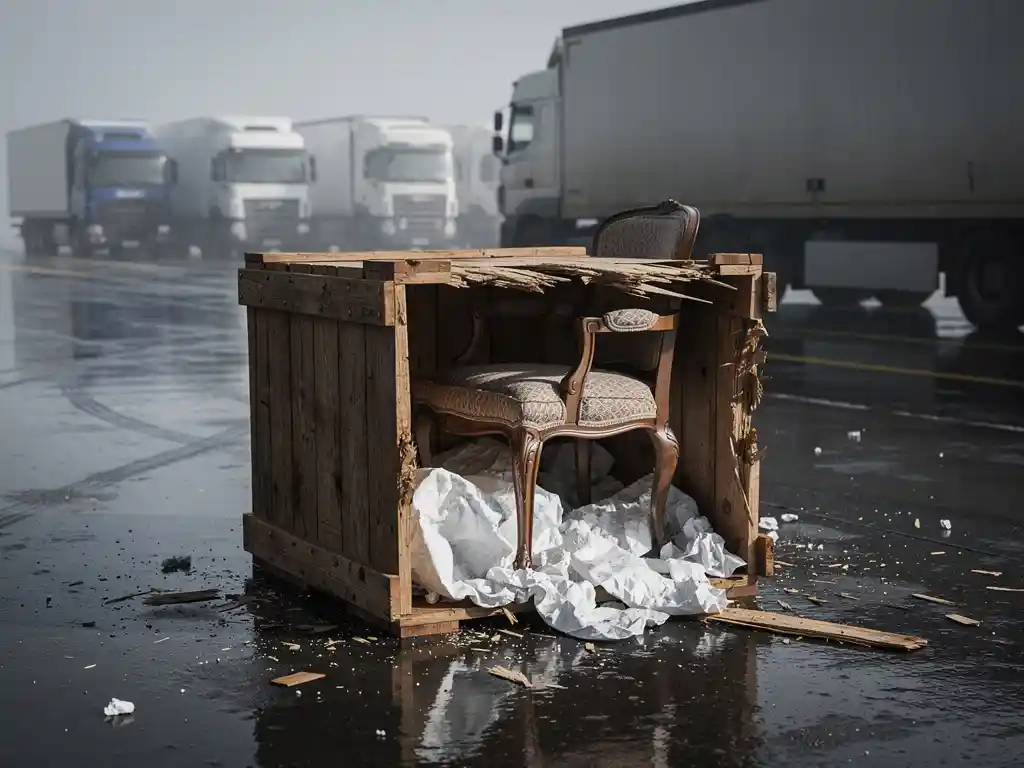
Exporting furniture across Europe comes with a distinct set of pitfalls that go well beyond standard freight challenges. Regulatory complexity, fragile cargo, inconsistent last-mile infrastructure, and hidden costs combine to make cross-border furniture shipping one of the more demanding logistics operations in the industry. Whether you are a manufacturer, retailer, or project developer, understanding these risks upfront is the difference between a smooth delivery and an expensive failure. The sections below break down the most common challenges and how to address them.
What customs and regulatory hurdles apply to cross-border furniture shipments?
Cross-border furniture shipments within the EU benefit from the single market, but shipments involving non-EU countries face customs declarations, tariff classifications, and compliance documentation that can delay or block delivery. Even within the EU, product safety regulations, material compliance requirements, and country-specific labelling rules create friction that unprepared exporters often underestimate.
Furniture exported outside the EU, for example to the UK post-Brexit, requires full customs documentation, including commodity codes, proof of origin, and, in some cases, conformity certificates. Getting the Harmonised System (HS) code wrong for a product can trigger reclassification, unexpected duties, or clearance delays at the border. Wooden furniture, in particular, may be subject to phytosanitary requirements if solid wood packaging materials are used, meaning incorrect treatment or missing ISPM 15 certification can result in cargo being held or returned.
Material compliance is another layer of complexity. Furniture containing certain foams, adhesives, or surface coatings may need to meet REACH regulations or specific country fire safety standards. These requirements vary by destination market, and what is fully compliant in the Netherlands may require additional documentation or modification for the German or French market. Working with a logistics partner who understands furniture export regulations across European markets helps prevent costly compliance surprises.
Why does furniture get damaged more often in export than domestic transport?
Furniture sustains more damage during export than domestic transport because cross-border shipments involve longer transit times, more handling touchpoints, and greater exposure to vibration, temperature variation, and moisture. Each additional transfer point between origin and destination is an opportunity for impact damage, scratching, or structural stress on joints and finishes.
Domestic deliveries typically move from a single warehouse to a final address with minimal reloading. Export shipments, by contrast, often pass through consolidation hubs, cross-dock facilities, and multiple vehicles before reaching the end customer. Upholstered pieces, glass components, and high-gloss finishes are particularly vulnerable during these transitions. Flat-pack furniture fares better, but assembled or semi-assembled pieces require specialist handling at every stage.
Packaging standards that work for short domestic runs frequently prove inadequate over longer European routes. Export-grade packaging needs to account for stacking pressure, lateral movement, and humidity changes across different climates. Corner protectors, custom foam inserts, and reinforced cartons all add cost but significantly reduce damage claims. Carriers who specialise in furniture transport, rather than general freight operators, understand these requirements and equip their vehicles and teams accordingly. We operate dedicated furniture transport solutions with trained specialists who handle vulnerable pieces under controlled conditions, reducing damage risk at every stage of the journey.
How do delivery complexity and last-mile challenges differ across European countries?
Last-mile delivery complexity for furniture varies significantly across Europe because of differences in urban infrastructure, building access, customer expectations, and local regulations. What works efficiently in the Netherlands can be logistically impractical in parts of southern Italy or central Paris, where narrow streets, restricted delivery windows, and high-rise buildings without lifts create real operational challenges.
Urban access and infrastructure differences
Northern European cities generally have better road access, more standardised address systems, and clearer delivery regulations. In contrast, many Mediterranean cities have historic centres with restricted vehicle access zones, time-limited delivery windows, and roads that are simply too narrow for standard furniture delivery vehicles. Exporters who do not account for these differences when planning routes often face failed deliveries, penalty charges, and rebooking costs.
Customer expectations and service standards
Customer expectations around delivery also differ by market. Scandinavian consumers often expect precise time-slot delivery and room-of-choice placement, while in some Eastern European markets, kerbside delivery remains standard. Failing to match the service level to local expectations leads to complaints, returns, and reputational damage. Exporters need a logistics partner with genuine on-the-ground knowledge of each target market rather than a one-size-fits-all approach to European furniture logistics.
What are the hidden costs of exporting furniture to European markets?
The hidden costs of exporting furniture to European markets typically include failed delivery charges, damage claims, customs delays, returns handling, compliance modifications, and the administrative burden of managing multiple carrier relationships. These costs rarely appear in an initial freight quote but can significantly erode margin on export orders.
Failed first-time deliveries are one of the most common hidden costs in furniture export. When a delivery fails because the customer was unavailable, the address was inaccessible, or the item did not fit through the entrance, the exporter absorbs the cost of rescheduling, storage, and a second delivery attempt. Across a large volume of shipments, failed delivery rates of even a few percent translate into substantial operational costs.
Returns are another underestimated expense. Furniture that is damaged in transit or refused by the customer must be transported back, assessed, repaired or written off, and potentially reshipped. The logistics cost of a single return can exceed the original delivery cost. Customs delays add further expense through storage fees at bonded warehouses, demurrage charges, and the administrative cost of resolving documentation issues. Exporters who calculate only the outbound freight rate when assessing export viability consistently find that the true cost of cross-border furniture shipping is higher than anticipated.
How can working with a specialist logistics partner reduce these risks?
Working with a specialist logistics partner reduces the risks of exporting furniture across Europe by consolidating expertise, infrastructure, and carrier relationships under one roof. A specialist understands furniture-specific handling requirements, has established processes for customs compliance, and maintains last-mile networks with local knowledge in each target market, all of which reduce damage, delays, and unexpected costs.
Generalist freight forwarders treat furniture like any other cargo. Specialist partners invest in the right vehicle configurations, trained handling teams, and packaging protocols that protect high-value and fragile pieces throughout the journey. This difference in approach directly reduces damage rates and the associated costs of claims and returns.
On the regulatory side, a specialist partner with experience in European furniture logistics maintains current knowledge of customs requirements, material compliance standards, and documentation processes across multiple markets. Rather than leaving exporters to navigate these requirements independently, they provide a managed solution that keeps shipments moving. We have been active in furniture logistics since 1924 and operate as part of the MACH-3000 network, giving us specialist reach across more than 150 locations worldwide. For businesses looking to scale their European furniture export operations without absorbing the full complexity internally, partnering with a dedicated specialist is the most effective way to manage risk while maintaining delivery quality.