




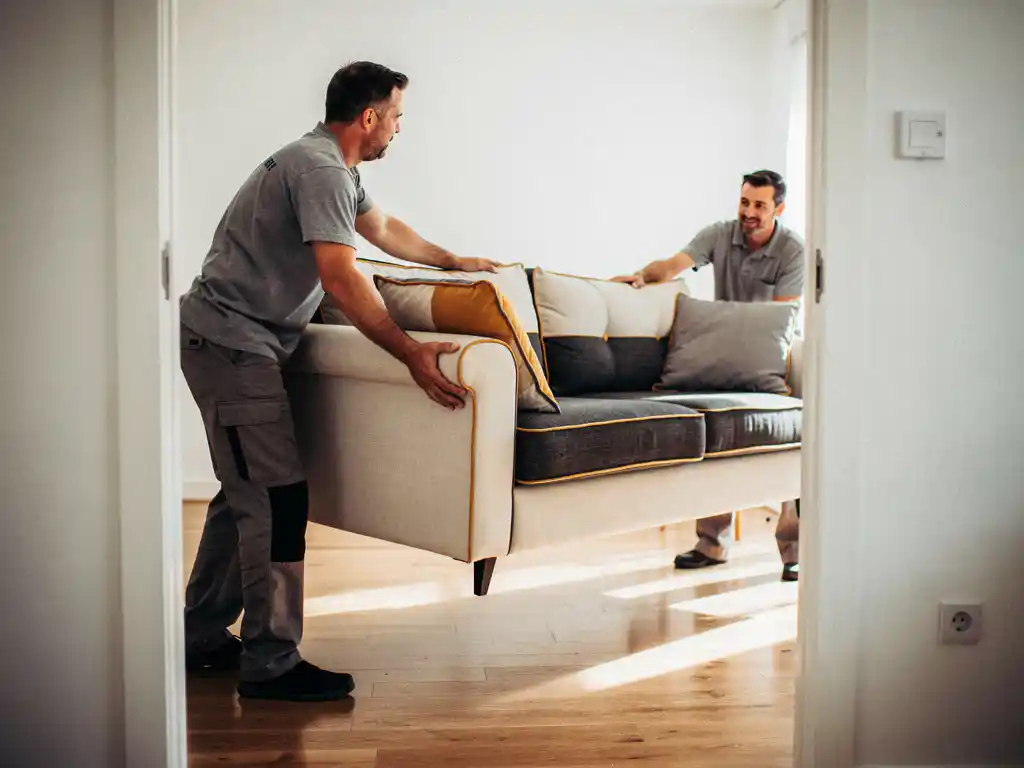
Two-man delivery for furniture is necessary whenever an item is too heavy, too bulky, or too fragile for a single person to handle safely. As a general rule, any furniture piece weighing more than 30 kilograms or requiring careful maneuvering through staircases, narrow hallways, or tight doorways calls for a two-person team. The sections below break down exactly when two-man delivery applies, what it includes, and how it shapes the broader furniture logistics process.
What types of furniture require two-man delivery?
Large sofas, double and king-size beds, wardrobes, dining tables, and modular shelving units almost always require two-man delivery. These items share a common set of characteristics: significant weight, awkward dimensions, or a combination of both that makes single-person handling unsafe and impractical. Any furniture piece that cannot be carried comfortably by one person without risk of injury or product damage falls into this category.
Beyond weight alone, shape plays a major role. A large sectional sofa may not be exceptionally heavy, but its length and flexibility make it nearly impossible for one person to navigate through a front door, around a corner, or up a flight of stairs. Similarly, glass-fronted display cabinets require two people simply to keep them stable and prevent the glass panels from shifting during movement. Flat-pack items that need on-site assembly after delivery may also require a two-man team if the components are numerous or the assembly process involves lifting heavy structural parts into position.
Why can’t large furniture be delivered by one person?
Large furniture cannot be safely delivered by one person because of the combined risks of physical injury, product damage, and property damage. When a single person attempts to maneuver a heavy or oversized item, they lose their balance, cannot adequately protect corners and surfaces, and have no way to safely navigate obstacles like stairs or tight turns without a second set of hands.
From a health and safety standpoint, manual handling regulations in most European countries set clear limits on the weight a single worker should lift without assistance. Furniture regularly exceeds these thresholds. Beyond regulatory compliance, there is a practical reality: a wardrobe being tilted to fit through a doorway needs one person to guide the top and another to control the base. Without that coordination, the item can tip, scratch walls, damage door frames, or fall entirely. The risk to both the delivery operative and the end customer’s property is simply too high to ignore.
There is also the question of accountability. A carrier delivering high-value furniture pieces is responsible for the condition of the item at the point of handover. A single-person delivery that results in a scratched sofa leg or a cracked cabinet panel creates a costly returns and replacement process that far outweighs the savings made by skipping the second operative.
What does a two-man delivery service actually include?
A two-man delivery service typically includes doorstep delivery, room-of-choice placement, unpacking, and in many cases basic assembly or installation. The two operatives work together to carry the item safely into the customer’s home, position it in the designated room, remove packaging materials, and check the item for any transit damage before the customer signs off on the delivery.
The exact scope varies depending on the retailer’s agreement with their logistics provider. At the more comprehensive end, a furniture transport service can include full assembly of flat-pack components, installation of wardrobes or kitchen units, connection of electrical recliner mechanisms, and removal of old furniture. At the more basic end, it may simply mean two people carrying the item to the correct room rather than leaving it at the front door.
For project deliveries such as furnishing offices, hotels, or residential developments, two-man teams often handle the complete installation of furniture, wall decorations, and accessories across multiple rooms or floors. This is a more structured operation that requires pre-planning, coordination with site managers, and strict scheduling to avoid disrupting other trades on site.
When is standard delivery sufficient for furniture?
Standard single-person delivery is sufficient for smaller, lighter furniture items that can be safely handled by one operative without risk of injury or damage. This typically applies to items such as bedside tables, occasional chairs, small coffee tables, desk chairs, and flat-pack boxes that a single person can carry comfortably and maneuver through standard doorways without assistance.
The key criteria are weight, dimensions, and the nature of the delivery location. If an item weighs under 30 kilograms, fits through a standard door in its packaging, and is being delivered to a ground-floor address with easy access, standard delivery is usually adequate. Online retailers selling smaller home accessories or lightweight furniture pieces often default to standard courier delivery for exactly this reason.
However, retailers should be cautious about underestimating the complexity of a delivery. A lightweight but very long item, such as a narrow console table in a tall box, can still require two people to carry safely without damaging the packaging or the product inside. When in doubt, upgrading to a two-man service protects both the customer experience and the retailer’s returns rate.
How does two-man delivery affect furniture logistics costs?
Two-man delivery increases furniture logistics costs compared to standard single-person delivery, primarily because it requires two operatives per drop, a larger vehicle in many cases, and more precise route planning to keep delivery windows manageable. These additional inputs translate directly into higher per-delivery costs, which are either absorbed by the retailer or passed on to the customer as a delivery surcharge.
The cost increase is real, but so is the cost of not using two-man delivery when it is needed. Failed deliveries, damaged goods, customer complaints, and returns all carry significant financial consequences. Industry experience consistently shows that investing in the right delivery method for the product type reduces overall logistics costs when the full picture is considered, including returns handling, replacement shipments, and customer service overhead.
For retailers operating at volume, partnering with a specialist in home delivery furniture logistics allows for more efficient route consolidation, better vehicle utilization, and shared network costs that bring the per-delivery price down. A dedicated furniture logistics partner with the right infrastructure can make two-man delivery economically viable even for mid-sized retailers.
Who is responsible for arranging two-man delivery — retailer or carrier?
The retailer is ultimately responsible for ensuring the correct delivery method is arranged for each product, but the carrier is responsible for executing it safely and to the agreed standard. In practice, this means the retailer must specify at the point of booking whether a two-man delivery service is required, and the carrier must have the operational capacity and trained staff to fulfill it.
This distinction matters because problems often arise at the boundary between these two responsibilities. A retailer who books standard delivery for an item that clearly requires two operatives shifts the risk onto the carrier, who may refuse the delivery or attempt it unsafely. Conversely, a carrier who accepts a booking without flagging that the item requires a two-man team and then delivers it with one person creates liability for both parties if something goes wrong.
The clearest arrangements are those where the retailer and carrier have an established contract that defines which product categories automatically trigger a two-man delivery requirement. This removes ambiguity, ensures every delivery is resourced correctly from the outset, and protects the end customer from a poor delivery experience. If you are a retailer looking to establish that kind of structured partnership, get in touch with us to discuss how we can support your furniture delivery operations across Europe.