




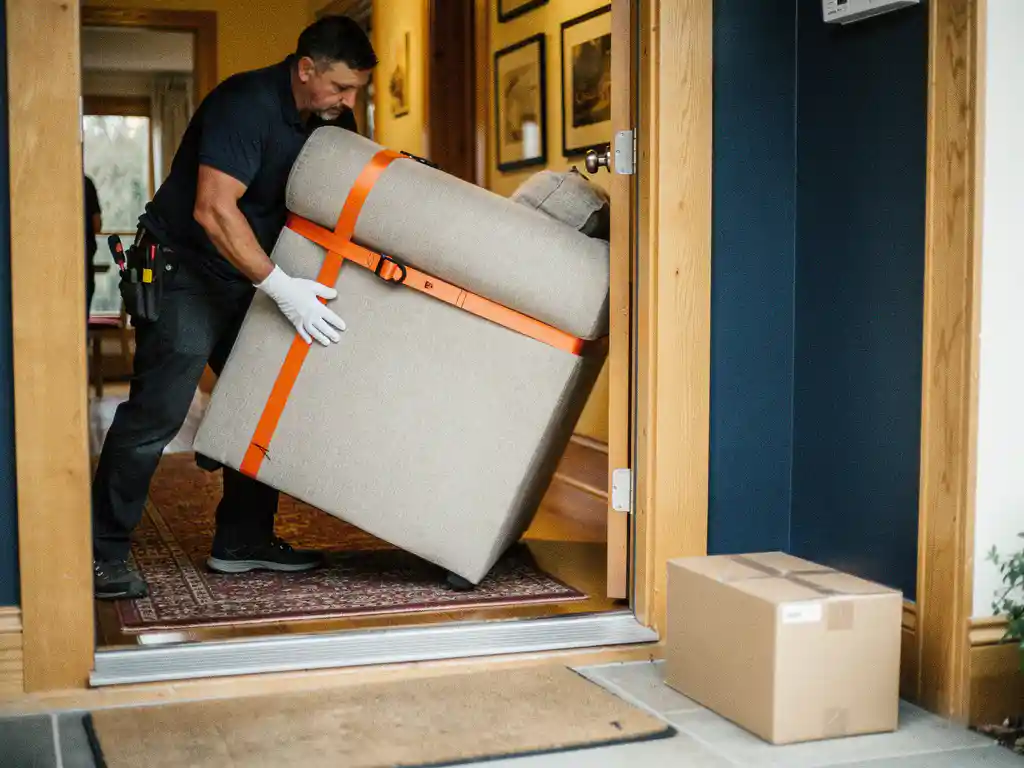
Ordering furniture online or through a showroom feels straightforward until the delivery question comes up. Should you book a standard courier, or does your purchase actually need a specialist delivery service? Getting this wrong can mean damaged goods, failed deliveries, or items left at your doorstep that were supposed to be installed in a third-floor bedroom. This guide walks you through exactly how to assess your needs, choose the right service, and prepare for a smooth handover.
The difference between a courier and a specialist furniture delivery service is significant. Couriers are optimized for speed and volume, handling parcels that can be loaded, sorted, and dropped off without special care. Furniture logistics, by contrast, involves trained handlers, specialist vehicles, and often in-room placement or assembly. Follow these steps to make the right call before you book anything.
Identify what your furniture delivery actually requires
Start by assessing the physical and logistical characteristics of what you are sending or receiving. Not every piece of furniture has the same delivery requirements, and the first step is building a clear picture of what the job actually involves.
- Note the dimensions and weight of each item. Anything that requires two or more people to lift safely falls outside standard courier capability.
- Identify whether the item is flat-packed or fully assembled. Assembled sofas, wardrobes, and dining tables need padded vehicles and trained handling teams.
- Check whether the item is fragile, upholstered, or has a high-gloss or lacquered finish. These surfaces scratch and dent easily during transit if not properly protected.
- Determine whether the item needs to be carried through narrow hallways, up stairs, or into a specific room. This is not something a standard courier driver is equipped or insured to do.
After completing this assessment, you will have a clear profile of your delivery. If any of the points above apply, a standard courier is not the right fit. Move to the next step to understand what a specialist service actually provides.
Understand what a specialist delivery service covers
A specialist delivery service for furniture goes well beyond dropping a parcel at a front door. Understanding the full scope helps you evaluate whether the service matches what your delivery actually needs.
Specialist furniture transport typically includes trained two-person delivery teams, padded and climate-controlled vehicles, pre-delivery scheduling with the recipient, in-room placement, and in many cases assembly or installation. This is what the industry calls white glove delivery: a handled, managed process from loading dock to final position in the room.
- White glove delivery: Full-service handling including unpacking, placement, and debris removal
- Room of choice delivery: Items carried to the specific room, not left at the entrance
- Assembly service: Flat-pack or component furniture built on-site by trained specialists
- Installation service: Fitted furniture such as kitchens or office systems installed by qualified teams
- Project delivery: Large-scale coordinated delivery across multiple units or floors, common in commercial fit-outs
Once you understand the service tiers available, you are ready to match them against the specific type of furniture you are moving.
Match the delivery type to your furniture category
Different furniture categories carry different delivery risks and requirements. Matching the right service to the right category prevents damage and ensures the delivery team is prepared for what they will encounter.
- Upholstered furniture (sofas, armchairs, beds): Requires padded wrapping, two-person teams, and room-of-choice placement as a minimum. White glove delivery is strongly recommended.
- Flat-pack furniture (self-assembly shelving, basic tables): Can sometimes be handled by a courier if the packaging is robust, but assembly services add significant value for the end recipient.
- High-value or designer pieces: Always require specialist furniture delivery with documented handling procedures and insurance cover appropriate to the item’s value.
- Kitchen units and fitted furniture: Require installation teams, not just delivery drivers. Kitchen transport is a distinct specialism involving precise sequencing and on-site coordination.
- Office and project furniture: Large commercial fit-outs involve coordinated project logistics, often including warehousing, phased delivery, and full installation across multiple floors or sites.
With your furniture category matched to the appropriate service type, the next step is confirming that your chosen provider can actually deliver on those requirements before you commit to a booking.
Verify specialist delivery capabilities before booking
Not every company that calls itself a furniture delivery specialist has the same level of capability. Verifying the right details upfront protects you from last-minute problems on delivery day.
Ask the provider direct questions about their operation. A credible furniture logistics partner will answer these clearly and without hesitation.
- Confirm whether their vehicles are purpose-built for furniture, including padding, load bars, and appropriate load capacity.
- Ask whether their delivery teams are trained specifically in furniture handling, not general freight.
- Check whether they offer pre-delivery contact with the recipient to confirm access, floor level, and any specific requirements.
- Verify their insurance cover for high-value or fragile items during transit and in-room handling.
- Ask whether they can provide tracking updates and a confirmed delivery window rather than a vague all-day slot.
A provider with genuine specialist capability will have clear answers to all of these. If responses are vague or the company cannot confirm trained two-person teams, treat that as a signal to look elsewhere. With a verified provider selected, the final step is preparing the delivery location itself.
Prepare the delivery location for specialist handling
Even the best specialist delivery team can run into problems if the receiving location is not ready. Preparation on your end reduces delays, protects your property, and ensures the delivery goes exactly as planned.
- Measure all access points in advance: doorways, hallways, stairwells, and lifts. Compare these against the item’s packaged dimensions, not just its assembled size.
- Clear the route from the entrance to the final room. Remove rugs, fragile objects, and anything that could obstruct a two-person team carrying a large item.
- Confirm parking or loading access for a large vehicle. Specialist furniture vehicles are significantly bigger than standard vans, and restricted access can delay or prevent delivery.
- Communicate any building rules to the delivery team in advance, such as lift booking requirements, delivery time restrictions, or floor protection requirements.
- Be present or arrange a responsible adult to be present at the confirmed delivery window. Specialist deliveries cannot simply be left outside.
Once the location is prepared and the delivery team arrives, walk through the placement plan with them before they begin. Point out the final position for each item, flag any surfaces that need protecting, and confirm the assembly or installation scope if that is part of the service. A well-prepared location means the team can work efficiently and you can sign off with confidence that everything is exactly where it should be.
Choosing between a courier and a specialist furniture delivery service comes down to one honest assessment: does the item and the delivery situation require trained handling, specialist vehicles, and in-room service? For most furniture beyond small flat-pack items, the answer is yes. Taking the time to follow these steps means fewer damaged pieces, fewer failed deliveries, and a far better experience for everyone involved. If you would like to understand how we approach furniture logistics, learn more about us and the standards we hold ourselves to.