




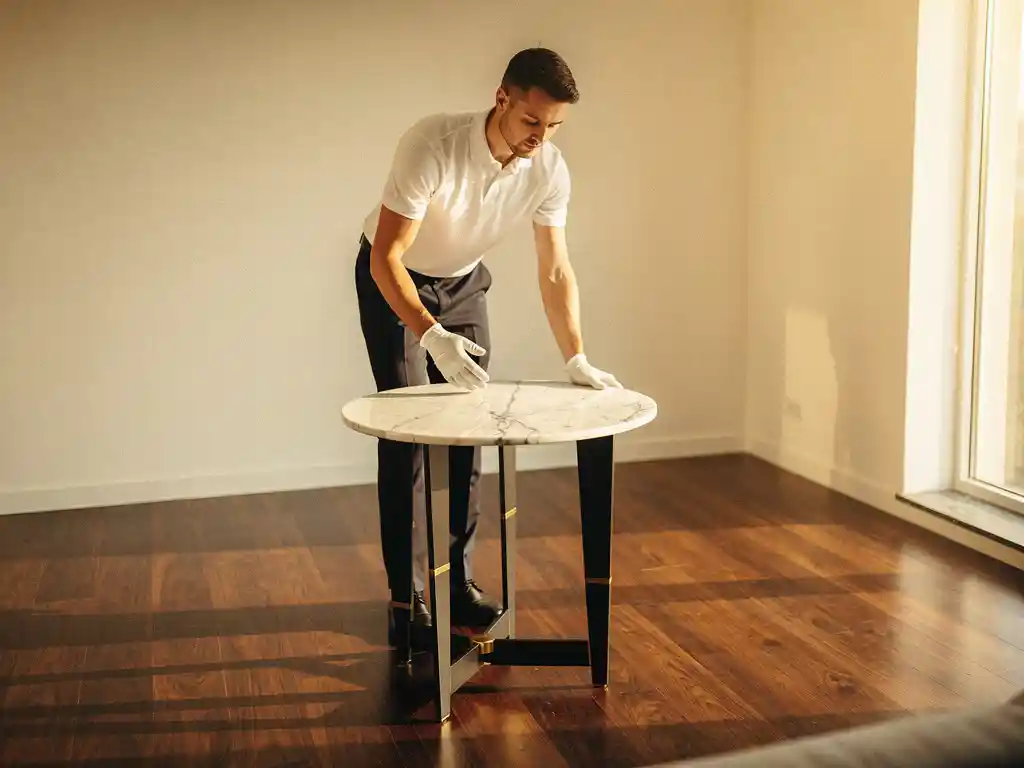
Yes, delivery is absolutely part of your brand in premium furniture. The moment a customer receives their purchase, every interaction, from the communication beforehand to the care taken in the home, either reinforces or undermines the promise your brand made when they chose to buy from you. For premium furniture brands, the delivery experience is not a logistics afterthought. It is a brand touchpoint, and in many cases, the most memorable one. Below, we unpack the key questions every premium furniture brand should be asking about its last mile.
How does the delivery experience shape a customer’s perception of a furniture brand?
The delivery experience shapes a customer’s perception of a furniture brand because it is the final and most tangible expression of the brand’s values. A customer may spend weeks researching, visiting showrooms, and deliberating before purchasing. When the product finally arrives, how it is handled, presented, and installed either validates that decision or creates immediate regret.
Premium furniture carries an emotional weight that everyday products do not. A dining table or a handcrafted sofa is not just a functional item. It is an investment in a home, a lifestyle, and, in many cases, a long-term relationship with a brand. When the delivery team arrives late, handles pieces carelessly, or leaves packaging debris behind, the customer’s emotional experience drops sharply, regardless of how beautiful the product itself is.
The delivery moment is also highly social. Customers share unboxing experiences, photograph new furniture in their homes, and talk about the process with friends and family. A seamless, professional delivery becomes part of the story they tell. A poor one becomes a warning they pass on. For premium brands, this word-of-mouth dimension makes the customer experience during delivery a genuine brand asset or liability.
What does ‘white glove delivery’ actually mean in premium furniture logistics?
White glove delivery in premium furniture logistics refers to a premium service level where trained specialists handle every step of the delivery process with exceptional care, including room-of-choice placement, assembly, installation, and removal of all packaging materials. It goes far beyond dropping a box at the door. The term signals a commitment to treating both the product and the customer’s home with the highest level of respect.
In practice, white glove delivery for furniture typically includes several key components:
- Pre-delivery communication with precise scheduling and arrival windows
- Specialist handling of fragile, oversized, or high-value pieces
- Careful navigation through the customer’s home to avoid damage to walls, floors, and doorframes
- On-site assembly where required, including checking all components for defects before leaving
- Full removal and responsible disposal of all packaging
- A final walkthrough with the customer to confirm satisfaction
We provide exactly this level of service through our furniture transport and delivery solutions, where experienced teams are trained to handle premium pieces with the care they deserve. For brands operating at the higher end of the market, white glove delivery is not optional. It is the standard customers expect and the benchmark against which your brand will be judged.
Why do premium furniture brands lose customers at the last mile?
Premium furniture brands lose customers at the last mile because they invest heavily in product quality and brand presentation but hand off the final, most personal interaction to logistics partners who are not aligned with their brand standards. The result is a disconnect between what the brand promises and what the customer actually experiences at home.
Several recurring failures drive this problem:
- Inconsistent communication: Customers are given broad delivery windows, receive no updates, or are left waiting without explanation. For someone who has rearranged their day around a delivery, this feels disrespectful.
- Inadequate handling: Furniture that arrives with scratches, dents, or damaged packaging signals that the product was not treated as premium at any point after it left the warehouse.
- Untrained delivery staff: Teams that are not briefed on the brand’s standards, do not know how to assemble the product, or behave unprofessionally in the customer’s home create lasting negative impressions.
- No post-delivery follow-through: Leaving a customer to deal with packaging waste or unresolved product issues after the team has left creates frustration that undermines an otherwise good experience.
The last mile is the hardest part of the supply chain to control, but it is the part the customer sees directly. Brands that treat it as a cost centre rather than a brand investment consistently lose customers they worked hard to acquire.
How does delivery quality affect reviews and repeat purchases?
Delivery quality directly affects both online reviews and the likelihood of repeat purchases because the delivery experience is what customers remember most vividly after a furniture purchase. A product that arrives perfectly but is delivered poorly generates negative reviews focused on the experience, not the item. A product delivered with care and professionalism generates positive reviews that reinforce the brand’s premium positioning.
For premium furniture, the purchase cycle is long. Customers do not buy a sofa every year. This means each interaction carries disproportionate weight. A single poor delivery experience can eliminate the possibility of a repeat purchase entirely, and in a category where average order values are high, that represents a significant revenue loss.
Review platforms and social media amplify this dynamic. Customers who experience frustrating deliveries are highly motivated to leave detailed negative reviews, while those who receive exceptional service become advocates. For premium brands, the asymmetry is important: a five-star delivery experience is expected and may not generate a review, but a two-star experience almost certainly will. This makes consistent delivery excellence a defensive brand strategy as much as an offensive one.
Repeat purchase behaviour in premium furniture is also strongly tied to trust. When a customer knows that ordering from a brand means a smooth, professional, end-to-end experience, they return. When they are uncertain about what the delivery will be like next time, they hesitate and look elsewhere.
What should a premium furniture brand look for in a logistics partner?
A premium furniture brand should look for a logistics partner with demonstrated expertise in handling high-value goods, a trained and professional delivery workforce, genuine white glove capabilities, and the flexibility to represent the brand consistently across every customer interaction. Logistics capability alone is not enough. The partner must understand and align with your brand’s standards.
When evaluating a furniture logistics partner, consider the following criteria:
- Specialist furniture experience: General freight carriers are not equipped for premium furniture. Look for partners with a dedicated track record in the category and the handling expertise to match.
- End-to-end service scope: The right partner handles more than transport. Assembly, installation, packaging removal, and returns management should all be part of the offering.
- Trained, consistent teams: Delivery staff should be trained not just in logistics but in customer-facing behaviour and brand representation. Consistency across deliveries matters enormously.
- Geographic reach: For brands selling across borders, the partner needs a network capable of maintaining service standards internationally, not just domestically.
- Technology and communication: Real-time tracking, proactive customer communication, and reliable scheduling systems reduce friction for both the brand and the end customer.
- Warehousing and value-added services: A partner who can also manage warehousing and storage gives you greater control over the full supply chain, reducing the risk of damage or delays before the product even reaches the customer’s door.
We have been specialising in furniture logistics since 1924, operating across more than 150 locations worldwide as part of the MACH-3000 network of specialist furniture carriers. Our teams handle everything from single high-value pieces to full project installations, always with the care and professionalism that premium brands and their customers expect. If you want to explore how we can support your brand’s delivery experience, get in touch with our team to discuss your requirements.