




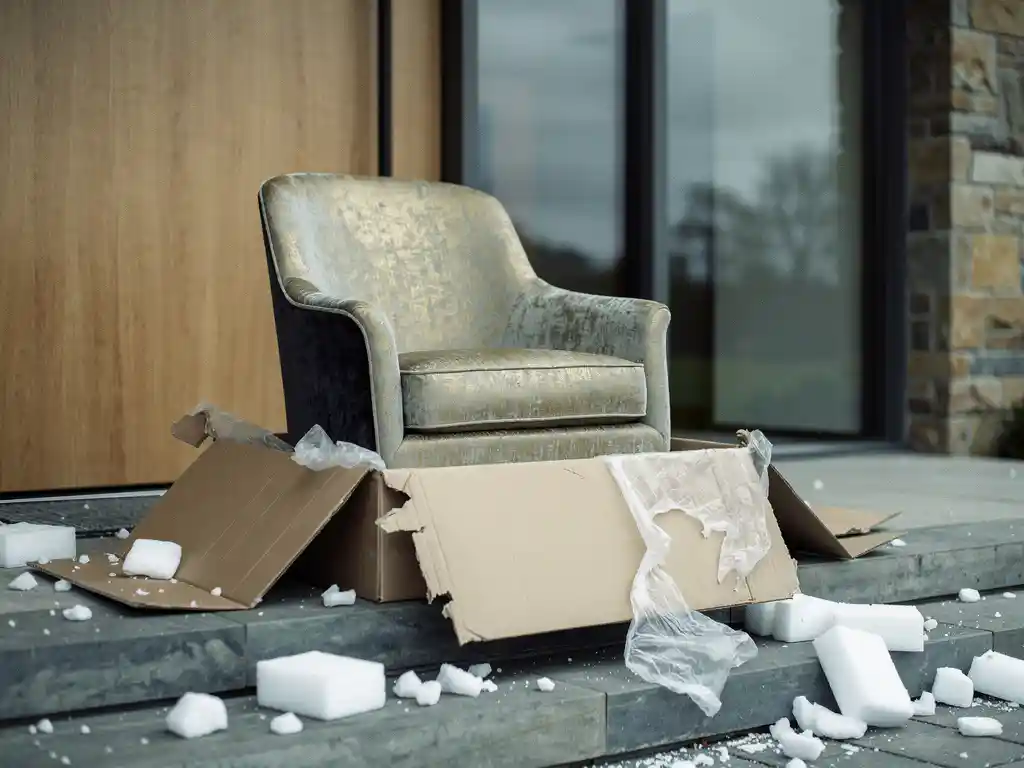
A single poor delivery experience can cost a premium brand far more than the value of one lost sale. Research across the logistics and retail sectors consistently shows that customers who experience a delivery failure are significantly less likely to purchase again, and for premium brands, the stakes are even higher because the entire value proposition rests on quality and trust. The sections below unpack exactly where loyalty breaks down, what makes premium customers so unforgiving, and how brands can respond when things go wrong.
How much revenue do premium brands lose from a single bad delivery?
A single poor delivery experience can trigger the loss of a customer whose lifetime value runs into thousands of euros or pounds. Premium customers spend more per transaction, purchase more frequently, and are far more likely to recommend a brand to peers in similar spending brackets. When a delivery fails, brands do not just lose one order. They risk losing the entire future revenue that customer represents, along with the referrals they would have generated.
The financial exposure compounds quickly. A premium furniture or interior brand, for example, may have customers who place repeat orders over multiple years. Losing even a small percentage of those customers to a competitor after a delivery failure represents a disproportionate revenue impact. The cost is not just the refund or replacement of a damaged item. It includes the marketing spend required to acquire a replacement customer, the operational cost of handling complaints, and the reputational damage that may quietly suppress conversion rates across the business.
Premium brands also invest heavily in the customer experience at the point of sale. A poor delivery experience effectively cancels out that investment, leaving customers with a final impression that contradicts everything the brand promised.
Why are premium customers less forgiving of delivery failures?
Premium customers are less forgiving of delivery failures because the price they pay carries an implicit promise of excellence at every touchpoint. When someone spends significantly more than they would at a standard retailer, they are not just buying a product. They are buying confidence that the entire experience will reflect the brand’s positioning. A delivery failure breaks that promise at the most tangible moment of the customer relationship.
This expectation gap is the core issue. A customer buying a budget sofa from a mass-market retailer may accept a delayed or slightly damaged delivery as an acceptable risk at that price point. A customer buying a designer sofa from a premium brand has no such tolerance because the premium price explicitly signals that such failures should not happen. The higher the price, the higher the standard expected.
Premium customers also tend to have more options. They can easily redirect their spending to a competitor offering a comparable product and a better service experience. Their loyalty is earned, not assumed, and it is revoked quickly when the experience falls short of what the brand has led them to expect.
What types of delivery failures damage brand loyalty the most?
The delivery failures that cause the most lasting damage to premium brand loyalty are those that feel avoidable and are handled poorly. Physical damage to a product is serious, but it is the communication and resolution that determine whether a customer leaves or stays. Failures that are compounded by poor service recovery are far more damaging than the original incident.
The most loyalty-damaging failure types include:
- Damaged products on arrival: Particularly for high-value furniture, lighting, or décor, visible damage signals a lack of care that contradicts the brand’s premium positioning.
- Missed or rescheduled delivery windows: Premium customers often take time off work or arrange their schedule around a delivery. A missed window wastes their time and signals disorganisation.
- Poor handling by delivery staff: Rude, careless, or unprofessional behaviour from the delivery team leaves a direct negative impression that customers associate with the brand itself, not just the logistics provider.
- Lack of communication or tracking: Customers who are left in the dark about where their order is feel anxious and undervalued. For premium brands, proactive communication is not optional.
- Incomplete delivery or installation: For brands offering white-glove or room-of-choice delivery, leaving a product uninstalled or failing to remove packaging defeats the purpose of the premium service tier.
The common thread is that each of these failures makes the customer feel like they are not a priority. That feeling is particularly corrosive for premium brand loyalty.
How does a poor delivery experience spread beyond the original customer?
A poor delivery experience rarely stays private. Premium customers are typically well-connected, socially active, and accustomed to sharing opinions within their networks. When a luxury brand delivery goes wrong, the story travels through word of mouth, online reviews, and social media in ways that can reach hundreds or thousands of potential buyers. The reputational damage extends well beyond the individual customer affected.
Online review platforms and social channels amplify negative experiences at scale. A single detailed account of a damaged piece of furniture, a missed delivery, or dismissive customer service can appear in search results for the brand’s name and influence purchase decisions for months or years. For premium brands where trust and reputation are central to the buying decision, this kind of visible negative feedback carries outsized weight.
There is also a subtler effect. Customers who are disappointed but do not complain publicly simply stop recommending the brand. Premium brands often rely heavily on word-of-mouth referrals from satisfied customers. When those customers go silent, the pipeline of new high-value customers quietly shrinks without the brand necessarily understanding why.
What does great last-mile delivery look like for premium brands?
Great last-mile delivery for premium brands means treating the delivery itself as part of the product experience, not just a logistical necessity. It requires trained delivery professionals, proactive communication, careful handling, and a service standard that matches the quality of the product being delivered. The last mile is often the only time a customer interacts with a physical representative of the brand, which makes it a defining moment.
The key components of a premium last-mile delivery experience include:
- Precise delivery windows: Narrow, reliable time slots that respect the customer’s schedule rather than broad all-day windows.
- Professional, trained delivery teams: Staff who handle products carefully, communicate clearly, and represent the brand positively in the customer’s home.
- White-glove service options: Room-of-choice delivery, unpacking, assembly, and removal of packaging materials as standard for high-value items.
- Real-time tracking and proactive updates: Customers should know where their delivery is without needing to chase it. Automated updates and live tracking reduce anxiety and increase satisfaction.
- Damage-free delivery: Specialist handling equipment, appropriate packaging, and experienced logistics partners who understand how to transport fragile or high-value items safely.
At Jan Krediet, our furniture transport service is built around exactly these standards. We combine specialist handling expertise with a professional team that understands the importance of representing premium brands well at the point of delivery. For brands in the furniture and interior sector, this level of care is not a luxury. It is a baseline requirement.
How can premium brands recover loyalty after a delivery failure?
Premium brands can recover customer loyalty after a delivery failure by responding quickly, taking full ownership, and resolving the issue in a way that exceeds what the customer expected. Speed and sincerity are the two most important factors. A customer who receives a genuine, fast, and generous response to a delivery failure will often end up more loyal than one who never experienced a problem at all.
Effective loyalty recovery after a poor delivery experience typically involves:
- Acknowledging the failure immediately: Do not wait for the customer to escalate. Proactive outreach when a problem is identified signals that the brand takes quality seriously.
- Taking full ownership: Avoid shifting blame to the logistics provider or external factors. From the customer’s perspective, the brand is responsible for every part of the experience.
- Offering a resolution that matches the brand’s positioning: A token discount voucher feels inadequate when a premium product has been damaged or mishandled. The resolution should be proportionate and generous.
- Following up after the resolution: A brief follow-up to confirm the customer is satisfied closes the loop and signals that their experience genuinely matters.
- Using the failure to improve: Internally, delivery failures should trigger a review of the logistics process. Brands that treat complaints as data points improve faster and reduce repeat incidents.
Recovery is also an opportunity to reinforce the brand’s values. A customer who sees a brand respond to a problem with honesty, speed, and genuine care often walks away with a stronger impression of the brand than they had before. The failure becomes evidence that the brand’s commitment to quality is real, not just marketing language.
For premium brands looking to reduce delivery failures in the first place, partnering with a logistics provider that shares their commitment to quality is the most effective long-term strategy. We work with premium furniture and interior brands across Europe to ensure that the last mile reflects the same standards as the rest of the brand experience. You can learn more about who we are and the values that guide our work, or explore our project logistics solutions for brands managing complex, high-value deliveries at scale.