




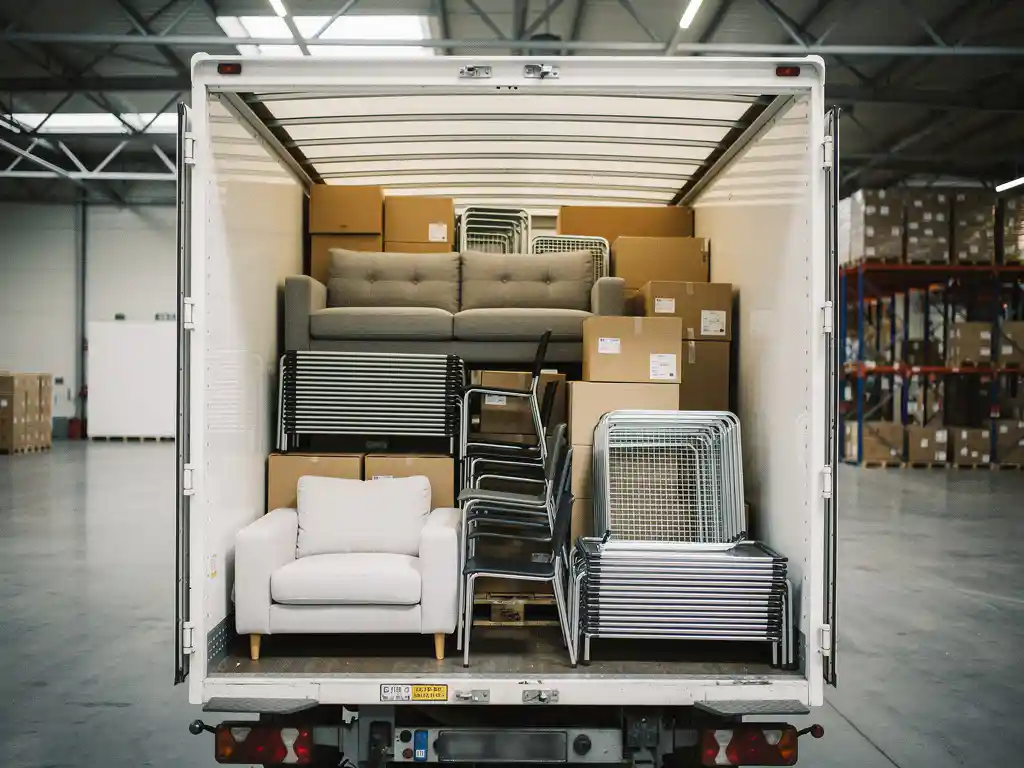
Poor load factor is one of the most common sources of wasted cost in furniture logistics. When trucks leave with empty space that could carry additional items, every kilometre driven becomes more expensive per unit delivered. In furniture transport specifically, the challenge is real: bulky sofas, flat-pack components, fragile glass panels, and oversized wardrobes all compete for the same limited cubic metres. Getting this right requires more than just stacking things tightly. It takes a structured approach that starts before the vehicle is ever loaded.
This guide walks you through five practical steps to optimise load factor in furniture transport, reduce empty kilometres, and improve overall transport efficiency. Whether you manage a small fleet or coordinate large-scale furniture logistics across multiple sites, these steps give you a clear process to follow.
Assess your current load factor baseline
Before you can improve your load factor in furniture transport, you need to know where you currently stand. Without a baseline, any changes you make are guesswork. Start by pulling data from your last 30 to 90 days of transport activity and calculating the average utilisation rate per vehicle.
- Gather trip records including vehicle capacity (in cubic metres or weight), actual load volume or weight per trip, and total trips completed.
- Calculate load factor per trip: divide the actual load by the maximum capacity, then multiply by 100 to get a percentage.
- Identify patterns in low-performing routes, specific vehicle types, or time periods where utilisation consistently drops below your target.
- Set a realistic improvement target based on your findings. A load factor below 70% is typically a clear signal that route or consolidation changes are needed.
After completing this step, you should have a clear picture of where load inefficiency is occurring. If you find that certain routes or delivery windows consistently underperform, those become your priority areas for the steps that follow. Knowing your baseline also gives you a benchmark to measure improvement against as you implement changes.
Plan routes and consolidate shipments strategically
With your baseline established, the next step is to tackle load factor at the planning stage. Furniture transport often involves multiple delivery points across a region, which creates natural opportunities for consolidation if routes are planned intelligently. The goal is to combine shipments heading in the same direction and sequence stops in a way that maximises the useful load carried for as much of the journey as possible.
- Group orders by geographic cluster rather than by customer or order date alone. Deliveries within the same postcode zone or corridor should be bundled into a single run wherever possible.
- Use transport management software or route planning tools to model different loading and sequencing scenarios before committing to a schedule.
- Identify return leg opportunities. If a vehicle delivers to a location and returns empty, explore whether a pickup, a return of packaging materials, or a consolidation from another supplier can fill that space.
- Review frequency versus volume trade-offs. Running fewer, fuller trips is almost always more efficient than running more frequent, partially loaded ones.
Once your routes are consolidated and sequenced, you will typically see an immediate improvement in load factor percentages. The key verification point here is whether your average load per trip increases without a corresponding increase in delivery time or customer complaints. If both improve together, the consolidation strategy is working.
Apply smart loading sequences for furniture items
Route planning determines what goes on a vehicle. Loading sequence determines how well it all fits. Furniture presents unique challenges here because items vary enormously in shape, weight, and fragility. A poorly planned load wastes cubic metres, risks damage, and slows down delivery because items need to be moved to reach earlier stops.
Load by delivery order, not by convenience
Load the vehicle in reverse delivery order so that the first stop is closest to the rear doors. This prevents unnecessary unloading and reloading at intermediate stops, which also reduces the risk of damage to delicate furniture pieces.
Fill irregular spaces with flat-pack components
Upholstered items, cabinets, and large case goods create gaps that are difficult to fill with similarly sized pieces. Flat-pack components, cushions, or smaller accessories can fill these voids effectively. Assign someone on your loading team the specific responsibility of identifying and filling dead space before the vehicle is sealed.
- Position the heaviest, most stable items (wardrobes, cabinets, bed frames) against the front wall and sides of the load space.
- Stack flat-pack boxes on top of stable base items where weight limits allow, using load bars or straps to secure them.
- Place fragile items such as glass panels or mirrors in protective slots or vertical racks rather than laying them flat where they can be crushed.
- Use the remaining gaps near doors and along walls for smaller accessories, cushions, and soft furnishings.
After loading, do a quick visual check: are there large visible gaps that could have accommodated additional items? If yes, review whether the load plan accounted for all available items on that run. A well-executed load should look dense and structured, with items secured and accessible in the correct delivery sequence.
Coordinate with customers to reduce last-minute changes
Even the best load plan falls apart when a customer cancels, delays, or changes an order at short notice. Last-minute changes are one of the biggest hidden causes of poor load factor in furniture logistics because they leave gaps in a load that was already planned and confirmed. Reducing this requires active coordination rather than just reactive problem-solving.
- Confirm delivery appointments at least 48 hours in advance and require customers to notify you of any changes within a defined window, such as 24 hours before dispatch.
- Build a short-notice substitution list: a pool of smaller orders or fill-in deliveries that can be added to a load when a cancellation creates space.
- Communicate clearly with customers about the cost implications of late changes. When customers understand that a last-minute cancellation affects vehicle utilisation and may carry a surcharge, confirmation rates typically improve.
- Use delivery confirmation systems such as SMS or email reminders that prompt customers to verify their availability, reducing no-shows on the day.
The goal is to make the load plan as stable as possible by the time the vehicle is being loaded. You will know this step is working when the frequency of last-minute load changes decreases and your planned load factor more closely matches your actual load factor at the end of each run.
Track, measure, and improve over time
Optimising load factor is not a one-time exercise. Transport efficiency in furniture logistics improves through consistent measurement, honest review, and incremental adjustment. The steps above give you the tools to improve, but sustained gains come from building a feedback loop into your operation.
- Record actual load factor for every trip and compare it against the planned figure. A consistent gap between planned and actual is a signal that your planning assumptions need adjustment.
- Review underperforming routes monthly and identify whether the cause is structural (route design, order volumes) or operational (loading practice, late changes).
- Share load factor data with your drivers and loading teams. When the people executing the plan can see how their work affects efficiency, engagement with best practices tends to increase.
- Set incremental targets rather than trying to reach a maximum load factor immediately. Improving from 68% to 75% over a quarter is a meaningful and achievable step.
Over time, you will build a clearer picture of which routes, customers, and product types consistently challenge your load optimisation efforts. That knowledge is what allows you to make smarter decisions about route design, vehicle selection, and customer agreements. If you are looking for a logistics partner who already has these systems and processes in place, our contract logistics team can support you with structured transport planning tailored to furniture and interiors. For teams managing this independently, consistent tracking is the most powerful tool you have for driving long-term improvement in furniture transport efficiency.