




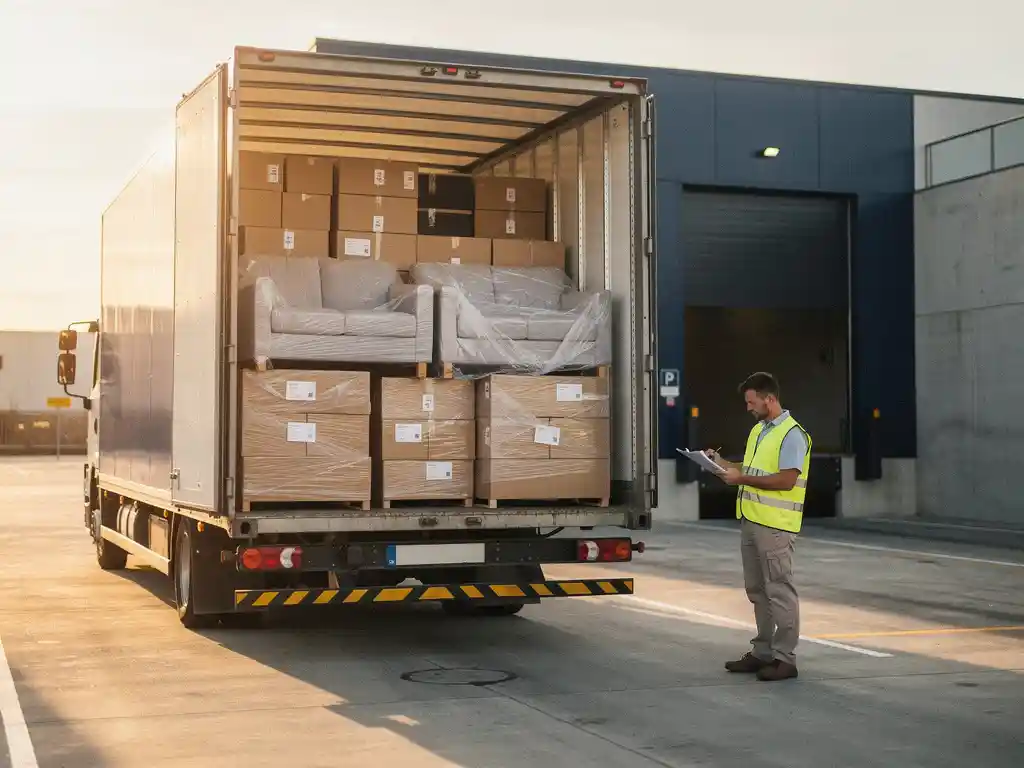
Furniture transport is one of the more cost-intensive areas of logistics. Large items, high damage risk, complex delivery requirements, and time-sensitive customers all push costs upward quickly. Whether you run a small fleet or manage a high-volume operation, understanding how to reduce cost per trip in furniture transport can make a measurable difference to your margins and your service quality.
This guide walks you through five practical steps to identify where money is being lost and how to recover it systematically. You do not need to overhaul your entire operation at once. Work through each step in sequence, and you will build a leaner, more predictable furniture delivery operation.
Map your current cost drivers per trip
Before you can reduce furniture delivery costs, you need to know exactly where they come from. Many operations have a rough sense of their average cost per trip but lack the granular breakdown needed to act on it. Start by pulling data from your last 90 days of completed trips and categorising every cost element.
- List all direct costs per trip: fuel, driver wages, vehicle depreciation, tolls, and any subcontracted capacity.
- Add indirect costs: damage claims, re-delivery attempts, customer service time related to failed deliveries, and administrative overhead per shipment.
- Separate fixed costs (vehicle lease, insurance) from variable costs (fuel, labour hours) so you can identify which ones respond to operational changes.
- Calculate a baseline cost per trip figure by dividing total costs over the period by total trips completed.
Once you have this breakdown, you will likely find that two or three cost categories dominate. In furniture logistics, failed deliveries and underloaded vehicles are typically the biggest culprits. Knowing this before moving to the next step ensures you focus your effort where it will have the most impact.
Optimise load capacity and route planning
Running trucks that are not fully loaded is one of the fastest ways to inflate your cost per trip in furniture transport. Every empty cubic metre on a vehicle represents revenue-generating capacity you are paying for but not using. At the same time, inefficient routing adds fuel costs and driver hours that compound across every trip.
- Review your average load factor across trips from the previous quarter. If vehicles are consistently leaving at less than 80% capacity, investigate whether order batching or scheduling adjustments could consolidate loads.
- Use route optimisation software to sequence stops in a way that minimises total distance while respecting delivery time windows. Even basic tools can reduce route length significantly.
- Consider whether your vehicle mix matches your typical order profile. Deploying a large truck for a small delivery is a structural cost problem, not a routing one.
- Where possible, plan return loads to avoid empty runs. Coordinating with warehousing partners or other shippers in your network can help fill backhaul capacity.
After implementing route and load improvements, recalculate your cost per trip over the following four weeks. You should see a reduction in fuel spend and an improvement in trips completed per vehicle per day. If load factors remain low, the problem may lie upstream in how orders are batched before dispatch. Our warehousing solutions can support smarter order consolidation before goods reach the vehicle.
Reduce failed deliveries and re-delivery costs
Failed first-attempt deliveries are one of the most damaging cost drivers in furniture logistics. A missed delivery does not just waste the trip cost. It also triggers customer contact, rescheduling, repeat driver time, and often a deterioration in customer satisfaction. Reducing your failed delivery rate is one of the highest-return actions you can take.
- Analyse your failed delivery data by reason code: customer not home, access issues, product damage on arrival, incorrect address, or refused delivery. Each cause has a different solution.
- Introduce pre-delivery notifications with a confirmed time window. Giving customers a two-hour window rather than a full-day slot significantly increases first-attempt success rates.
- Ensure drivers have a reliable way to contact the customer on the day of delivery, and that they use it proactively if they are running early or late.
- For items requiring assembly or installation, confirm in advance that the customer has cleared the space and that access to the building is arranged. Arriving at a site unprepared adds time and sometimes forces a failed delivery.
Track your first-attempt delivery rate as a standalone metric. A meaningful improvement here reduces re-delivery costs directly and also frees up vehicle capacity for additional first-time trips. Even reducing failed deliveries by a few percentage points can noticeably lower your average furniture delivery costs across the operation.
Streamline handling and assembly at the delivery point
Time spent at the delivery point is a direct cost. In furniture transport, deliveries often involve carrying items to upper floors, unpacking, assembling components, and removing packaging. If this process is unstructured or poorly equipped, it extends dwell time per stop and reduces how many deliveries a team can complete in a day.
- Standardise what each delivery team carries in terms of tools and equipment. A consistent kit prevents delays caused by missing items and ensures assembly tasks are completed efficiently.
- Pre-assemble components where possible before the item leaves the warehouse. Reducing the assembly burden at the delivery point shortens dwell time and lowers the risk of errors on site.
- Brief delivery teams on the specific requirements of each stop before departure. Knowing in advance that a delivery involves a third-floor apartment with no lift changes how the team plans their approach.
- Set time benchmarks for common delivery types and review performance against them regularly. This is not about rushing teams but about identifying where processes are slower than they should be.
Well-prepared delivery teams complete stops faster and with fewer callbacks or complaints. This directly reduces your labour cost per trip and improves vehicle utilisation across the day. If your operation includes large-scale project deliveries, our project logistics services are structured to handle complex on-site installation efficiently at scale.
Track and benchmark trip cost over time
Reducing transport costs is not a one-time exercise. It requires ongoing measurement and a feedback loop that connects operational decisions to financial outcomes. Without consistent tracking, improvements made in earlier steps can erode as conditions change.
- Set up a simple reporting structure that calculates cost per trip weekly or monthly, broken down by route, vehicle, and delivery type.
- Identify your top and bottom performing routes or vehicle runs in terms of cost efficiency. Investigate what the best performers are doing differently and apply those practices more broadly.
- Benchmark your figures against industry norms where data is available, and against your own historical performance. A trend line is more useful than a single data point.
- Review your cost drivers quarterly and repeat the mapping exercise from step one. Cost structures shift as fuel prices, labour costs, and customer mix change.
Consistent benchmarking turns cost per trip from a vague concern into a managed metric. Over time, you build a clear picture of what drives efficiency in your specific operation and where the next improvement opportunity lies. For teams looking to develop a more structured approach to contract logistics, having this data foundation in place makes every conversation with partners and clients more grounded and productive.
Reducing cost per trip in furniture transport is achievable through disciplined measurement, smarter load and route planning, fewer failed deliveries, and efficient on-site handling. Each step builds on the last, and the gains compound over time. Start with your data, focus on the biggest cost drivers first, and track your progress consistently.