




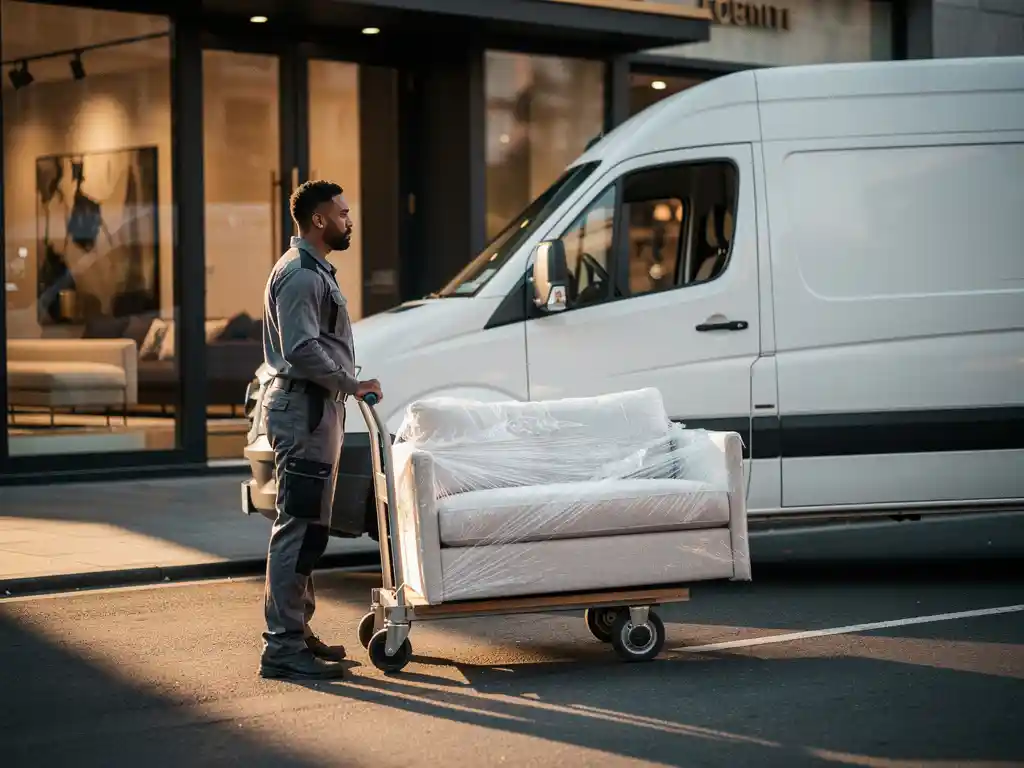
Running a retail business means your reputation lives and dies by the customer experience, and few moments matter more than the final delivery. Whether you sell sofas, dining sets, or full kitchen units, a clumsy or unreliable delivery undoes everything you have worked hard to build. The good news is that you do not need to hire drivers, lease vans, or manage a logistics operation yourself. With the right approach, you can offer a genuinely premium delivery experience by partnering with a specialist provider and setting up the process properly from day one.
This guide walks you through exactly how to do that, from scoping your requirements to monitoring performance, so you can focus on selling while your logistics partner handles the rest.
Define your premium delivery requirements first
Before you contact a single provider, get clear on what premium delivery actually means for your specific products and customers. A retailer selling flat-pack shelving has very different needs from one selling bespoke upholstered sofas or full kitchen installations. Vague requirements lead to vague service agreements, and vague service agreements lead to disappointed customers.
Work through the following questions and document your answers:
- What product categories are you shipping, and how fragile or heavy are they?
- Do your customers expect two-person delivery, room-of-choice placement, or full assembly on site?
- What delivery windows do you promise, and how tight are they?
- Do you deliver nationally, across Europe, or both?
- What happens when something goes wrong, and what is your returns process?
Once you have these answers written down, you have a clear brief. This document becomes the foundation for every conversation you have with a potential outsourced delivery partner, and it prevents scope creep later on.
Choose a logistics partner with the right specialisation
Not every logistics company is equipped to handle premium goods. General parcel carriers are built for speed and volume, not for careful handling of a marble-topped dining table or a modular kitchen. For furniture delivery and high-value home products, you need a provider whose core business is exactly that.
Look for these qualities when evaluating candidates:
- Proven experience with the product type you sell, including references or case studies from comparable retailers.
- Dedicated two-person delivery crews trained in careful handling and customer interaction.
- The ability to offer room-of-choice delivery, assembly, and packaging removal as standard services.
- A network that covers your target geography, including cross-border capability if you sell internationally.
- Warehousing capacity that allows pre-assembly, quality checks, and flexible scheduling before the final mile.
We at Jan Krediet, for example, specialise in furniture transport and have built our entire operation around the careful, reliable movement of high-value interior products. Our team handles everything from individual pieces to full project installations across more than 150 locations worldwide. When you evaluate any provider, ask directly whether furniture and home goods logistics is their specialism or just one of the many services they offer. The answer tells you a great deal.
Align on service levels and delivery standards
Once you have selected a partner, the next step is translating your requirements into a formal service level agreement. This is where many retailers leave too much to chance. A handshake agreement on “careful delivery” is not enough. You need specific, measurable commitments that both sides understand.
Work through these areas together with your provider:
- Define delivery time windows precisely, for example a two-hour arrival slot communicated to the customer the day before.
- Agree on customer communication touchpoints, including confirmation messages, day-of notifications, and driver tracking.
- Set clear damage reporting procedures, including how incidents are documented, photographed, and resolved.
- Confirm what white-glove services are included as standard versus charged as extras, such as assembly, packaging removal, or staircase delivery.
- Establish escalation paths so that when something goes wrong, both teams know exactly who to contact and how quickly.
After this conversation, ask your provider to send a written summary of agreed standards. Review it carefully against your original requirements document. If there are gaps, address them before you go live. A well-aligned service level agreement protects your customers and gives your team clear expectations to manage against.
Integrate your systems with the provider’s logistics platform
With service levels agreed, the next step is connecting your order management system to your provider’s logistics platform. This integration is what turns a manual, error-prone handover process into a smooth, automated flow of information.
At a minimum, your integration should cover:
- Automatic order transmission from your e-commerce or ERP system to the logistics platform when an order is confirmed.
- Real-time inventory visibility if your provider is also handling warehousing on your behalf.
- Automated customer notifications triggered by delivery milestones, such as dispatch, out-for-delivery, and delivered.
- A returns and exception workflow so failed deliveries or damaged items are flagged and handled without manual intervention.
Ask your logistics partner what integration options they support, whether that is a direct API connection, an EDI feed, or a simpler file-based transfer. Most established providers have experience connecting to major retail platforms and can guide your technical team through the setup. Test the integration thoroughly with a sample of orders before going live, and confirm that tracking data flows correctly to your customer-facing communications.
Monitor delivery performance and act on feedback
The final step is building a rhythm of performance review so that your last-mile delivery quality improves over time rather than drifting. Even the best logistics partnerships require active management. Data and customer feedback are your tools here.
Set up a regular review process that includes the following:
- Track key metrics weekly: on-time delivery rate, damage rate, first-attempt delivery success, and customer satisfaction scores.
- Review customer feedback from post-delivery surveys or reviews and look for patterns, not just individual complaints.
- Share performance data with your logistics partner in a monthly or quarterly review meeting and agree on improvement actions where targets are missed.
- Flag recurring issues quickly rather than waiting for the next scheduled review. A spike in damage claims or missed time slots needs a fast response.
When you act on feedback consistently, two things happen. Your delivery quality improves because problems are caught early and fixed. And your relationship with your logistics partner strengthens because they see you as a serious, engaged client who holds them to a high standard. That dynamic tends to bring out the best in any provider.
Organising premium delivery as a retailer without building your own delivery team is entirely achievable when you follow a structured approach. Define your requirements clearly, choose a partner with genuine specialisation, lock in service standards, connect your systems, and stay close to the data. If you would like to explore how we can support your delivery operation, get in touch with our team and we will walk you through what a partnership could look like for your business.