




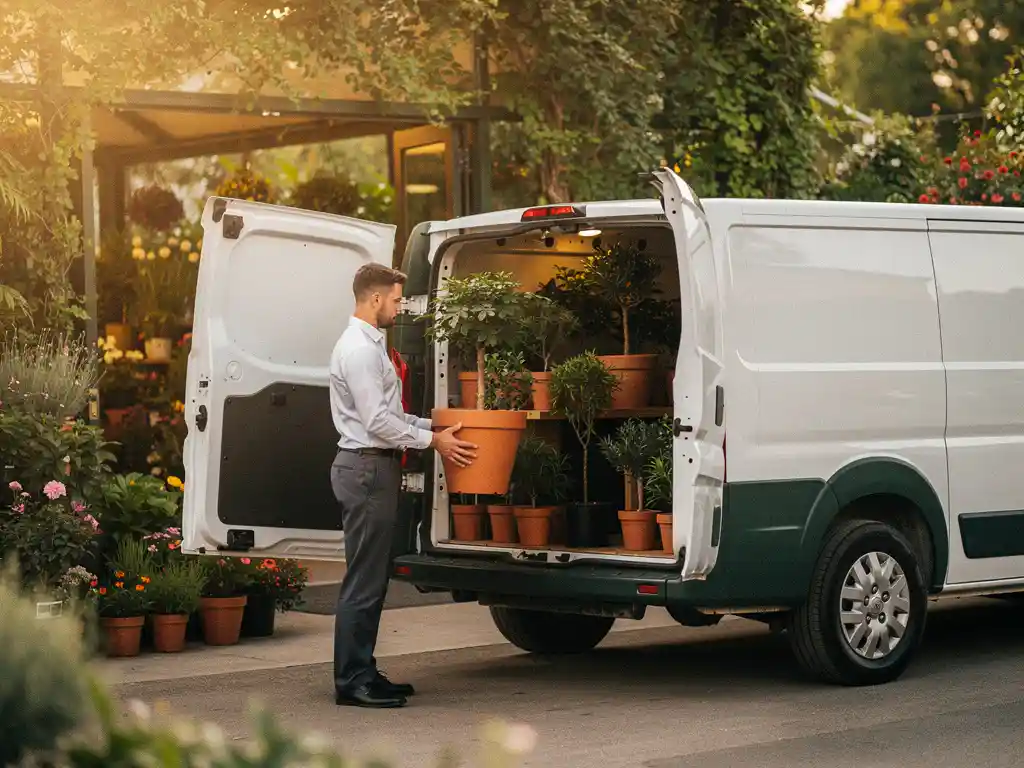
Garden centres are increasingly moving beyond seasonal foot traffic and in-store sales. With more customers browsing and buying plants, garden furniture, pots, and outdoor living products online, the pressure is on to offer a delivery experience that matches the quality of the products themselves. A premium delivery service as a paid add-on gives you a way to do exactly that while generating additional revenue and building lasting customer loyalty.
This guide walks you through every step of setting up a premium paid delivery option for your garden centre, from laying the groundwork to refining the service based on real performance data. Whether you sell bulky garden furniture, fragile ceramics, or large potted trees, the principles here apply directly to your operation.
What you need before launching a premium delivery tier
Before you build out the service itself, take stock of what you already have and what gaps need filling. Launching a paid delivery option without the right foundations in place leads to broken promises and refund requests, which is the opposite of premium.
- A clear picture of your current delivery volumes and geographic reach
- An understanding of which product categories are most commonly delivered (heavy garden furniture, fragile pots, large plants)
- A reliable logistics partner capable of handling specialist last-mile delivery
- A checkout or e-commerce platform that supports multiple delivery options at the basket stage
- Internal processes for order picking, packing, and handover to the carrier
- A customer service workflow to handle delivery queries and complaints
Once you can tick each of these off, you are ready to build something worth charging for. If any of these elements are missing, address them first. A premium delivery service is only as strong as the weakest link in the chain behind it.
Define what your premium delivery service includes
The most common mistake garden centres make is launching a paid delivery tier without clearly defining what makes it different from a standard option. Customers will only pay extra if the value is obvious and tangible.
Think carefully about the specific pain points your customers face when receiving garden and outdoor products. Bulky items like garden benches or large planters are difficult to carry alone. Fragile ceramics need careful handling. Large plants require upright transport and careful positioning. Your premium tier should directly solve these problems.
- Choose a specific delivery window, such as a two-hour slot, rather than a vague all-day estimate
- Offer two-person delivery for heavy or bulky items so customers do not need to arrange help themselves
- Include placement in the room or garden location of the customer’s choice, not just doorstep drop-off
- Add packaging removal and responsible disposal as part of the service
- Provide real-time tracking with proactive SMS or email updates on delivery day
- Consider offering a named delivery day guarantee, particularly for gift purchases or seasonal planting deadlines
Once you have defined the service, write it out in plain language exactly as your customer will see it at checkout. If you cannot explain the difference between your standard and premium options in two sentences, the distinction is not clear enough yet.
Set the right price for your paid delivery option
Pricing a premium delivery service requires balancing what it actually costs to deliver with what your customers perceive as fair value. Underpricing signals low quality; overpricing kills conversion.
Start with your actual cost per delivery for the premium tier. Factor in the carrier rate for a timed two-person service, any internal labour for packing and handover, and a reasonable margin to make the service commercially viable. Then look at what comparable retailers in the furniture and outdoor living space charge for equivalent services. This gives you a realistic market anchor.
A few practical pricing principles to apply:
- Charge more for larger or heavier items where the logistics cost is genuinely higher
- Consider a flat premium fee for standard garden products and a tiered fee for oversized or fragile items
- Test a price point with a small segment of your customer base before rolling it out site-wide
- Make sure the premium price is clearly displayed alongside the standard option so customers can make an informed choice
After setting your initial price, monitor your take-up rate. If fewer than one in ten customers select the premium option, either the price is too high or the perceived value is not coming through clearly enough in how you describe it.
Integrate premium delivery into your checkout process
With your service defined and priced, the next step is making it visible and easy to select at the point of purchase. A premium delivery option that is buried or confusing to choose will not convert, regardless of how good the service itself is.
- Add the premium delivery option as a clearly labelled choice in your checkout delivery step, positioned directly alongside your standard option
- Use a short bullet list beneath the premium option to highlight its key benefits (timed slot, two-person delivery, placement service)
- Display the price difference clearly so customers can make a quick value judgement
- Trigger the premium option automatically for product categories above a certain weight or value threshold, where it is most relevant
- Send a post-purchase confirmation email that reminds the customer exactly what they have booked and what to expect on delivery day
Verify this is working correctly by completing a test purchase yourself and checking that the premium option appears, is selectable, and flows through to your order management system with the correct service flag attached. If your carrier needs to be notified of premium orders separately, build that handover step into your daily dispatch process now.
Partner with the right logistics provider for fulfilment
A premium delivery service for garden centres lives or dies on the quality of the last-mile execution. You can define the service perfectly and price it correctly, but if the carrier cannot deliver on the promise, the customer experience fails.
Look for a logistics partner with proven experience in handling bulky, fragile, or high-value items rather than a standard parcel carrier. Garden furniture, large ceramic pots, and mature plants all require specialist handling. A carrier that treats a garden bench the same way it treats a small parcel will generate damage claims and negative reviews. We work across specialist furniture transport and related product categories, which means we understand the specific demands of delivering items that are heavy, fragile, or awkward in shape.
When evaluating a logistics partner, assess the following:
- Do they offer timed delivery windows and two-person crews for heavy items?
- Can they provide real-time tracking data that feeds into your customer communications?
- Do they have experience with garden, outdoor living, or furniture logistics specifically?
- What is their process for handling damage claims and failed delivery attempts?
- Can they scale capacity during peak garden season (spring and early summer) without service degradation?
Once you have selected a partner, document the handover process clearly. Define how orders are communicated, how packaging requirements are specified, and how exceptions are escalated. A solid operational process between your team and your carrier is what keeps the premium promise consistent at scale. You can explore contract logistics solutions if you need a more structured long-term arrangement.
Measure performance and refine the service over time
Launching the service is the beginning, not the end. A premium delivery option that is not measured and improved will gradually lose its competitive edge as customer expectations rise and competitors catch up.
Set up a small set of key performance indicators from day one so you have a baseline to improve against:
- Take-up rate: What percentage of eligible orders select the premium option?
- On-time delivery rate: Are timed slots being met consistently?
- Damage rate: How often do items arrive in less than perfect condition?
- Customer satisfaction score: Send a short post-delivery survey asking specifically about the delivery experience
- Repeat purchase rate: Are customers who used the premium service returning more often than those who did not?
Review these metrics monthly in the first six months. Look for patterns: if damage rates spike during a particular period, review your packing process. If take-up is low for certain product categories, consider whether the premium option is being surfaced clearly enough at checkout for those items. Small, data-driven adjustments made regularly will compound into a meaningfully better service over time.
A well-executed premium delivery service becomes a genuine competitive advantage for your garden centre. It turns a functional necessity into a reason customers choose you over a competitor, and it creates a revenue stream that grows alongside your online sales. Build it carefully, partner wisely, and keep improving it, and it will pay for itself many times over.