




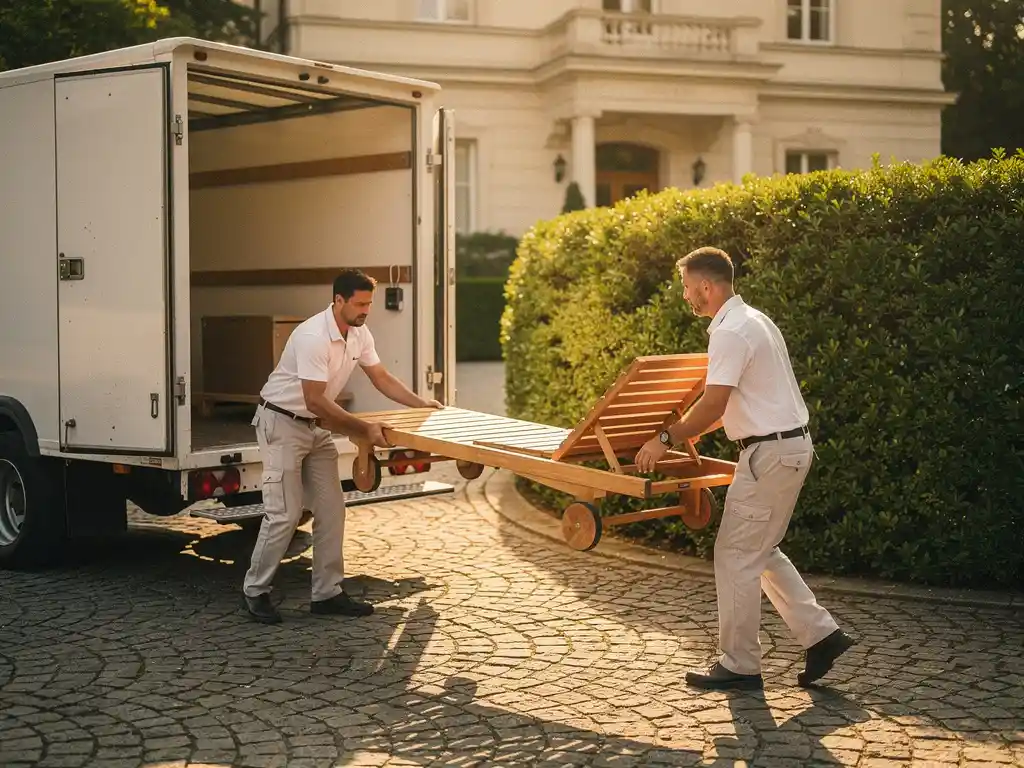
Importing designer garden furniture and getting it into the hands of customers across Europe is genuinely rewarding work. The products are beautiful, the demand is growing, and the margins can be strong. But the last mile is where things get complicated fast. You are dealing with bulky, high-value items, customers who expect white-glove service, and a patchwork of national regulations that can trip up even experienced importers.
This guide walks you through exactly how to organise last mile delivery for designer garden furniture across Europe, from building your distribution network before the first shipment arrives to measuring performance once operations are running. Follow these steps in order, and you will have a solid, scalable logistics structure in place.
Map your European delivery network before importing
Before you commit to sourcing volumes or signing supplier contracts, map out where your customers actually are. Last mile logistics for designer garden furniture across Europe is not a single problem. It is a collection of regional problems, each with its own carrier landscape, delivery expectations, and infrastructure constraints.
- Identify your primary sales markets by country and region, and rank them by expected order volume in the first 12 months.
- Research carrier availability in each market, specifically carriers experienced with large, fragile, or high-value items rather than standard parcel networks.
- Pinpoint geographic gaps where no suitable specialist carrier exists and decide whether a hub-based approach or a local partner arrangement makes more sense.
- Overlay seasonal demand patterns, since garden furniture peaks sharply in spring and early summer, which affects carrier capacity and lead times.
Once you have this map, you will know which markets you can serve confidently from day one and which ones need more groundwork. Do not skip this step. Importers who skip network mapping often discover carrier gaps only after a customer has already placed an order, which creates expensive emergency solutions and damages your reputation before it is built.
Define delivery requirements for designer garden furniture
Designer garden furniture is not standard freight. Before you approach any logistics partner or carrier, you need a precise brief that covers the physical and service requirements of your products. Vague briefs lead to damaged goods, unhappy customers, and difficult insurance conversations.
Start by documenting the following for your product range:
- Dimensions and weight per SKU, including packaging, since many designer pieces ship in oversized or irregularly shaped boxes
- Fragility level and specific handling instructions, for example whether items can be stacked, turned on their side, or require climate considerations
- Assembly requirements at the point of delivery, including whether customers expect two-person delivery teams, room-of-choice placement, or installation
- Packaging removal and disposal expectations, which vary significantly between markets
- Delivery window preferences, since premium customers typically expect narrow, pre-booked time slots rather than all-day windows
With these requirements documented, you have a clear specification to share with every logistics partner you evaluate. This also becomes the baseline for your service level agreements and the standard against which you measure delivery quality. Our furniture transport solutions are built around exactly these kinds of requirements, including specialist handling and two-person delivery teams for bulky items.
Choose between direct distribution and hub-based delivery models
With your network map and delivery requirements in hand, the next decision is your distribution model. For European last mile delivery of designer garden furniture, two primary models exist, and the right choice depends on your order volumes, geographic spread, and service promises.
Direct distribution
In a direct model, goods move from your import point or central warehouse directly to the end customer. This works well when your volumes are concentrated in a small number of markets close to your main warehouse, and when delivery lead times are not a competitive differentiator. It keeps your network simple but limits your speed in distant markets.
Hub-based delivery
A hub-based model uses regional distribution centres to pre-position stock closer to customers in key markets. This reduces last mile transit times, improves carrier relationships through consistent local volumes, and gives you more control over delivery quality in each region. The trade-off is higher fixed costs and more complex inventory management.
- Calculate your projected order volumes per country over the next 12 to 24 months to determine whether regional hubs are financially justified.
- Identify two or three potential hub locations based on proximity to your largest customer clusters and access to specialist furniture carriers.
- Evaluate whether owned warehousing, shared warehousing, or a contract logistics arrangement best fits your growth stage and capital position.
Most importers starting out with designer garden furniture across Europe begin with a direct model and transition to a hub structure as volumes grow. Plan your technology and processes to support that transition from the start, so you are not rebuilding your operations when the time comes.
Set up customs and compliance for cross-border shipments
Cross-border logistics within Europe involves more regulatory complexity than many importers expect, even for intra-EU shipments. Getting customs and compliance right protects your margins and prevents shipments from being held at borders during your peak selling season.
- Confirm the correct commodity codes for each product in your range, since garden furniture classifications can vary and affect duty rates significantly.
- Verify your country of origin documentation is complete and accurate for all products, as this determines preferential duty treatment under trade agreements.
- Register for VAT in each country where you hold stock or exceed local distance-selling thresholds, and consider using the EU One Stop Shop scheme where applicable.
- Establish a relationship with a customs broker or freight forwarder experienced in furniture imports, who can handle documentation and flag regulatory changes proactively.
- Review product compliance requirements in your target markets, including safety standards and labelling rules, which can differ between EU member states.
Verify your compliance setup by running a test shipment through each new trade lane before committing to full volumes. This surfaces documentation gaps or classification issues while the stakes are low. For complex multi-country operations, our general cargo transport and customs handling expertise can help you navigate these requirements across borders efficiently.
Coordinate returns and failed delivery handling
Returns and failed deliveries are a reality in European furniture logistics, and your process for handling them directly affects your cost base and customer satisfaction scores. Designer garden furniture has a higher return rate than standard goods due to customer expectation mismatches, damage in transit, and the seasonal nature of the category.
Build your returns process before you launch, not after your first wave of complaints arrives. Define the following clearly:
- Who is responsible for initiating and managing a return at each stage of the delivery process
- Where returned goods go, whether back to your central warehouse, a regional hub, or a local carrier depot for inspection
- How returned items are assessed, refurbished if possible, and reintegrated into sellable stock
- What your failed delivery protocol is, including how many attempts are made, how customers are notified, and what happens to goods after a set holding period
Failed deliveries are particularly costly for bulky designer furniture because the return journey is expensive. Reduce failure rates by implementing pre-delivery communication workflows, such as automated SMS or email confirmations with narrow delivery windows, and by offering flexible rescheduling options that keep the customer engaged rather than disengaged.
Measure and improve last mile performance over time
Once your last mile operations are live, the work shifts from setup to continuous improvement. Last mile logistics for designer garden furniture across Europe is a dynamic environment. Carrier performance fluctuates, customer expectations rise, and your product range evolves. A structured measurement approach keeps you ahead of problems rather than reacting to them.
Establish a core set of KPIs from your first delivery onward:
- On-time delivery rate by country and carrier, tracked weekly during peak season
- Damage rate per SKU and per carrier, which helps identify whether issues are product-specific or handling-related
- First-attempt delivery success rate, which directly impacts your cost per delivery
- Customer satisfaction score tied specifically to the delivery experience, separate from product satisfaction
- Return rate by market and by product category
- Review KPIs monthly at minimum, and weekly during your spring peak season when volume spikes create the most pressure on carrier networks.
- Hold quarterly performance reviews with each carrier partner, using your data to drive conversations about service improvements or contract adjustments.
- Benchmark your performance against your own historical data first, then against industry norms as you accumulate enough data to make meaningful comparisons.
Consistent measurement turns last mile delivery from a cost centre into a competitive advantage. Importers who know their data can negotiate better carrier rates, identify which markets are ready for investment, and deliver a consistently premium experience that supports the positioning of designer garden furniture brands. If you want to explore how a specialist logistics partner can support your European growth, get in touch with our team to discuss your specific requirements.