


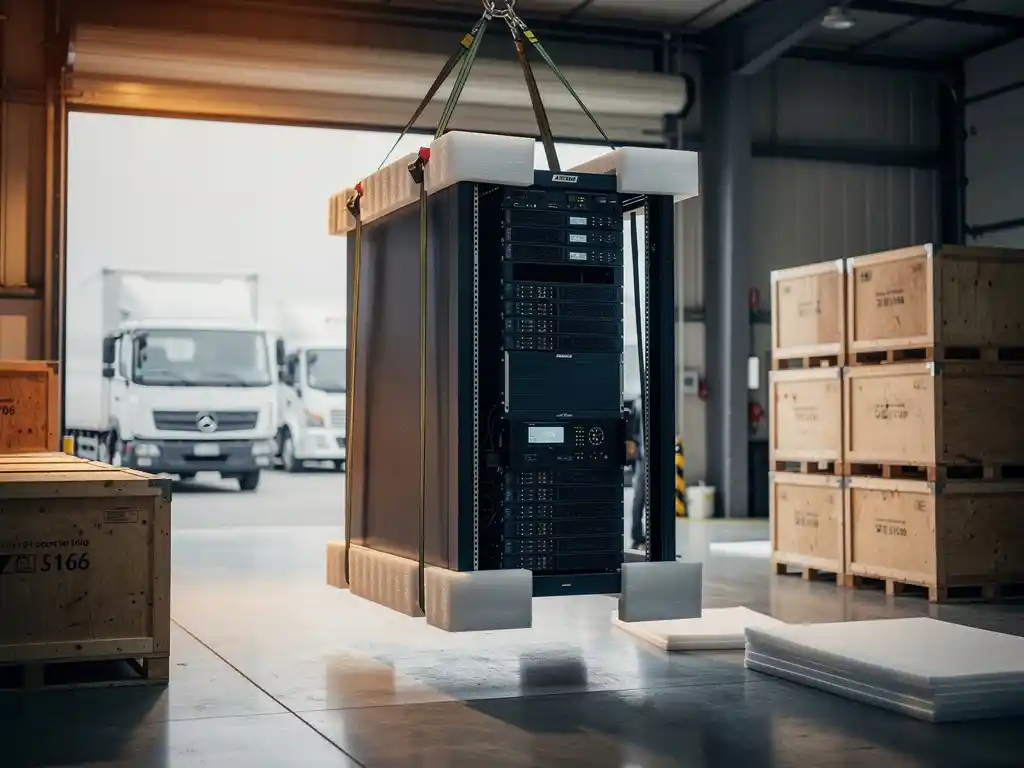
Companies that specialise in safely relocating critical infrastructure are specialist logistics providers with proven expertise in high-value, high-risk moves, combining dedicated project teams, technical installation capabilities, customs knowledge, and precision planning. Not every freight company qualifies. The right partner treats each relocation as a unique project rather than a standard shipment, building a tailored plan around the specific assets, timelines, and compliance requirements involved. Below, we answer the most common questions organisations ask when planning a critical infrastructure move.
What types of companies specialise in critical infrastructure relocation?
Companies that specialise in critical infrastructure relocation are full-service project logistics providers with demonstrated experience handling complex, high-value assets such as server infrastructure, medical equipment, industrial machinery, and telecommunications hardware. These are not general hauliers. They combine transport, technical installation, warehousing, and project management under one roof, and they build dedicated teams around each project’s specific demands.
The clearest differentiator is track record. Specialist providers have completed relocations involving sensitive equipment in controlled environments, coordinated multi-party projects across international borders, and delivered assets to operational readiness on tight schedules. We at Jan Krediet, for example, assemble server cabinets in a dust-free clean room environment and provide warehousing, refurbishment, and worldwide distribution for high-tech clients, capabilities that go well beyond standard freight handling.
Other characteristics that distinguish genuine specialists include:
- Dedicated project managers who oversee every phase from planning through to final installation
- Technically trained personnel capable of handling, assembling, and commissioning equipment on-site
- Controlled warehouse environments suited to sensitive assets
- An international partner network that extends local expertise globally
- Formal quality and environmental certifications such as ISO standards
Organisations operating in sectors like technology, healthcare, and finance should look specifically for providers with relevant sector experience, since the handling requirements and compliance expectations differ significantly between industries. You can explore the industries we serve to understand how specialist logistics expertise is applied across different sectors.
What makes relocating critical infrastructure different from standard freight?
Relocating critical infrastructure differs from standard freight because the assets involved are irreplaceable, operationally sensitive, and often subject to strict regulatory requirements. A delayed or damaged server rack, medical imaging system, or telecommunications node does not just represent a financial loss, it can halt operations, breach service agreements, or compromise safety. The margin for error is effectively zero.
Several factors make these projects fundamentally different from conventional cargo moves:
Asset sensitivity and handling requirements
Critical infrastructure assets are frequently fragile, heavy, or both. Server hardware is sensitive to vibration, static electricity, dust, and temperature fluctuations. Medical equipment may require climate-controlled transport and specialist handling protocols. Industrial machinery may need disassembly before transport and precision reassembly at the destination. Standard freight handling practices are simply not designed for these conditions.
Operational continuity pressure
Most organisations relocating critical infrastructure cannot afford extended downtime. This places enormous pressure on scheduling and sequencing. Project logistics providers use just-in-time management principles to coordinate routes, lead times, and delivery windows so that assets arrive exactly when installation teams are ready, minimising the gap between disconnection and recommissioning.
Beyond the technical and scheduling complexity, critical infrastructure moves often involve multiple stakeholders: facilities managers, IT teams, installation engineers, customs authorities, and building management. Coordinating all of these parties requires experienced project management, not just transport capacity.
What services are involved in a critical infrastructure relocation project?
A critical infrastructure relocation project typically involves a combination of transport, specialist handling, warehousing, on-site installation, project management, and customs clearance. The exact mix depends on the nature of the assets, the distance of the move, and the operational requirements at the destination. A full-service provider delivers all of these under a single point of accountability.
The core services involved include:
- Pre-move planning and risk assessment: Mapping asset inventories, defining handling requirements, and building a project timeline that protects operational continuity
- Specialist transport: Using appropriate vehicles, securing methods, and environmental controls for sensitive equipment across road, sea, or air modalities
- Controlled warehousing: Staging assets in secure, climate-appropriate environments when the move involves phased delivery or temporary storage
- On-site assembly and installation: Technically trained teams who do not simply deliver equipment but position, connect, and commission it to operational readiness
- Project management: A dedicated manager coordinating all parties, tracking progress, and resolving issues in real time throughout the project lifecycle
- Customs clearance and documentation: Managing all administrative requirements for cross-border moves, including export declarations, import permits, and duty management
Our project logistics solutions are structured precisely around this kind of end-to-end delivery, with dedicated teams assigned to each project from the initial planning phase through to final installation. We also offer warehousing services for assets that need secure interim storage during phased relocations.
How do you choose the right logistics partner for a critical infrastructure move?
Choosing the right logistics partner for a critical infrastructure move comes down to verifying three things: relevant technical capability, demonstrated project management experience, and a clear accountability structure. Price should not be the primary selection criterion when the cost of failure, in downtime, data loss, or regulatory breach, far exceeds any savings made on transport fees.
When evaluating potential partners, ask the following questions:
- Have they handled comparable projects? Request specific examples of infrastructure relocations they have completed, including the asset types, distances, and complexity involved.
- Do they have in-house technical capability? Partners who rely entirely on subcontractors for installation and commissioning introduce additional coordination risk. Look for providers with trained, employed specialists.
- Who is your single point of contact? Complex projects require one accountable person who manages all communication across transport, warehousing, installation, and customs, not a rotating team or a call centre.
- What controlled environments do they operate? For IT and medical equipment, clean room or climate-controlled warehouse capability is not optional.
- What certifications do they hold? ISO quality and environmental certifications indicate structured processes and a commitment to consistent standards.
- Can they operate internationally? If the move crosses borders, the partner needs an established network of qualified local partners, not just a willingness to figure it out.
We assign a single dedicated contact to every project, ensuring that clients have one person who knows the full picture at every stage. You can learn more about the people behind our operations by visiting our team page.
What role does customs clearance play in cross-border infrastructure relocation?
Customs clearance plays a critical role in cross-border infrastructure relocation because delays at borders can directly interrupt the operational timeline of the entire project. High-value assets like server hardware, medical devices, or specialist industrial equipment are subject to export controls, import duties, and, in some cases, sector-specific regulatory requirements. Incomplete or incorrect documentation can hold shipments for days or weeks.
A logistics partner with in-house customs expertise manages the full administrative process on behalf of the client. This includes preparing accurate export declarations, securing the correct import classifications, managing duty calculations, and ensuring compliance with any sector-specific trade regulations that apply to the assets being moved. For technology equipment in particular, export control rules can apply depending on the destination country and the nature of the hardware.
There are several practical reasons why customs handling should never be treated as an afterthought in infrastructure relocation planning:
- Incorrect tariff classification of specialist equipment can result in unexpected duty costs or shipment holds
- Temporary import regimes may apply when equipment is being relocated for installation rather than permanent sale, and these require specific documentation
- Some countries require advance permits or certifications for medical or communications equipment before it can be imported
- Post-move, customs records must be accurate for asset management, insurance, and audit purposes
We handle the complete administrative process for our clients, removing both the logistical and regulatory burden. Our project managers apply just-in-time coordination principles across the full chain, including customs stages, so that documentation is ready when assets reach the border and no time is lost to avoidable administrative delays. If you are planning a cross-border infrastructure move and want to understand how we approach the full process, get in touch with our team directly.