


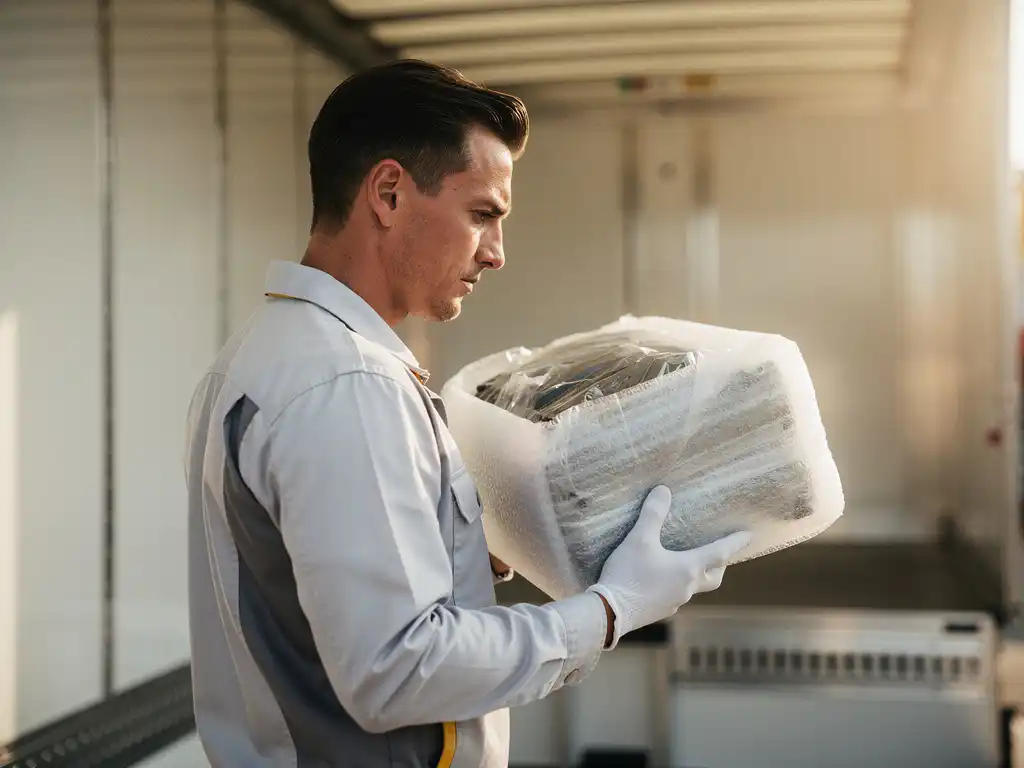
A specialist logistics provider with trained handlers, purpose-built equipment, and a structured damage-prevention process can move fragile equipment without risk of damage. The key is choosing a provider whose operations are specifically designed around product vulnerability, not one that treats all cargo the same way. Below, we answer the most important questions to help you make the right choice.
What makes equipment count as ‘fragile’ in logistics?
Equipment is considered fragile in logistics when it is vulnerable to damage from vibration, impact, pressure, moisture, or improper handling during transport, storage, or installation. This includes items where structural integrity, surface finish, or internal components can be compromised by standard cargo handling methods. The classification matters because it determines which handling protocols, vehicles, and personnel are required.
In practice, fragile equipment covers a wide range of product categories. Premium furniture and high-end kitchens fall into this category because their surfaces, joints, and finishes are easily scratched or warped. Server cabinets and IT infrastructure are fragile because internal components are sensitive to shock and static. Works of art, medical devices, and precision instruments are fragile because even minor physical stress can cause irreversible damage.
What connects all of these is that standard freight handling, designed for palletised goods or robust industrial cargo, is simply not appropriate. Fragile equipment requires two-person delivery teams, specialist loading techniques, protective wrapping or furniture blankets, and vehicles equipped for careful loading and unloading. The moment any of those elements is missing, the risk of damage increases significantly.
It is also worth noting that fragility is not always about physical delicacy alone. High-value equipment is effectively fragile from a commercial perspective: even a minor surface blemish on a premium kitchen or designer chair can result in a customer rejection, a replacement cost, and a damaged business relationship. That commercial dimension is just as relevant when choosing a logistics partner.
What type of logistics provider specialises in fragile equipment?
A specialist logistics provider for fragile equipment is one that has built its entire operation around careful, product-specific handling rather than volume-driven freight throughput. These providers train their own staff internally, operate purpose-equipped vehicles, and apply structured handling protocols that are specific to the product category they serve.
General cargo carriers can move most goods efficiently, but they are optimised for speed and volume. Fragile equipment transport demands a different model entirely. The right provider will have experience in the specific product type you need moved, whether that is premium furniture, high-end kitchens, server infrastructure, or precision instruments. Sector-specific knowledge is not a nice-to-have; it is the foundation of a damage-free outcome.
We at Jan Krediet are a clear example of this specialist model. With a century of experience rooted in furniture and kitchen logistics, we have developed handling expertise, vehicle configurations, and team structures that are built specifically around product vulnerability. That foundation has since extended into project logistics, covering server cabinet assembly, art transport, and complete office and hotel fit-outs, all of which involve fragile or high-value equipment. A specialist provider like this brings not just equipment but institutional knowledge about what can go wrong and how to prevent it.
How do specialists prevent damage during fragile equipment transport?
Specialists prevent damage during fragile equipment transport through a combination of trained personnel, purpose-built vehicles, structured pre-departure checks, and careful loading techniques. No single measure is sufficient on its own; damage prevention is a system, and every element of that system must work together consistently.
Trained two-person delivery teams
One of the most important safeguards is ensuring that fragile items are never handled by a single person. We deploy two trained professionals for every delivery of fragile goods such as kitchens and premium furniture. Before departure, these specialists conduct a final inspection of the items to confirm condition and identify any pre-existing issues. This step protects both the end customer and the client, and it ensures accountability throughout the chain.
Purpose-built vehicles and loading systems
Standard freight vehicles are not designed with fragile cargo in mind. We use swap bodies fitted with a double loading floor, which increases transport capacity while simultaneously reducing the number of loading and unloading movements required. Fewer movements mean fewer opportunities for damage. Drivers are trained in an energy-efficient driving style that also reduces vibration and sudden braking, both of which are common causes of in-transit damage to fragile goods.
Beyond the vehicle itself, the way goods are secured inside matters enormously. Furniture blankets, careful stacking, and product-specific restraint techniques are all part of standard practice for a specialist provider. These details are often absent in general freight operations, where speed of loading takes priority over care.
Clean rooms and controlled environments
For high-tech fragile equipment such as server cabinets, the environment itself is part of the damage-prevention strategy. We assemble server cabinets in a dust-free clean room within our warehouse, eliminating contamination risk during the most vulnerable phase of the logistics process. This level of environmental control is simply not available through a standard logistics provider.
What questions should you ask a logistics provider before trusting them with fragile goods?
Before entrusting fragile equipment to any logistics provider, you should ask direct questions about their handling protocols, staff training, vehicle specifications, and track record with similar products. The answers will quickly reveal whether the provider is genuinely equipped for the task or simply willing to take on the job without the necessary expertise.
Here are the most important questions to ask:
- Do you train your own staff internally for this type of product? Providers who rely solely on general freight training are not specialists. Look for in-house training programmes that are specific to the product category.
- How many people handle each delivery? For fragile goods, two-person teams are a minimum standard. A single-driver delivery model is a red flag for high-value or delicate items.
- What vehicles and loading systems do you use? Ask specifically about vehicle configuration, securing methods, and whether they use furniture blankets or product-specific protection.
- Do you conduct pre-departure inspections? A structured condition check before the vehicle leaves is a basic but critical step that not all providers perform.
- Can you handle the full logistics chain, including warehousing and installation? Fragile equipment often requires careful storage and on-site assembly, not just transport. A provider who covers the entire chain reduces the number of handoffs and therefore the number of opportunities for damage.
- What does your claims process look like? A provider who is confident in their damage prevention record will have a clear, straightforward process. Vague answers here are a warning sign.
You can also look at the provider’s client portfolio. If they work with premium brands in furniture, kitchens, technology, or interiors, that is a meaningful signal of their capability. Our client cases include names such as Herman Miller, Vitra, Moooi, Bulthaup, and WeWork, which reflects the level of trust premium brands place in specialist handling.
When does fragile equipment transport require white-glove service?
Fragile equipment transport requires white-glove service when the product is high-value, the end customer is a private individual, the delivery involves assembly or installation, or when any damage would directly affect the client’s brand reputation and customer satisfaction. In these situations, standard delivery is simply not appropriate.
White-glove service means the logistics provider takes responsibility for the entire delivery experience, not just moving the item from A to B. This includes delivery to the correct room, assembly, connection of components, removal of packaging, and a final check that everything is in perfect condition before the team leaves. For kitchens delivered directly to a consumer’s home, for example, this level of service is the only acceptable standard.
The B2C context is particularly important here. When a manufacturer or retailer delivers directly to an end consumer, that delivery moment is the most visible expression of the brand. A damaged item, a careless handler, or a missed appointment does not just create a logistics problem; it generates a negative online review that affects future sales. We recognise this directly in our approach to contract logistics, where end-customer satisfaction and the reviews it generates are treated as a commercial priority for our clients.
White-glove service is also the right choice for project logistics involving fragile equipment in complex environments. Furnishing a hotel, fitting out an office building, or installing server infrastructure in a live data centre all involve fragile goods, multiple stakeholders, tight deadlines, and zero tolerance for damage. In these scenarios, a dedicated project team that manages every phase from planning through to final installation is not a luxury; it is the only way to deliver a reliable outcome.
If you are unsure whether your shipment qualifies for white-glove handling, the safest approach is to speak directly with a specialist. Our team is available to assess your specific requirements and recommend the right level of service for your goods and your customers. You can reach us through our contact page to discuss your logistics challenge in detail.