


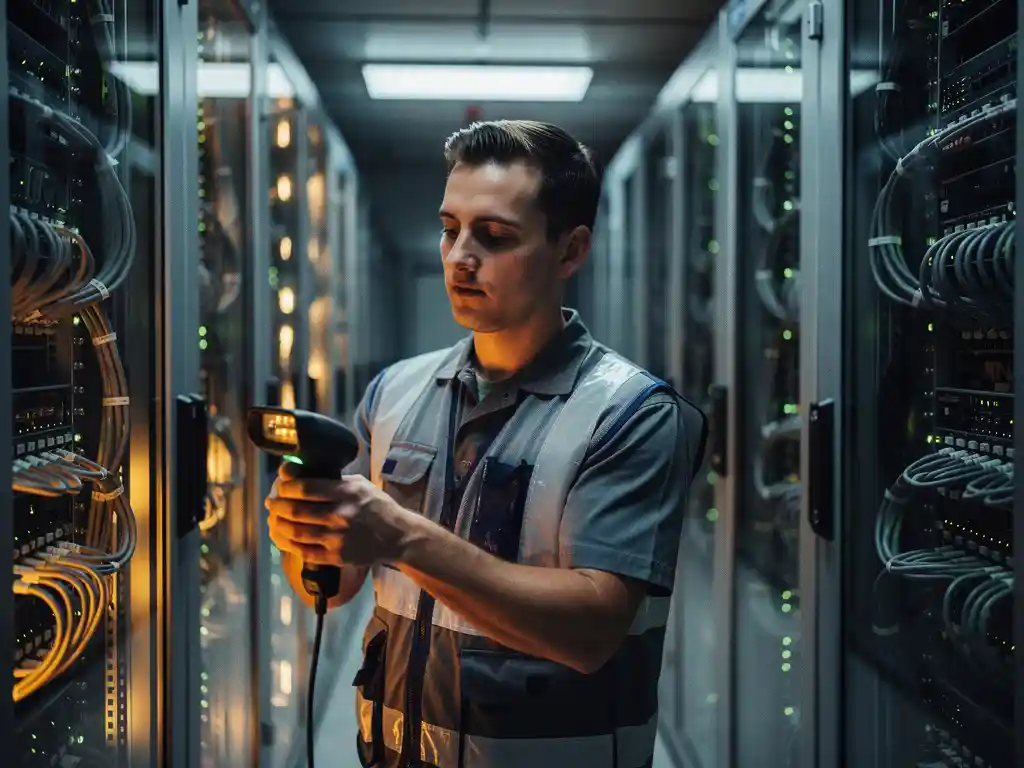
Asset tracking in a data center works by assigning a unique identifier to every physical asset, then using hardware and software systems to record where each asset is, what condition it is in, and how it is being used. The tracking process captures real-time or near-real-time data about servers, networking equipment, cables, and other infrastructure items throughout their entire lifecycle. This article unpacks the key questions surrounding data center asset tracking, from the technologies involved to the challenges operators face.
What types of assets are tracked in a data center?
Data centers track a wide range of physical and virtual assets, including servers, storage units, networking switches, routers, patch panels, power distribution units (PDUs), uninterruptible power supplies (UPS), cables, cooling units, and rack enclosures. Software licenses, virtual machines, and firmware versions are also tracked, though the focus of most asset tracking programs is the physical hardware layer.
Physical IT assets form the core of any tracking program. Each server, blade chassis, or storage array represents a significant capital investment, so knowing its exact location, configuration, and status is essential for both financial reporting and operational efficiency. A misplaced or unrecorded server can consume power and cooling resources without contributing any workload, which drives unnecessary cost.
Beyond compute hardware, data centers also track passive infrastructure such as cable runs, fiber connections, and power circuits. These assets are easy to overlook but critical to map accurately. A mislabeled cable or an undocumented power feed can cause hours of troubleshooting during an incident. Cooling equipment, including computer room air conditioning (CRAC) units and in-row coolers, is tracked as well, since its health directly affects the thermal environment of the entire facility.
What technologies are used for data center asset tracking?
The most commonly used technologies for data center asset tracking are RFID (Radio Frequency Identification), barcodes and QR codes, intelligent power distribution units, Data Center Infrastructure Management (DCIM) software, and increasingly, Bluetooth Low Energy (BLE) beacons. Each technology offers a different balance of cost, accuracy, and automation.
Barcodes and QR codes are the most accessible starting point. A technician scans a label on each asset using a handheld device, and the scan updates a central database. This approach is low-cost and easy to implement, but it requires manual effort and is only as accurate as the last scan performed.
RFID tags allow assets to be detected without line-of-sight scanning, making them faster and more reliable for large environments. DCIM software sits above all these hardware layers and consolidates data into a single platform, providing dashboards, alerts, and reporting across the entire asset inventory. BLE beacons are a newer addition, offering continuous location updates for mobile or frequently moved equipment without the infrastructure investment that full RFID deployments require.
How does RFID tracking work in a data center?
RFID tracking in a data center works by attaching a small electronic tag to each asset. The tag stores a unique identifier and communicates with fixed or handheld RFID readers via radio waves. When a reader detects a tag, it logs the asset’s identity and location in a central system, creating an automatically updated record without requiring manual scanning.
There are two main types of RFID tags used in data centers. Passive tags have no internal battery and are powered by the electromagnetic field generated by the reader. They are inexpensive, have a long lifespan, and are well-suited to assets that stay in fixed rack positions. Active tags carry their own power source and broadcast a signal continuously, enabling real-time location tracking over a wider area. Active tags cost more but are valuable for mobile equipment that moves frequently between zones.
Fixed RFID readers are often mounted at cage or aisle entry points, automatically recording every asset that passes through. Handheld readers allow technicians to perform rapid audits by walking through a row of racks and capturing all tag data in seconds rather than scanning each item individually. The data flows into a DCIM or asset management platform, where it is reconciled against the expected inventory. Discrepancies, such as an asset appearing in the wrong rack or failing to register at all, trigger alerts for the operations team to investigate.
What is the difference between asset tracking and asset management?
Asset tracking is the process of recording where an asset is and what its current status is. Asset management is the broader discipline of planning, deploying, maintaining, and retiring assets throughout their entire lifecycle. Tracking is a component of management: you cannot manage what you cannot track, but tracking data alone does not constitute a full management strategy.
Asset tracking answers operational questions in the present tense. Where is this server right now? Is it powered on? Which rack does it occupy? These answers come from the scanning, RFID, or DCIM systems described above. The data is primarily used by operations teams to maintain accuracy and respond quickly to incidents.
Asset management takes that tracking data and applies it to longer-term decisions. When does this server reach end of life? What is the total cost of ownership across the fleet? Which assets are underutilized and could be decommissioned or redeployed? Asset management also encompasses procurement planning, warranty tracking, vendor relationships, and compliance reporting. In practice, most organizations use a single platform, often a DCIM or IT asset management (ITAM) tool, that handles both functions, but understanding the distinction helps teams assign the right responsibilities and set the right goals for each system.
What are the biggest challenges of data center asset tracking?
The biggest challenges of data center asset tracking are maintaining data accuracy over time, managing the scale and pace of change in active environments, integrating tracking systems with existing IT and facilities tools, and securing buy-in from all teams that interact with physical assets. No tracking system delivers value if the data it holds is outdated or incomplete.
Data decay is the most persistent problem. Assets move, get swapped, or are decommissioned without the tracking record being updated. In a busy data center where technicians are under pressure to resolve issues quickly, updating an asset database can feel like a low priority. Over months, these small omissions accumulate into significant inaccuracies that undermine every decision the tracking system is meant to support.
Scale and velocity of change add another layer of difficulty. A large colocation facility may house tens of thousands of individual assets across multiple floors, with dozens of changes occurring every day. Tracking systems must be able to absorb this volume without creating bottlenecks for operations teams. Integration is a related challenge: asset data needs to flow cleanly into service management platforms, capacity planning tools, and financial systems. Siloed data that lives only in the tracking tool loses much of its value.
Finally, cultural adoption is often underestimated. Even the most sophisticated RFID or DCIM deployment will fail if technicians bypass the system, skip scan steps, or record changes informally. Successful asset tracking programs invest in training, clear process documentation, and accountability mechanisms to ensure the system is used consistently by everyone who touches physical infrastructure.
When should a data center invest in automated asset tracking?
A data center should invest in automated asset tracking when manual processes can no longer keep pace with the volume of assets, the frequency of changes, or the accuracy requirements of the business. Common trigger points include audit failures, repeated incidents caused by undocumented changes, growing compliance obligations, or a planned expansion that will significantly increase asset count.
For smaller facilities with a stable, well-documented inventory, a spreadsheet or basic barcode system may be sufficient. The economics of automated tracking, whether RFID or a full DCIM platform, only become favorable when the cost of inaccuracy exceeds the cost of the system. That threshold arrives sooner than many operators expect, because the hidden costs of poor asset visibility, wasted technician time, over-provisioning, and compliance risk add up quickly.
Organizations handling sensitive workloads, regulated data, or complex multi-tenant environments typically reach this threshold earlier than others. Compliance frameworks such as ISO 27001 and SOC 2 require demonstrable control over physical assets, which automated tracking directly supports. If an organization is already experiencing audit findings related to asset inventory, that is a clear signal that manual processes have reached their limit.
The right moment to invest is before a crisis, not after one. Automated tracking systems take time to implement properly, and deploying them reactively, in the middle of a capacity crunch or a compliance audit, increases both cost and risk. Planning the investment as part of a broader infrastructure refresh or data center modernization program gives teams the time to configure the system correctly, train staff, and establish the processes that will keep the data accurate long after go-live.
At Jan Krediet, we understand the operational complexity that comes with managing large-scale physical assets across multiple locations. Our warehousing solutions incorporate inventory management and tracking practices built on decades of logistics experience, supporting clients who need full visibility over their goods at every stage of the supply chain. If you are looking for a logistics partner who treats asset visibility as a foundation rather than an afterthought, get in touch with our team to discuss your requirements.