


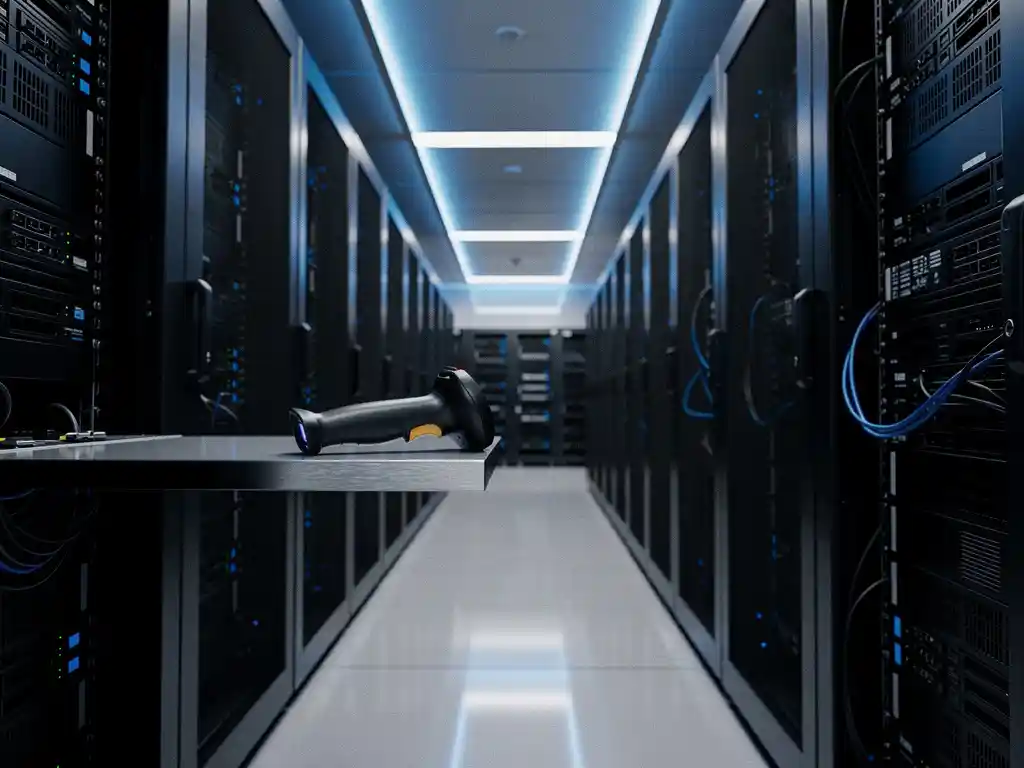
Data centers rely on a combination of tools to track their assets effectively. The most widely used solutions include RFID systems, barcode scanners, Data Center Infrastructure Management (DCIM) software, and IT Asset Management (ITAM) platforms. Choosing the right combination depends on the scale of the facility, the types of assets involved, and how frequently inventory needs to be audited. The sections below answer the most common questions about asset tracking in data centers so you can build or refine your approach with confidence.
What types of assets need tracking in a data center?
Data centers need to track both physical hardware and supporting infrastructure. The primary asset categories include servers, storage arrays, networking equipment, power distribution units (PDUs), uninterruptible power supplies (UPS), cooling units, cables, and rack enclosures. Any item that consumes power, occupies rack space, or carries data traffic is a candidate for active tracking.
Beyond the core hardware, data centers also track software licenses, virtual machines, and consumables such as spare parts and replacement drives. Tracking these assets matters because unmonitored equipment leads to capacity planning errors, compliance gaps, and unnecessary procurement spending. When you know exactly what you have, where it sits, and what condition it is in, you make better decisions about upgrades, decommissioning, and space allocation.
- Active hardware: Servers, switches, routers, firewalls, load balancers
- Power and cooling infrastructure: PDUs, UPS systems, CRAC units, generators
- Passive infrastructure: Racks, patch panels, cable trays, fiber runs
- Software and licensing: Operating systems, firmware versions, software entitlements
- Consumables and spares: Hard drives, transceivers, replacement modules
The more complex your data center environment, the more categories you will need to track. Hyperscale facilities may manage hundreds of thousands of individual assets, while a mid-sized enterprise data center might deal with a few thousand. Either way, having a defined asset taxonomy before selecting your tracking tools saves significant effort later.
What are the main tools used for data center asset tracking?
The main tools used for data center asset tracking are RFID systems, barcode and QR code scanners, DCIM software, ITAM platforms, and network discovery tools. Most data centers use a combination of these rather than relying on a single solution, because each tool addresses a different layer of the asset lifecycle.
RFID and barcode systems
RFID tags and barcode labels are the physical identification layer. They attach directly to hardware and allow technicians to scan assets during audits, moves, or installations. RFID is faster and does not require line of sight, making it better suited to dense rack environments. Barcodes and QR codes are lower-cost and work well for less frequent audits or smaller facilities.
DCIM and ITAM software
DCIM software manages the physical infrastructure layer, tracking rack positions, power draw, cooling load, and physical connectivity. ITAM platforms focus on the IT asset lifecycle, covering procurement, deployment, maintenance, and retirement. Network discovery tools complement both by automatically detecting connected devices and pulling configuration data, reducing the need for manual data entry.
How does RFID tracking work for data center assets?
RFID tracking for data center assets works by attaching a small electronic tag to each piece of equipment. A reader emits a radio frequency signal that activates the tag, which responds with a unique identifier. This identifier is matched against a database to retrieve the asset record, including location, configuration, and maintenance history, without requiring a technician to physically handle or scan each item individually.
There are two main types of RFID tags used in data centers. Passive tags have no internal power source and are activated entirely by the reader’s signal. They are smaller, cheaper, and have an indefinite lifespan, making them the most common choice for server and networking equipment. Active tags carry their own battery and can broadcast their location continuously, which is useful for high-value or frequently moved assets.
Fixed RFID readers mounted in racks or at room entry points can monitor assets in real time, alerting staff when equipment is removed without authorization or moved to an unexpected location. Handheld readers allow technicians to conduct rapid audits of entire rows of racks in minutes rather than hours. When integrated with DCIM or ITAM software, RFID data feeds directly into the central asset database, keeping records current without manual updates.
What’s the difference between DCIM and ITAM for asset tracking?
DCIM (Data Center Infrastructure Management) focuses on the physical and operational layer of a data center, tracking where assets are located, how much power they consume, how they are connected, and how the environment around them behaves. ITAM (IT Asset Management) focuses on the lifecycle and financial layer, tracking who owns an asset, what it costs, what software runs on it, and when it should be replaced or retired.
The distinction matters because the two tools answer different questions. DCIM tells you that a server is in rack 14, row C, consuming 400 watts, and connected to a specific switch port. ITAM tells you that the same server was purchased in 2021, carries a support contract expiring next quarter, and runs three licensed applications. Together, they give you a complete picture of both the physical and administrative state of your assets.
In practice, many organizations run both platforms and integrate them so that data flows between them automatically. Some enterprise DCIM platforms have absorbed basic ITAM functionality, and some ITAM tools have added physical location tracking. However, dedicated tools in each category still tend to outperform all-in-one solutions for large or complex environments. The right choice depends on whether your primary pain point is physical capacity management or IT governance and compliance.
Which asset tracking tool is best for large-scale data centers?
For large-scale data centers, a combination of enterprise DCIM software and automated RFID infrastructure delivers the best results. At scale, manual processes break down quickly, so the priority shifts to automation, real-time visibility, and integration with adjacent systems such as change management, capacity planning, and service desk platforms.
Enterprise DCIM platforms designed for large environments offer features such as automated discovery, 3D rack visualization, power chain mapping, and API integration with ITAM and CMDB (Configuration Management Database) tools. These capabilities matter at scale because even small inaccuracies in asset records compound into significant capacity planning errors when you are managing thousands of devices.
RFID infrastructure complements DCIM at scale by eliminating the audit burden. Instead of scheduling periodic manual inventories, fixed readers provide continuous location data, and exceptions surface automatically. This is particularly valuable in colocation facilities and hyperscale environments where equipment moves are frequent and access to specific cages or suites may be restricted.
Network discovery tools add another layer by automatically identifying every device connected to the network and comparing that list against the asset database. Any device that appears on the network but is not in the database, or vice versa, becomes an immediate action item. This automated reconciliation is difficult to replicate manually at large scale and significantly reduces the risk of shadow IT or untracked, decommissioned hardware remaining connected.
How do you keep asset tracking data accurate over time?
Keeping asset tracking data accurate over time requires building asset management steps into every operational process rather than treating it as a separate activity. The most effective approach is to make it impossible to complete a change, installation, or decommissioning without updating the asset record at the same time. When data entry is a byproduct of the work rather than an extra step, accuracy improves dramatically.
Several practices help maintain data quality on an ongoing basis:
- Integrate asset updates into change management: Every change request, work order, or ticket should require an asset record update before it can be closed.
- Run regular automated reconciliation: Schedule network discovery scans to compare live device data against the asset database and flag discrepancies automatically.
- Conduct periodic physical audits: Even with RFID and automated discovery, a physical walk-through at least once or twice a year catches gaps that automated tools miss.
- Assign clear ownership: Each asset category should have a designated owner responsible for its records. Shared responsibility often means no responsibility.
- Establish a decommissioning process: Retired hardware that stays in the database as active is one of the most common sources of inaccuracy. A formal decommissioning checklist that includes removing or archiving the asset record prevents this.
Data accuracy also depends on the quality of the initial data load. If your asset database starts with incomplete or incorrect records, ongoing processes will inherit those errors. Investing time in a thorough baseline audit before rolling out new tracking tools pays off significantly in the long run. The goal is a system where the database reflects reality at all times, not just on audit day.