




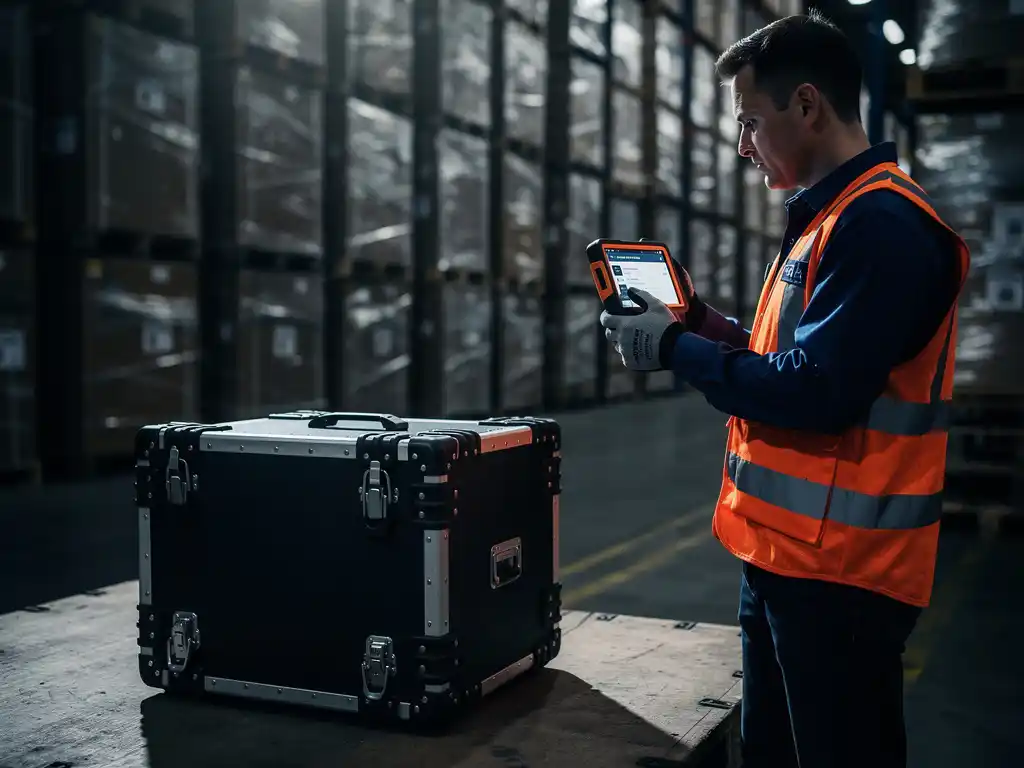
Yes, real-time tracking is available for critical IT shipments, and for high-value technology cargo, it is not a luxury but a genuine operational necessity. Modern logistics providers use GPS-enabled tracking systems, digital freight platforms, and automated status updates to give shippers continuous visibility over their goods from pickup to final delivery. The sections below break down how this works in practice, what to look for, and how to choose the right logistics partner for sensitive IT cargo.
How does real-time tracking actually work for IT shipments?
Real-time tracking for IT shipments works by attaching GPS-enabled devices or scanners to individual consignments, vehicles, or pallets, which transmit location and status data continuously to a central platform. Shippers and logistics managers can access this data through a web portal or app, giving them live visibility over exactly where their cargo is at any given moment.
The technical backbone typically combines several layers. GPS hardware on trucks or containers feeds location data to a transport management system (TMS), which then processes and displays that information in a dashboard accessible to the customer. At key handling points, such as warehouse intake, customs clearance, or cross-docking, barcode or RFID scans generate event-based status updates that complement the continuous GPS signal.
For IT shipments specifically, this level of visibility matters because the cargo is often time-sensitive, high-value, and destined for environments where delays carry operational consequences. A server cabinet arriving late at a data centre, or a batch of laptops held up at customs without notification, can disrupt entire business operations. Real-time visibility into critical component shipments allows logistics teams and their clients to intervene early, reroute if necessary, and keep all stakeholders informed without waiting for manual check-ins.
We integrate digital tracking tools into our logistics operations so that clients always have a clear, up-to-date picture of their shipment status, regardless of which transport modality or partner network is involved in moving the goods.
What types of IT equipment benefit most from live tracking?
The IT equipment that benefits most from live tracking includes server hardware, networking components, medical-grade computing devices, and any technology asset that is high in value, sensitive to handling conditions, or required on a strict delivery schedule. These categories share a common characteristic: the cost of a delayed or damaged delivery far exceeds the cost of the tracking infrastructure itself.
Server cabinets and data centre hardware are a clear example. These units are expensive, fragile, and often installed in sequences that depend on precise arrival timing. A single missing component can delay an entire infrastructure rollout. Live tracking allows project managers to monitor each unit in transit and coordinate on-site installation teams accordingly.
Networking equipment, such as routers, switches, and cabling infrastructure, often ships in multiple batches across different routes. Without visibility, consolidating these deliveries at the right moment becomes guesswork. Real-time data turns that coordination into a managed process.
Medical and laboratory computing devices carry an additional layer of urgency. These items frequently support clinical or research environments where downtime is not acceptable. Knowing the precise location and estimated arrival time of a shipment allows receiving teams to prepare and reduces the window of operational disruption.
Laptops, workstations, and peripherals for large-scale workplace rollouts also benefit significantly. When an organisation equips hundreds of employees simultaneously, even a partial delay affects productivity across teams. Live tracking gives logistics coordinators the information they need to sequence deliveries efficiently and flag exceptions before they escalate.
What’s the difference between real-time and near-real-time tracking?
The key difference between real-time and near-real-time tracking is the frequency and immediacy of data updates. Real-time tracking transmits location and status information continuously or at very short intervals, often every few seconds to a few minutes. Near-real-time tracking updates at longer intervals, typically every 15 to 60 minutes, or only when a shipment passes a fixed scan point.
For most standard freight, near-real-time tracking is sufficient. Knowing that a pallet of office supplies is somewhere on a motorway in Germany and will arrive by Thursday afternoon is enough information to plan receiving operations. The difference in update frequency does not meaningfully change the outcome.
For critical IT shipments, however, the gap matters. Consider a scenario where a shipment carrying replacement server components is rerouted due to a road closure. With near-real-time tracking, a logistics manager might not learn about the deviation for 30 to 45 minutes. With true real-time visibility, the alert arrives within moments, leaving time to notify the receiving team, adjust the installation schedule, and communicate with the end client before the delay becomes a disruption.
Another practical distinction is event-based versus continuous data. Near-real-time systems often rely on scan events at fixed points, such as depot arrivals or customs checkpoints. Real-time systems supplement those scans with continuous GPS data, so visibility does not disappear between scan points. For high-value IT cargo moving across borders or through multiple handling stages, continuous data coverage is the more reliable option.
How does real-time tracking reduce risk for high-value IT cargo?
Real-time tracking reduces risk for high-value IT cargo by shortening the time between a problem occurring and a response being initiated. When logistics teams can see exactly where a shipment is and receive instant alerts for exceptions such as unexpected stops, route deviations, or temperature changes, they can act before a minor issue becomes a costly one.
Theft and loss are among the most serious risks for high-value technology shipments. GPS-enabled tracking makes stolen or misrouted cargo significantly easier to locate and recover. The visibility itself also acts as a deterrent, since cargo under continuous monitoring is less attractive to opportunistic theft than untracked freight.
Damage risk is also reduced through monitoring. Some advanced tracking systems include sensors for shock, vibration, humidity, and temperature, all of which are relevant for sensitive electronics. If a unit records an impact event or exposure to conditions outside the agreed parameters, the logistics team is notified immediately and can document the incident before delivery, protecting both parties in any subsequent insurance or liability discussion.
Real-time visibility into critical component shipments also supports better decision-making during customs delays. Cross-border IT shipments frequently require documentation verification, and delays at customs are not uncommon. When a logistics team can see that a shipment has been held and for how long, they can proactively engage with customs authorities, prepare additional documentation, and keep the client informed rather than discovering the issue only after a missed delivery window.
Finally, tracking data creates an auditable record of the entire shipment journey. For regulated industries or clients with strict compliance requirements, this documentation is often a contractual or legal requirement rather than a nice-to-have feature.
What should a real-time tracking system include for IT logistics?
A real-time tracking system for IT logistics should include continuous GPS location updates, automated exception alerts, event-based milestone notifications, a customer-accessible dashboard, and integration with the logistics provider’s transport management system. Together, these components give shippers the visibility and control they need for sensitive technology shipments.
- Continuous GPS updates: Location data should refresh frequently enough to give an accurate picture of the shipment’s position between fixed scan points, not only when a vehicle arrives at a depot or crosses a border.
- Automated exception alerts: The system should notify relevant parties immediately when something deviates from the plan, whether that is an unexpected stop, a route change, a customs hold, or a delivery attempt that could not be completed.
- Milestone notifications: Automated updates at key stages, such as pickup confirmed, in transit, customs cleared, out for delivery, and delivered, keep clients informed without requiring them to log in and check manually.
- Customer portal or app access: Clients should be able to check shipment status independently at any time, without having to contact their logistics coordinator for a manual update.
- Condition monitoring for sensitive cargo: For electronics that are vulnerable to shock or environmental conditions, sensor data for temperature, humidity, and impact should be accessible alongside location data.
- Integration with customs and documentation workflows: For international IT shipments, the tracking system should connect with customs clearance processes so that documentation status is visible alongside physical location.
- Single point of contact backed by data: Technology is most effective when paired with a dedicated logistics contact who can interpret the data and take action. A system that flags an exception is only as useful as the team behind it.
Our warehousing and distribution operations include online tracking access for clients, so that every step from goods reception through to final delivery is visible and documented.
How do you choose a logistics partner with reliable IT shipment tracking?
To choose a logistics partner with reliable IT shipment tracking, evaluate their technology infrastructure, their experience with high-value or sensitive cargo, the transparency of their communication model, and whether they offer a dedicated contact person who can act on tracking data in real time. Tracking capability is only valuable when it is paired with the expertise and responsiveness to use it effectively.
Start by asking specific questions about the tracking technology they use. A credible logistics provider should be able to explain how their system works, what data it captures, how frequently it updates, and how clients access it. Vague answers or a reliance on carrier-provided tracking alone are signs that visibility may be limited once the shipment leaves their direct control.
Experience with IT or technology logistics is equally important. Handling server hardware, networking equipment, or large-scale device rollouts requires specific knowledge of packaging requirements, clean-room handling, customs documentation for technology goods, and installation coordination. A logistics partner with a proven track record in project logistics for the technology sector will understand these requirements without needing to be educated on them.
Assess their partner network as well. International IT shipments rarely move through a single carrier from origin to destination. A logistics provider that works with a vetted global network and holds those partners to the same service standards they apply to their own operations gives you consistent visibility and accountability across the entire journey, not just the legs they handle directly.
Finally, look at how they handle exceptions. Ask what happens when a shipment is delayed at customs, when a delivery attempt fails, or when a vehicle breaks down. The answer will tell you whether their tracking system is connected to a responsive operational team or simply a dashboard that records what has already gone wrong.
We have been building logistics expertise since 1924, and our approach combines advanced tracking tools with a single dedicated contact for each client, ensuring that the data you see is always backed by someone who can act on it. If you want to discuss how we handle critical IT shipments, our team is ready to help. Get in touch with us to explore the right solution for your needs.