


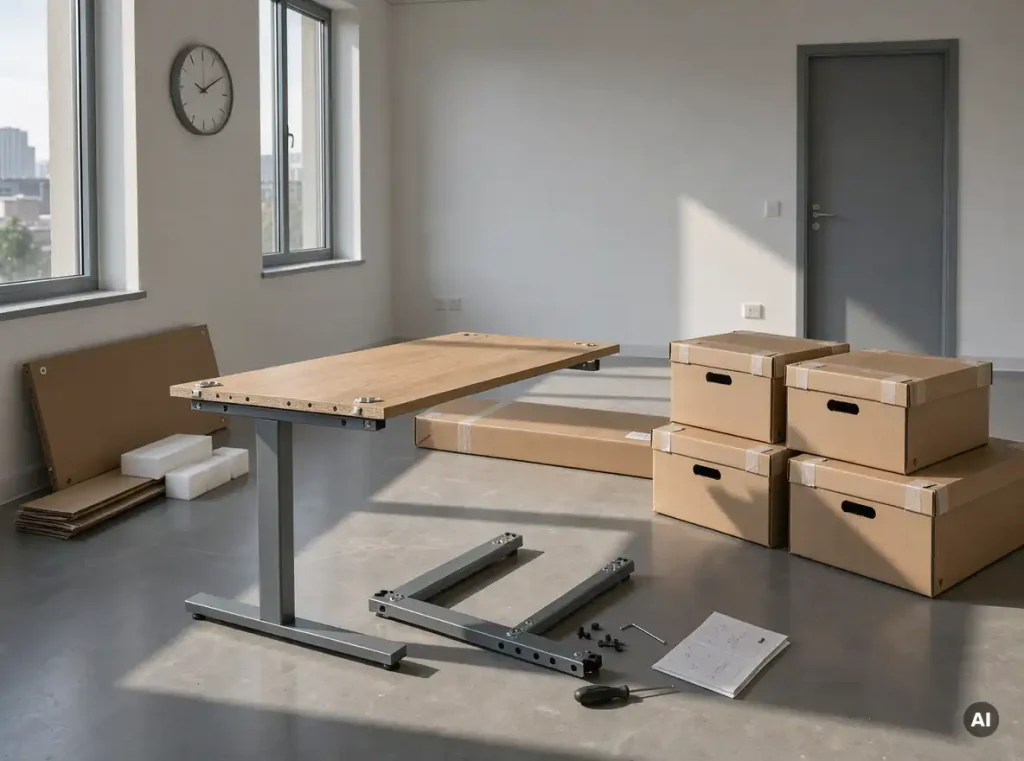
A furniture fit-out is likely to run late when you see seven early signals: vague supplier lead times, silent production updates, an unready site, unconfirmed delivery access, missing installation sequencing, no buffer between trades, and a handover date nobody has stress-tested. Spotting these signs early gives you weeks, not days, to react.
Most late fit-outs do not fail suddenly. They drift, one small slip at a time, until the opening date is at risk. As a furniture logistics and project logistics specialist since 1924, we have seen the same patterns repeat across offices, hotels and schools. Below we answer the questions project teams ask most about fit-out project delays.
Which delays hit furniture fit-outs most often?
The most common furniture fit-out delay comes from late product availability: production overruns, missing components and transport that is booked too late. Site readiness and installation sequencing follow closely. Together these three account for most of the late furniture delivery problems that push a fit-out past its planned handover date.
A fit-out depends on a chain of events happening in the right order. When one link moves, everything behind it moves too. The usual suspects include:
- Production and supply slippage: manufacturers extend lead times or ship in partial batches.
- Site not ready: painting, flooring or electrical work overruns, so furniture cannot be placed.
- Damaged or incomplete deliveries: items arrive broken or with missing parts and need replacing.
- Poor sequencing: furniture, IT and décor arrive in the wrong order and block each other.
The first two warning signs on your list are really about this chain: lead times that stay vague, and a site that is not yet confirmed as ready. Both deserve attention weeks before delivery.
How can supplier and production delays be spotted early?
Supplier and production delays show up as vague answers: lead times given as ranges, no dated production milestones, slow replies to simple questions and sudden requests to split orders. Treat any supplier who cannot give a firm ex-works date as a risk, and ask for written production confirmation well before the planned shipping date.
Good suppliers share progress without being chased. When you have to chase, that is already a warning sign. Watch for these signals:
- Lead times that change between quotes and order confirmations.
- No fixed production slot or confirmed completion date.
- Reluctance to share photos or progress updates from the factory.
- Requests to change finishes or specifications late in the process.
Build a simple tracking routine. Ask each supplier for a dated milestone list, such as materials secured, production started, quality check passed and ready for collection. Review it weekly. If you ship goods from several manufacturers, consolidating them in a nearby warehouse lets you check completeness before anything travels to site. Our warehousing services are built for exactly this kind of staging.
What site and delivery issues cause last-minute slippage?
Last-minute slippage usually comes from site and access problems: unfinished building work, unconfirmed unloading permissions, lifts that are too small or not yet working, and delivery windows that clash with other trades. These issues are easy to prevent with a pre-delivery site check, but costly when discovered on the day.
Even perfect products cannot be installed in a space that is not ready. Common site-side warning signs include:
- Unfinished preceding trades: floors still curing, ceilings open or paint not dry.
- Unclear access: no confirmed loading bay, parking permit or lift booking for the delivery date.
- Restricted routes: narrow stairwells, low doorways or lifts that cannot take large pieces.
- Clashing schedules: several contractors competing for the same floor or hoist on the same day.
- No site contact: nobody on location who can sign off the delivery and answer questions.
A short site survey a few weeks before delivery catches most of these problems. Confirm measurements, access routes, floor protection and the exact delivery sequence per floor or room. Inner-city and high-rise projects need extra attention, since time slots and hoist capacity are often limited.
Does a fit-out logistics partner reduce the risk of delays?
Yes. A specialist fit-out logistics partner reduces delay risk by coordinating transport, storage, delivery sequencing and installation under one plan, with one point of contact. This removes handover gaps between separate parties, which is where many schedule problems begin, and creates earlier visibility on anything that threatens the deadline.
Fit-outs often involve many parties: manufacturers, carriers, installers and site managers. Every handover is a place where information gets lost. A partner who handles the whole chain can plan backwards from the handover date and align every step.
In practice, this means:
- Goods are received, checked and stored centrally before they are scheduled for site.
- Deliveries follow the installation sequence, room by room or floor by floor.
- Installers and drivers are briefed on the specific project and furniture.
- One contact person keeps you informed, instead of you chasing several parties.
Our project logistics team builds dedicated project teams for offices, schools and hotels, covering planning, coordination, delivery and installation. Specialist handling matters too: premium furniture needs trained people and the right equipment to arrive undamaged and on time. If you want to see how this works in real situations, take a look at our project cases.
What should be done when a fit-out is already slipping?
When a fit-out is already slipping, act in this order: identify the exact cause, re-plan the critical path, prioritize what must arrive first, and communicate the new dates to everyone involved. Quick, honest re-sequencing usually saves more time than waiting and hoping the delay will resolve itself.
Speed matters, but so does a calm, structured response. Work through these steps:
- Find the root cause. Is it production, transport, site readiness or access? The fix depends on the answer.
- Re-plan around the critical path. Decide which areas or items must be finished first, such as reception, meeting rooms or the first guest floor.
- Split deliveries. Ship available items in phases instead of waiting for a complete order.
- Use buffer capacity. Stored stock, extra installation crews and extended working hours can recover days.
- Communicate clearly. Share the revised plan with the client, suppliers, installers and site management on the same day.
- Document changes. A clear record protects everyone when the schedule is reviewed afterward.
The remaining warning signs from the list are about discipline rather than events: no buffer between trades, installation sequencing that exists only in someone’s head, and a handover date that has never been stress-tested. If any of these ring true for your project today, now is the time to fix them. When you want a second opinion or practical support on a complex fit-out, you are welcome to get in touch with us, and we will gladly think it through with you.