


When a furniture supplier is delayed, first get a confirmed new delivery date in writing, then protect your project timeline by resequencing work, arranging temporary alternatives, and keeping customers informed. Quick, structured action limits the damage and keeps trust intact.
The right response depends on how long the delay is and how much of your schedule depends on it. Below, we walk through the causes, the practical fixes, and how to stop it from happening again.
If you want to know more about who we are and how we approach furniture logistics, take a look at our company background.
What Usually Causes Furniture Delivery Delays?
Furniture delivery delays usually come from production backlogs, raw material shortages, customs or transport bottlenecks, and poor coordination between suppliers and carriers. Most delays start upstream at the factory and only become visible when a delivery date is missed.
Knowing the likely cause helps you judge how serious the delay is and how quickly it can be solved. The most common culprits are:
- Production issues: machine downtime, staff shortages, or a sudden surge in orders can push finished goods back by days or weeks.
- Material shortages: specific fabrics, hardware, or finishes may be unavailable, especially for premium and custom pieces.
- Transport and customs problems: port congestion, missing paperwork, or border checks can hold up shipments, especially on international routes.
- Quality control failures: a batch that fails inspection has to be corrected or remade before it can ship.
- Planning gaps: unrealistic lead times or poorly coordinated handovers between factory, warehouse, and carrier create avoidable slippage.
Furniture is also vulnerable cargo. Careful handling takes time, and rushing a delivery can lead to damage that causes a second, longer delay.
How Can You Get Reliable Updates From a Delayed Supplier?
To get reliable updates from a delayed supplier, ask for a named contact, a written revised delivery date, and a fixed update schedule. Vague promises like “soon” are not enough. You need specific milestones, such as production completion, dispatch, and arrival, that you can check against.
Start by asking the supplier directly for the root cause and what they are doing about it. A transparent answer tells you a lot about how likely the new date is to hold. Then agree on a rhythm, for example, a short update every two or three days, so you are never chasing news.
It also helps to ask for proof points. Photos of finished goods, a booking confirmation with the carrier, or a tracking reference all turn a promise into something verifiable. If the supplier cannot provide any of these, treat the new date with caution and start preparing a backup plan.
How Do You Protect a Project Timeline During a Delay?
You protect a project timeline during a delay by resequencing tasks, splitting deliveries into phases, and arranging temporary solutions for the missing items. The goal is to keep other work moving so that one late shipment does not stall the entire project.
Several practical moves work well:
- Resequence the work. Bring forward tasks that do not depend on the delayed furniture, such as flooring, painting, or technical installations.
- Phase the delivery. If part of the order is ready, ask for a partial shipment so rooms can be completed in stages.
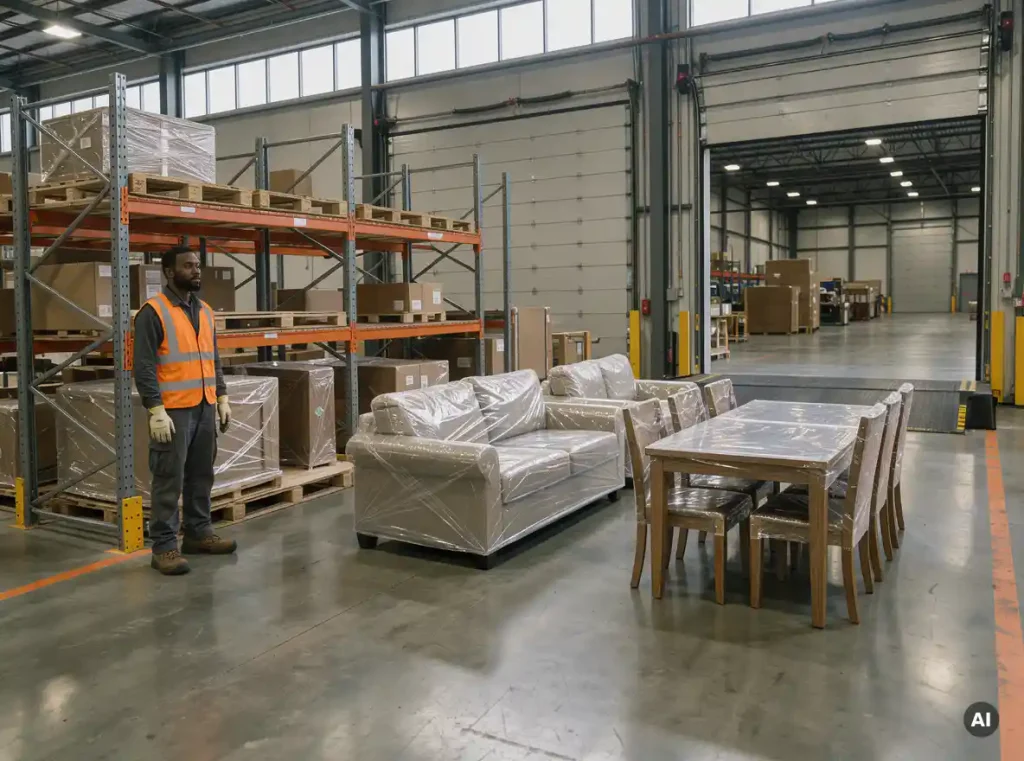
- Use temporary storage. Secure warehousing lets you receive items as they arrive and hold them until the site is ready, which avoids double handling and damage on a busy building site.
- Arrange interim solutions. Rental pieces or stock alternatives can bridge a gap for key spaces, such as a reception area or meeting rooms.
- Update the installation plan. Reschedule fitting teams and access slots once the new date is confirmed, so crews are not waiting around.
For large furnishing jobs, a dedicated coordinator makes a real difference. Complex project logistics involve many parties, and one person who sees the whole picture can adjust quickly when something shifts.
Should You Switch Suppliers or Wait for the Delivery?
You should wait if the delay is short, the new date is credible, and the product is custom or hard to replace. You should switch if the delay is long, communication is poor, or an equivalent product is available from stock. The decision comes down to cost, time, and risk.
Ask yourself these questions before deciding:
- How long is the delay, and is the new date backed by evidence?
- Is the item custom-made, or is a comparable product available elsewhere?
- What does waiting cost you in penalties, idle crews, or lost revenue?
- Would switching mean cancellation fees, new lead times, or a mismatch in design?
- Has this supplier delivered reliably in the past?
A useful middle path is a hybrid approach. Keep the original supplier for the main order, and source a small number of critical items elsewhere to protect the most time-sensitive areas. This limits your exposure without throwing away a relationship that may otherwise work well.
How Should You Tell Customers About a Furniture Delay?
Tell customers about a furniture delay as early as possible, in plain language, with a clear new date and a practical next step. Honest, proactive communication protects trust far better than silence, and most customers accept a delay when they feel informed and respected.
A good delay message includes four things:
- What happened: a short, honest explanation without excuses or technical jargon.
- The new date: a realistic window, not an optimistic guess. It is better to promise a later date and beat it than the opposite.
- What you are doing: the steps you are taking to speed things up or reduce the impact.
- What the customer can do: options such as a partial delivery, a temporary alternative, or a rescheduled appointment.
Follow up as promised. Online tracking and proactive notifications keep customers informed without them having to call you. This matters because customer experience shows up directly in online reviews, and a well-handled delay is far less likely to end up as a complaint than a badly communicated one.
How Can a Logistics Partner Help Prevent Future Delays?
A logistics partner prevents future delays by adding planning discipline, buffer capacity, and clear communication between supplier, warehouse, and delivery team. With one party overseeing the chain, problems are spotted earlier and solved before they reach the customer.
Specialist furniture logistics adds value in several ways. Inventory held in a nearby warehouse acts as a buffer when a supplier runs late. A single point of contact keeps updates consistent, even when several carriers or partners are involved. Customs handling, assembly, and installation can be arranged under one roof, which removes handover gaps where delays tend to hide.
At Jan Krediet, we have specialized in furniture transport since 1924, and we know how fragile and time-sensitive these deliveries are. We train our own people in careful handling, and we back our work with a global network of partners, so we can adapt quickly when plans change.
If supplier delays are a recurring problem in your business, we are happy to look at your supply chain together. You can get in touch with us to talk through your situation and find a more resilient setup.