


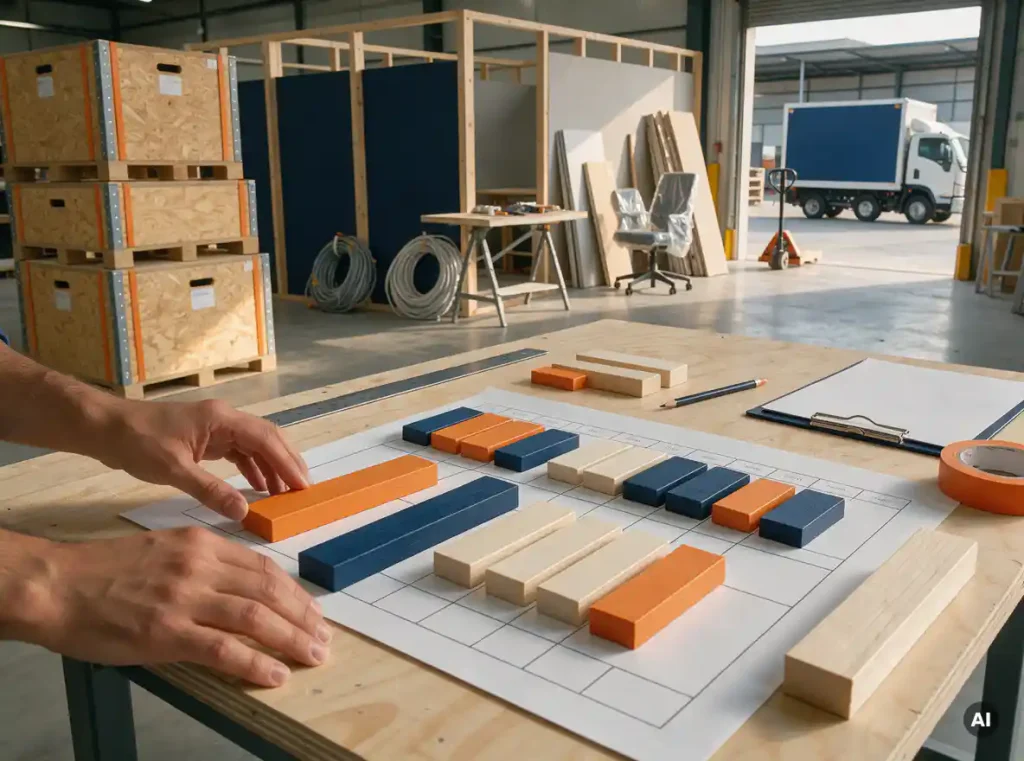
When a fit-out deadline moves forward, replan by re-confirming the new date with all parties, rebuilding the delivery sequence around installation priority, and securing transport, warehouse and supplier capacity for the compressed window. The faster you separate critical items from flexible ones, the less disruption reaches the site.
The right response depends on how much of the project is already in motion, but the same core steps apply to offices, schools, hotels and showrooms alike. Below, we walk through the questions project teams ask most often when the schedule shrinks.
What should be checked first when the deadline shifts?
Start by confirming the new date, what it actually covers, and what is already in progress. Verify the revised completion milestone with the client or main contractor, then compare it with current stock locations, supplier lead times, and installation team availability. These checks show what is still achievable and where the real bottlenecks sit.
A quick fact-finding round saves days later. Work through this checklist:
- The new date itself: is it a hard handover, a partial opening, or a floor-by-floor target?
- Site readiness: are floors, walls, power and access points ready to receive furniture earlier than planned?
- Goods status: what is produced, what is in transit, and what is still in production?
- Installation capacity: can assembly teams start sooner, work longer shifts or work in parallel?
- Constraints on site: lift bookings, loading bay slots, building access hours and permits.
Our project managers usually run this check as a single call with everyone present, because a shifted deadline rarely affects just one party. For complex jobs, a dedicated project team is a big help here, which is why we build one around every large project logistics assignment.
How do you re-sequence deliveries by installation priority?
Re-sequence by working backwards from the installation order, not the original shipping order. Deliver items that must be installed first, or that block other trades, at the front of the schedule. Group goods by floor, zone or room so each delivery supports a complete, usable section of the building.
To rebuild the sequence in a practical way:
- Map the installation order. Identify which zones need to be finished first, such as reception areas, meeting rooms or the first guest floor.
- Tag critical items. Mark anything with long assembly time, special handling needs or dependencies, like workstations that need cabling.
- Bundle by zone. Load and label goods per room or floor so installers receive complete sets rather than mixed pallets.
- Push flexible items back. Loose furniture, accessories and decoration can arrive last without blocking handover.
- Build in a short buffer. Leave room for a missed slot or a damaged item.
This approach to installation sequencing also supports just-in-time site delivery, which matters when storage space on site is limited and a crowded corridor slows every team down.
Which transport and warehouse options speed things up?
The fastest options are extra capacity on the road, consolidated loads, and a nearby warehouse holding stock close to the site. Adding vehicles or runs shortens the delivery window, while a warehouse buffer lets you release goods in the exact order installers need them.
Transport options for an accelerated delivery schedule
More frequent, smaller runs often beat fewer large ones when the site can only receive limited volume. Dedicated vehicles, additional runs per day and evening or weekend deliveries can all compress the timeline. Efficient loading matters too. We use swap bodies with a double loading floor, which raises capacity and cuts loading and unloading time, so drivers can spend more of their day on careful handling. Our own fleet and partner network make it easier to scale up quickly when the timeline tightens. For furniture specifically, our furniture transport teams plan routes and lead times together with the customer.
Warehouse buffer stock and pre-staging
Holding goods in a warehouse near the project gives you flexibility that direct factory-to-site shipping cannot. Goods can be received, checked, sorted by zone and pre-staged, then released in installation order. This buffer stock absorbs late supplier deliveries and removes the pressure from the site itself. Pre-assembly in the warehouse can also shorten on-site installation time. Our warehousing capacity is set up for exactly this kind of staged release.
What if suppliers cannot meet the earlier date?
If suppliers cannot meet the earlier date, split the order into what can arrive in time and what cannot, then protect the critical path. Ask each supplier for a realistic partial shipment date, prioritise essential items, and agree on interim solutions for the rest so the site can still open or hand over on schedule.
Practical options include:
- Partial deliveries: accept finished items now and ship the remainder later, rather than waiting for a full order.
- Re-prioritised production: ask suppliers to produce critical zones first.
- Alternative sourcing: check whether equivalent items are available from stock elsewhere, with client approval.
- Temporary placement: install the available items first and return later for late arrivals, if the building allows it.
- Early consolidation: collect items from several suppliers in one warehouse so they travel to site together.
Be open with the client early. A clear message that most of the project will be ready, with a firm date for the remainder, is far easier to manage than a late surprise on handover day.
How do you keep the site team aligned during the change?
Keep the site team aligned with one shared, up-to-date schedule, a single point of contact, and short, regular check-ins. Everyone from drivers to installers should work from the same plan, so that changes reach all parties at the same moment and nobody acts on outdated information.
A few habits make a real difference:
- One schedule, one version: circulate a single revised plan and retire older versions immediately.
- A named contact: a dedicated project manager who owns communication removes confusion about who to call.
- Daily check-ins: a brief morning briefing covers deliveries due, access slots and any issues from the day before.
- Clear delivery windows: share time slots with building management and installers in advance.
- Quick escalation: agree how delays or damaged goods are reported, so decisions are made in hours rather than days.
This is where experience on large installations pays off. Our project managers oversee a client’s project from start to finish and keep every party informed. If you are facing a shortened timeline right now, get in touch with our team and we will help you build a delivery plan that fits the new date.