


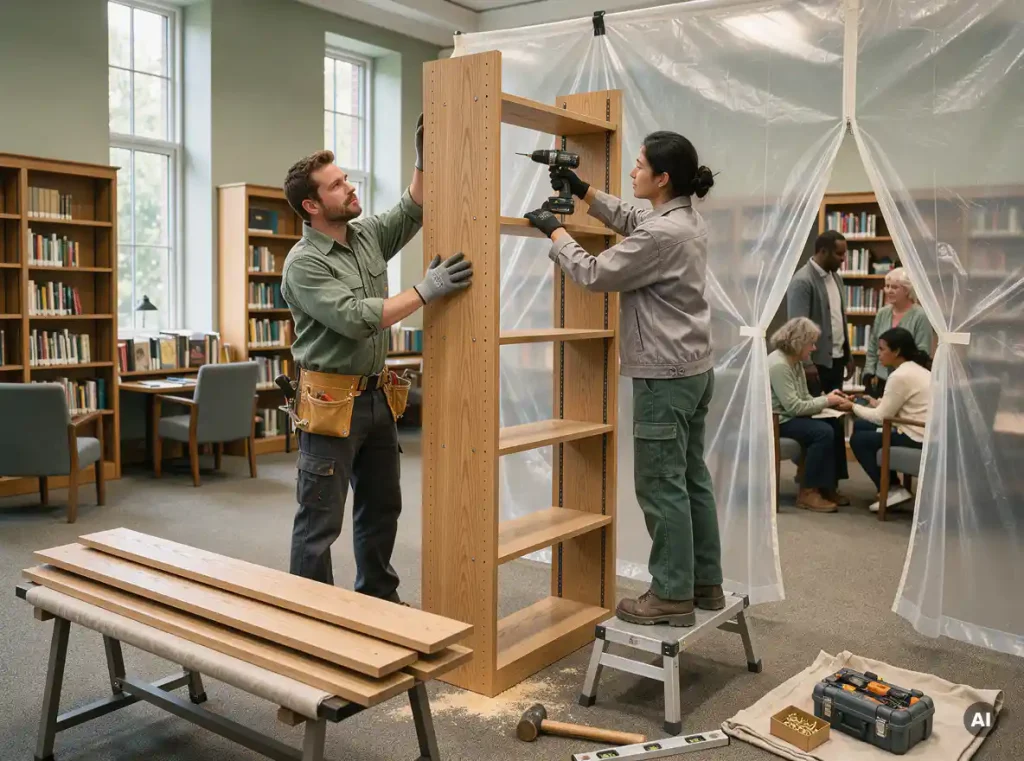
Libraries can install new shelving while staying open by working in phases, zone by zone, and saving the noisiest and most disruptive tasks for evenings, early mornings, or closed days. Careful planning, clear sectioning, and good communication keep borrowers served while crews work.
The right approach depends on the size of your building, the collection, and how busy each area is. The questions below cover how to plan the phases, schedule the work, control risks, move books, talk to visitors, and decide when to bring in outside help.
What does a phased shelving installation plan look like?
A phased shelving installation plan divides the library into zones and completes one zone at a time, so most of the building stays open. Each phase covers clearing, installing, reloading, and reopening a single area before the next one begins.
Start by mapping the floor plan and ranking zones by how heavily borrowers use them. Quieter areas, such as reference or archive sections, usually go first. They give the crew a chance to refine its routine before it reaches busy fiction or children’s areas. A typical plan includes:
- Survey and measurement: confirm floor levels, wall fixings, fire exits, and lighting positions before any shelving arrives.
- Zone sequencing: decide the order of areas and how long each will be closed.
- Temporary collections: set up a small, accessible pop-up selection so popular titles remain available.
- Delivery scheduling: time deliveries and staging so materials never block aisles or entrances.
- Handover and reopening: check each finished zone for stability, labelling, and accessibility before books return.
Build in buffer days between phases. Delays happen, and a schedule with some breathing room protects both your opening hours and your budget. Good library shelving project planning treats the timeline as flexible and the borrower experience as fixed.
Which installation tasks are best done outside opening hours?
Tasks that create heavy noise, dust, or hazards are best done outside opening hours. These include drilling into floors or walls, cutting materials, moving large shelving units through public areas, and any work that needs aisles or exits fully clear.
Many libraries run project logistics style schedules, where the loud and disruptive work happens in the evening or early morning and the quieter assembly happens during the day. Good candidates for after-hours work include:
- Drilling, anchoring, and fixing shelving to walls or floors
- Delivering and unloading bulky components
- Moving units across main thoroughfares
- Final levelling and safety checks that need clear floor space
Daytime work can focus on lower-impact jobs inside a screened-off zone, such as assembling pre-cut units or fitting shelf brackets. Check your building’s access rules, insurance terms, and neighbour restrictions first, because some premises limit evening noise. After-hours shelving installation often costs a little more in labour, but it usually saves far more in goodwill and lost footfall.
How can noise, dust, and safety risks be controlled?
Control noise, dust, and safety risks by physically separating the work zone from public areas, choosing low-dust methods, and scheduling the loudest tasks for quiet times. Solid hoarding, signage, and a clear site routine protect both visitors and staff.
Practical measures include:
- Solid barriers: use full-height screens rather than tape or cones, and seal gaps to limit dust spread.
- Dust control: use drills with extraction, damp-wipe surfaces, and cover nearby collections with protective sheeting.
- Noise management: keep drilling and cutting for after-hours, and warn staff before any loud task starts.
- Clear routes: keep fire exits, accessible paths, and emergency lighting unobstructed at all times.
- Safe stacking: never leave loose shelving components, ladders, or tools unattended in public view.
Brief the installation crew on library etiquette too. Quiet voices, tidy workspaces, and respect for readers go a long way. A named site contact who walks the zone at the start and end of each day helps catch hazards early. Dust-sensitive materials, such as rare books or archives, may need to move off-site or into sealed storage before work begins.
How do you move books without disrupting borrowers?
Move books in planned batches, zone by zone, using a clear numbering and tracking system so every title stays findable. Relocating collections during quiet periods and keeping popular items on accessible temporary shelves keep borrowers served throughout.
A reliable library collection relocation follows a few core steps:
- Audit the collection: note sequences, shelf counts, and any fragile or special items.
- Label everything: number crates or trolleys in shelf order so books return in exactly the right sequence.
- Use temporary shelving: create a compact holding area for high-demand titles, and update the catalogue so staff know where items are.
- Move in small batches: never empty more shelves than the crew can reinstall within the planned window.
- Reshelve and verify: check order and spacing before reopening the zone.
Consider offering a request service during the project. Borrowers can ask staff to retrieve a title from storage, which turns a potential frustration into a helpful touch. Weeding out damaged or outdated stock before the move also reduces how much needs to be handled, which shortens the whole project.
How should libraries communicate with visitors during the project?
Libraries should communicate early, often, and in several places: on-site signs, the website, social media, and face-to-face with staff. Visitors cope well with disruption when they know what is changing, for how long, and where to find what they need.
Useful communication tactics include:
- Advance notice: announce the project weeks ahead, with a simple timeline and what to expect.
- Clear signage: mark closed zones, alternative routes, and temporary collection locations with large, readable signs.
- Digital updates: keep a short project page on the website and post regular progress notes.
- Staff briefings: make sure every team member can answer common questions confidently.
- Positive framing: explain the benefits, such as better accessibility, more space, or improved layouts.
Invite feedback too. A simple comment box or short survey helps you spot problems early and shows readers that their experience matters. When people feel informed and heard, they tend to be patient, and many even enjoy watching the library improve in stages.
When is hiring an experienced installation partner worth it?
Hiring an experienced installation partner is worth it when the project is large, the timeline is tight, or the library must stay open throughout. Specialists bring tested methods for phasing, handling, and installing that reduce risk, delays, and damage.
Consider outside help if you face any of the following:
- Multiple zones that must be completed in a strict sequence
- Large volumes of shelving that need careful delivery and staging
- Limited staff capacity to manage logistics alongside daily operations
- Valuable or fragile collections that need expert handling
At Jan Krediet, we have handled furniture transport and complex fit-outs for schools, offices, and other public spaces for a century, so we know how to plan around people who still need to use the building. Our dedicated project teams coordinate planning, delivery, and on-site installation, and our experience also covers warehousing for temporary storage when collections or components need a safe place to wait. If you are weighing up a shelving project, you are welcome to get in touch and talk through your plans with us.