


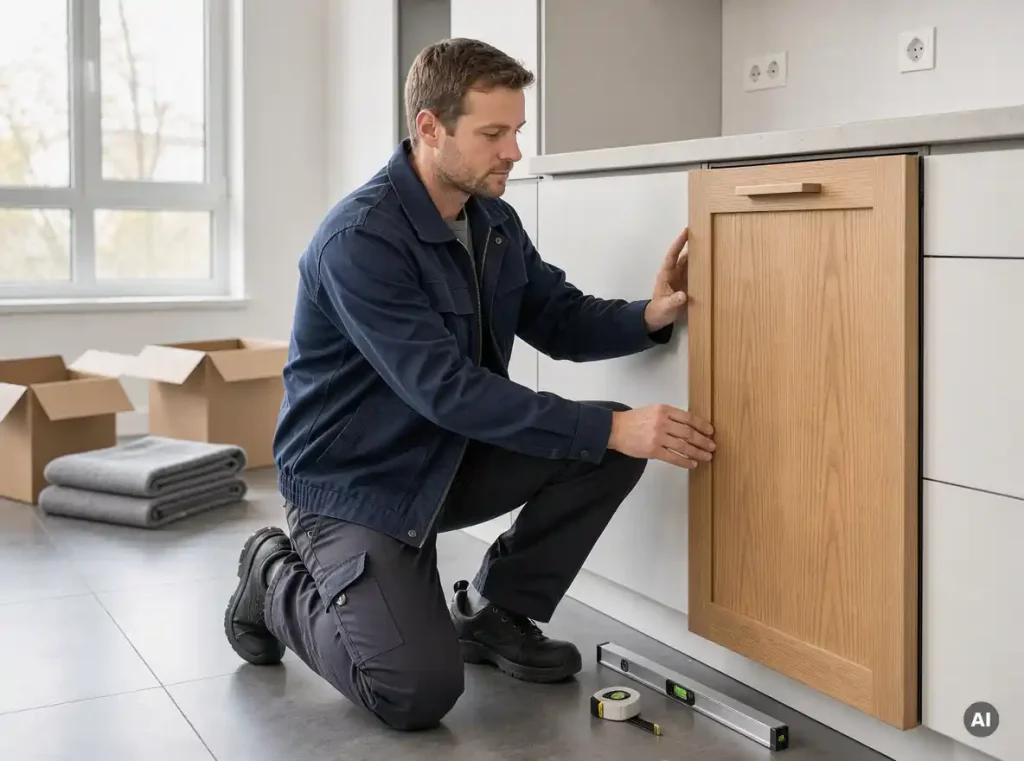
The ten checks that matter at furniture installation handover are: item count against the order, correct models and finishes, visible damage, function of moving parts, stability and fixings, correct placement against the floor plan, surface cleanliness, packaging and waste removal, missing parts, and a signed snagging list. Together they confirm the work is complete and accepted.
These checks apply to offices, hotels, schools and private homes alike, although projects with many rooms need more structure than a single sofa delivery. Below, we answer the related questions about who attends, how to record issues and what documents to keep.
Who Should Be Present at a Furniture Handover?
A furniture handover needs three roles present: someone from the installation team who can explain what was fitted, a client representative with authority to accept or reject the work, and, on larger projects, a project manager who holds the order and floor plans. Without all three, sign-off often gets delayed or disputed.
On a home delivery, the client is usually the end customer, and our two-person installation team walks through each room with them. On a corporate fit-out, the picture is broader. The client may send a facilities manager, an office manager or an interior designer. If a dealer or manufacturer was involved in the sale, a representative from them can help settle questions about specifications.
Our project logistics teams typically assign one project manager per job, so there is a single point of accountability from planning through to final acceptance. That person should attend the handover and carry the order list, drawings and delivery notes. Agree the date and attendees in advance, so nobody has to sign off a space they have not actually seen.
What Should Be Checked Before Signing Off?
Before signing off, check ten things: quantities against the order, correct models and finishes, visible damage, working mechanisms, stability and fixings, placement against the plan, cleanliness, packaging removal, missing parts, and the snagging list. Work through them room by room rather than from memory, so nothing slips through.
- Quantities: Count every item and compare it with the order and delivery note.
- Models and finishes: Confirm colours, fabrics, wood types and dimensions match what was specified.
- Visible damage: Look for scratches, dents, chips, stains and torn upholstery, including on the back and underside.
- Moving parts: Open every drawer and door, and test every hinge and adjustable mechanism. Test chair height, tilt and castors.
- Stability and fixings: Check that wall-mounted items are secure and that tables and cabinets stand level without wobbling.
- Placement: Compare the layout with the agreed floor plan, including spacing, orientation and access routes.
- Cleanliness: Wipe-down marks, fingerprints, dust and adhesive residue should be gone.
- Packaging and waste: Confirm that all packaging has been removed or collected as agreed.
- Missing parts: Check for absent handles, glass shelves, cable covers, keys, manuals and spare fittings.
- Snagging list: Make sure any outstanding issue is written down before anyone signs.
Take your time on this. A rushed furniture delivery inspection is the most common reason damage goes unreported until it is too late to determine when it happened.
How Should Damage and Defects Be Recorded?
Damage and defects should be recorded in writing on the handover form or snagging list, supported by dated photos, before anyone signs for acceptance. Each entry needs the room, the item, a clear description and a photo. Vague notes such as “some marks” are hard to act on later.
A good snagging list for furniture includes:
- A reference number for each issue
- Location, such as floor, room or workstation
- The item name or product code
- A short description of the defect
- A close-up photo and a wider photo showing where the item sits
- The agreed action, such as repair, replace or adjust
Both parties should sign the list, and each should keep a copy. If the client prefers to sign with reservations, the form should say exactly what those reservations are. Signing without noting visible damage can weaken any later furniture delivery damage claim, so encourage everyone to note issues on the day, even small ones.
What Happens If Problems Are Found at Handover?
If problems are found at handover, the issues go on the snagging list, the installer agrees on a corrective action and a date, and the client can sign with reservations or withhold full acceptance until fixes are made. Minor defects rarely block handover, whereas major damage or missing items usually do.
The right response depends on severity:
- Minor issues such as a loose handle or small mark can often be fixed on the spot by the installation team.
- Repairable damage usually needs a return visit with the right materials or touch-up kit.
- Replacement items need a new delivery date, which should be written into the snagging list.
- Disputed items should be photographed, noted and escalated to the project manager for resolution.
Keep the tone constructive. Most problems are solved quickly when they are documented clearly and everyone knows who is responsible for the follow-up. If you need to talk through a difficult handover, you can contact our team and we will help find a practical route forward.
Which Documents Belong in the Handover Pack?
A furniture handover pack should contain the signed handover form, the completed snagging list with photos, the original order and delivery notes, the floor plan, assembly and care instructions, and warranty details. Together these form a complete record of what was delivered, installed and accepted.
A thorough pack usually includes:
- Signed handover or acceptance certificate
- Snagging list with dated photos and agreed actions
- Order confirmation and delivery notes
- As-installed floor plans or room layouts
- Care, cleaning and maintenance instructions for each product
- Warranty terms and manufacturer contact details
- Asset list or inventory, useful for offices and hotels
- Contact details for follow-up issues
Store the pack digitally as well as on paper, so facilities teams can find it years later when a repair or reorder comes up. On larger rollouts, a clear record also makes later phases easier to plan, because you can see precisely what was installed and where. If you are managing a bigger programme, our project cases show how structured handovers work across many locations.