




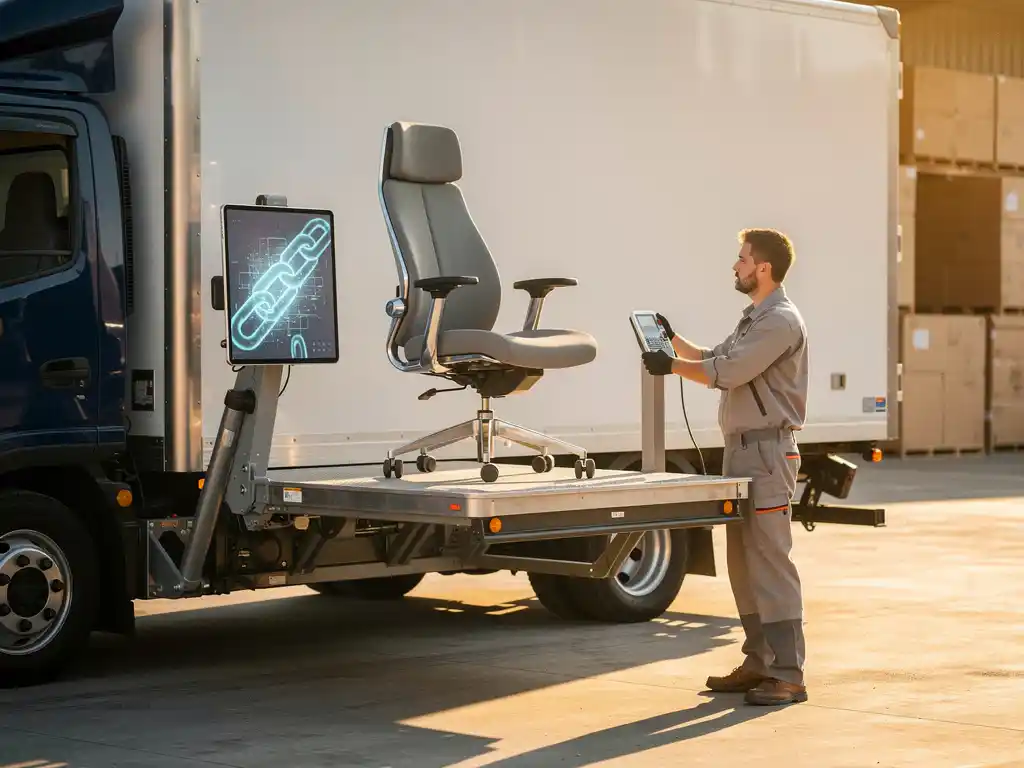
The commercial furniture industry faces increasing pressure to deliver complex projects on time, within budget, and with complete transparency. As project logistics become more sophisticated, traditional tracking methods often fall short of meeting client expectations and regulatory requirements. Blockchain technology is emerging as a transformative solution that could revolutionize how furniture logistics companies manage supply chains, track deliveries, and ensure accountability across global projects.
From warehouse management to final installation, blockchain offers unprecedented visibility and control over every aspect of furniture project logistics. This technology promises to address long-standing challenges in transparency, tracking, and trust that have plagued the industry for decades.
What is blockchain technology in logistics?
Blockchain technology in logistics is a distributed digital ledger system that creates an immutable, transparent record of every transaction and movement throughout the supply chain. Each “block” contains encrypted data about shipments, transfers, or transactions, which is linked to previous blocks, creating an unbreakable chain of information that all authorized parties can access in real time.
In furniture logistics, blockchain functions as a shared database where manufacturers, logistics providers, customs authorities, and clients can track products from production to final delivery. Unlike traditional tracking systems that rely on centralized databases, blockchain distributes information across multiple nodes, making it virtually impossible to alter or falsify records. This technology enables automatic verification of deliveries, instant updates on shipment status, and complete visibility into handling procedures.
The decentralized nature of blockchain eliminates the need for intermediaries to verify transactions or movements, reducing delays and potential points of failure. Smart contracts built into the blockchain can automatically trigger payments, notifications, or next steps when predetermined conditions are met, streamlining the entire logistics process.
How can blockchain improve furniture project tracking?
Blockchain improves furniture project tracking by creating a permanent, real-time record of every item’s journey from manufacturing through final installation, providing complete visibility and accountability at every stage. Each piece of furniture receives a unique digital identity that tracks its location, condition, handling history, and delivery status across the entire supply chain.
Traditional tracking systems often suffer from data silos, where different parties maintain separate records that may not align or update simultaneously. Blockchain eliminates these inconsistencies by maintaining a single source of truth that all stakeholders can access. When a shipment moves from the warehouse to transport, the blockchain automatically updates with timestamps, location data, and handler information.
For complex commercial furniture projects involving multiple deliveries, installations, and locations, blockchain provides project managers with unprecedented oversight. They can monitor which items have been delivered to specific floors of a building, track assembly progress, and identify potential delays before they impact project timelines. This level of visibility is particularly valuable for project logistics involving international shipments or multi-phase installations.
The technology also enables predictive analytics by analyzing historical movement patterns and identifying potential bottlenecks or delays. This data helps logistics companies optimize routes, anticipate challenges, and provide more accurate delivery estimates to clients.
What are smart contracts for commercial furniture delivery?
Smart contracts for commercial furniture delivery are self-executing digital agreements built into blockchain networks that automatically trigger actions or payments when predetermined delivery conditions are met, eliminating the need for manual verification and reducing disputes. These contracts contain coded rules that activate automatically when sensors, GPS data, or other verification methods confirm successful delivery.
A typical smart contract might specify that payment is released automatically when furniture arrives at the designated location, passes quality inspection, and receives client confirmation. The contract could also trigger penalty clauses if deliveries are late, automatically adjust schedules based on delays, or release partial payments as project milestones are completed.
For commercial furniture projects, smart contracts can manage complex delivery schedules involving multiple phases and locations. They can coordinate with building access systems, schedule installation teams, and ensure that prerequisite work is completed before furniture arrives. This automation reduces administrative overhead and minimizes human error in project coordination.
Smart contracts also enhance trust between parties by removing subjective interpretation of contract terms. All conditions are clearly defined in code, and execution is automatic and transparent. This is particularly valuable in international projects where different legal systems and languages might create ambiguity in traditional contracts.
Which furniture logistics challenges does blockchain solve?
Blockchain solves critical furniture logistics challenges, including lack of transparency, documentation fraud, payment disputes, and coordination difficulties across multiple stakeholders in complex commercial projects. The technology addresses the industry’s most persistent problems by creating verifiable, tamper-proof records and automated processes.
Transparency issues plague furniture logistics when clients cannot verify where their products are or why delays occur. Blockchain provides real-time visibility into every aspect of the supply chain, from manufacturing status to customs clearance to final delivery. This transparency reduces client anxiety and enables proactive problem-solving.
Documentation fraud and errors represent significant risks in international furniture logistics, where customs forms, certificates of origin, and quality inspections can be falsified or lost. Blockchain creates immutable records of all documentation, making fraud virtually impossible and ensuring that regulatory requirements are met consistently.
Payment disputes often arise when delivery conditions are unclear or when different parties have conflicting records of what was delivered and when. Smart contracts eliminate these disputes by automatically executing payments based on verified delivery conditions, reducing administrative costs and improving cash flow for all parties.
Coordination challenges multiply in large commercial projects involving multiple suppliers, logistics providers, installation teams, and client representatives. Blockchain provides a shared platform where all stakeholders can access the same real-time information, reducing miscommunication and ensuring that everyone works from the same data.
How much does blockchain implementation cost for logistics companies?
Blockchain implementation costs for logistics companies typically range from €50,000 to €500,000 for initial setup, depending on company size, existing technology infrastructure, and scope of implementation, with ongoing operational costs of €10,000 to €50,000 annually. These costs include software development, system integration, staff training, and technology infrastructure upgrades.
Smaller logistics companies focusing on basic tracking functionality can expect lower initial costs, particularly if they adopt existing blockchain platforms rather than developing custom solutions. However, companies requiring complex smart contracts, integration with multiple external systems, or custom features will face higher development costs.
The return on investment typically materializes through reduced administrative costs, fewer disputes, faster payment processing, and improved client satisfaction. Companies often see cost savings within 12–18 months of implementation, particularly through reduced manual tracking, documentation processing, and dispute resolution.
Operational costs include ongoing platform fees, system maintenance, security updates, and staff training as the technology evolves. Companies must also consider the cost of ensuring all supply chain partners can interact with the blockchain system, which may require providing training or technical support to smaller suppliers or clients.
How Jan Krediet helps with blockchain-based project logistics
We understand that transparency and accountability are crucial for successful commercial furniture projects. As part of Logistics Plus, we leverage advanced technology solutions to provide clients with unprecedented visibility into their project logistics operations.
Our approach to technology-enhanced project logistics includes:
- Real-time tracking systems that provide complete visibility from warehouse to final installation
- Digital documentation that ensures compliance and reduces administrative overhead
- Automated coordination between our 200+ logistics professionals and local partners worldwide
- Advanced planning tools that optimize delivery schedules and resource allocation
- Integrated quality control processes that verify deliveries and installations
Whether you’re planning a complex office fit-out, an educational facility renovation, or an international hotel project, our team combines decades of experience with cutting-edge technology to deliver exceptional results. Ready to explore how technology-enhanced project logistics can transform your next commercial furniture project? Contact us to discuss your specific requirements and discover how we can optimize your supply chain operations.