




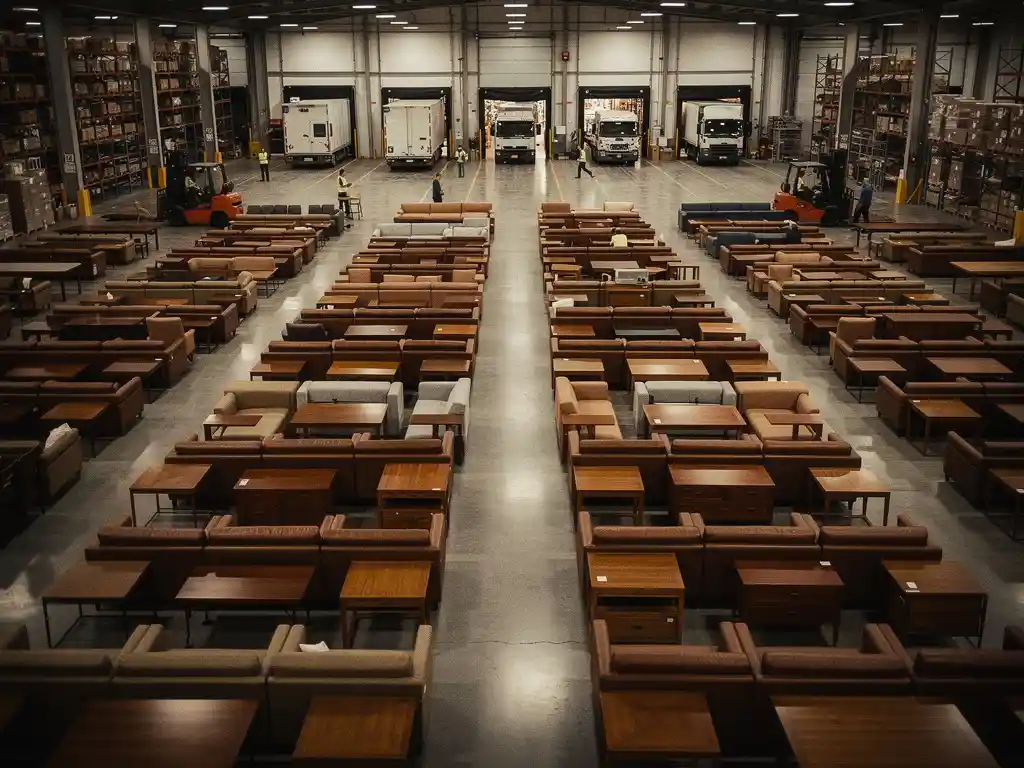
Managing furniture distribution across multiple locations presents unique challenges that require sophisticated coordination strategies. From synchronizing inventory levels to optimizing transportation routes, successful multi-location furniture distribution demands careful planning and the right systems in place.
Whether you’re operating regional distribution centers or managing global furniture logistics, understanding the key components of location coordination can significantly improve your operational efficiency and customer satisfaction. Let’s explore the essential aspects of coordinating multiple locations in furniture distribution.
What does coordinating multiple locations in furniture distribution involve?
Coordinating multiple locations in furniture distribution involves synchronizing inventory, transportation, and operations across various warehouses and distribution centers to ensure seamless product flow from manufacturers to customers. This coordination includes managing stock levels, scheduling deliveries, and maintaining consistent service standards across all locations.
The process encompasses several critical components that work together to create an efficient distribution network. Inventory allocation ensures each location maintains optimal stock levels based on regional demand patterns and seasonal fluctuations. Transportation coordination involves scheduling and routing shipments between locations to minimize costs while meeting delivery deadlines.
Communication systems play a vital role in keeping all locations informed about inventory changes, urgent orders, and operational updates. Additionally, standardized processes across locations help maintain quality control and enable staff to work efficiently, regardless of which facility they’re operating from.
How do you manage inventory across multiple furniture distribution centers?
Managing inventory across multiple furniture distribution centers requires centralized visibility systems that provide real-time stock levels, automated reorder points, and demand forecasting capabilities. This approach ensures optimal inventory allocation while preventing stockouts and reducing excess inventory costs.
Effective inventory management starts with implementing a warehouse management system that connects all locations to a central database. This system tracks inventory movements, monitors stock levels, and generates alerts when items fall below predetermined thresholds. Demand forecasting tools analyze historical sales data and seasonal patterns to predict future inventory needs at each location.
Regular inventory audits and cycle counting procedures help maintain accuracy across all distribution centers. Cross-docking capabilities allow for direct transfers between locations without long-term storage, improving efficiency for high-turnover items. Safety stock calculations consider lead times and demand variability to ensure adequate buffer inventory at each location.
What technology systems help coordinate furniture distribution locations?
Technology systems that coordinate furniture distribution locations include warehouse management systems (WMS), transportation management systems (TMS), and enterprise resource planning (ERP) platforms that provide centralized control and real-time visibility across all facilities.
A robust WMS serves as the foundation for multi-location coordination by tracking inventory movements, managing picking and packing operations, and optimizing storage layouts across all facilities. These systems integrate with barcode scanning and RFID technology to ensure accurate inventory tracking and reduce human error.
Transportation management systems optimize routing and scheduling between locations, considering factors like delivery windows, vehicle capacity, and fuel costs. Cloud-based platforms enable real-time communication between locations, allowing managers to make informed decisions about inventory transfers and resource allocation.
Advanced analytics tools provide insights into performance metrics across locations, helping identify optimization opportunities and potential bottlenecks. Mobile applications enable field staff and drivers to access critical information and update systems while on the move.
How do you optimize transportation between multiple furniture warehouses?
Optimizing transportation between multiple furniture warehouses involves strategic route planning, load consolidation, and coordinated scheduling to minimize costs while maintaining delivery performance. This includes using transportation management systems to calculate optimal routes and maximize vehicle utilization.
Route optimization considers multiple factors, including distance, traffic patterns, delivery time windows, and vehicle capacity constraints. Load planning ensures maximum utilization of truck space while considering weight distribution and product fragility. Consolidating shipments from multiple locations into single deliveries reduces transportation costs and environmental impact.
Coordinated scheduling between locations prevents conflicts and ensures smooth operations. This includes planning for peak periods, coordinating maintenance schedules, and managing driver availability across the network. Backhauling opportunities, where vehicles pick up inventory or returns on return trips, further improve transportation efficiency.
What are the biggest challenges in multi-location furniture distribution?
The biggest challenges in multi-location furniture distribution include maintaining inventory accuracy across locations, coordinating complex delivery schedules, managing varying regional demands, and ensuring consistent service quality while controlling operational costs.
Inventory discrepancies between systems and actual stock levels can lead to overselling or stockouts, which is particularly challenging given furniture’s large size and storage requirements. Coordinating deliveries becomes complex when dealing with bulky items that require special handling and specific delivery windows.
Regional demand variations make it difficult to predict optimal inventory allocation, especially for seasonal items or location-specific preferences. Quality control becomes more challenging when operations are distributed across multiple facilities with different staff and management teams.
Communication gaps between locations can result in inefficient resource utilization and missed opportunities for optimization. Managing costs while maintaining service levels requires a careful balance, particularly given the high transportation costs associated with furniture distribution.
How do you measure success in multi-location furniture distribution coordination?
Success in multi-location furniture distribution coordination is measured through key performance indicators, including inventory turnover rates, order fulfillment accuracy, delivery performance metrics, and cost per shipment across all locations.
Inventory metrics focus on turnover rates, stockout frequencies, and carrying costs to evaluate how effectively inventory is managed across locations. Order fulfillment accuracy measures the percentage of orders completed correctly, including the correct items, quantities, and delivery locations.
Delivery performance indicators include on-time delivery rates, damage rates, and customer satisfaction scores. Transportation efficiency is measured through metrics like cost per mile, vehicle utilization rates, and fuel consumption. Labor productivity metrics track picking efficiency, loading times, and overall workforce utilization across all facilities.
Financial performance indicators include total logistics costs, cost per order, and return on investment for technology and infrastructure improvements. Regular benchmarking against industry standards helps identify areas for improvement and validate operational decisions.
How Jan Krediet helps with multi-location furniture logistics
We specialize in coordinating complex furniture distribution across multiple locations through our extensive network and advanced project logistics capabilities. Our expertise in managing over 150 locations worldwide positions us to handle your multi-location furniture distribution challenges effectively.
Our comprehensive approach includes:
- Centralized inventory management across all your distribution points
- Optimized transportation routing between warehouses and final destinations
- Real-time coordination systems that ensure seamless operations
- Specialized handling for delicate and oversized furniture items
- Local partnerships that enhance our global reach and capabilities
With over 60,000 square meters of warehouse space and 250 vehicles at our disposal, we provide the infrastructure and expertise needed to streamline your multi-location operations. Our team of 200+ logistics professionals brings decades of experience in furniture distribution coordination.
Ready to optimize your multi-location furniture distribution network? Contact us today to discuss how we can enhance your logistics coordination and improve your operational efficiency.