


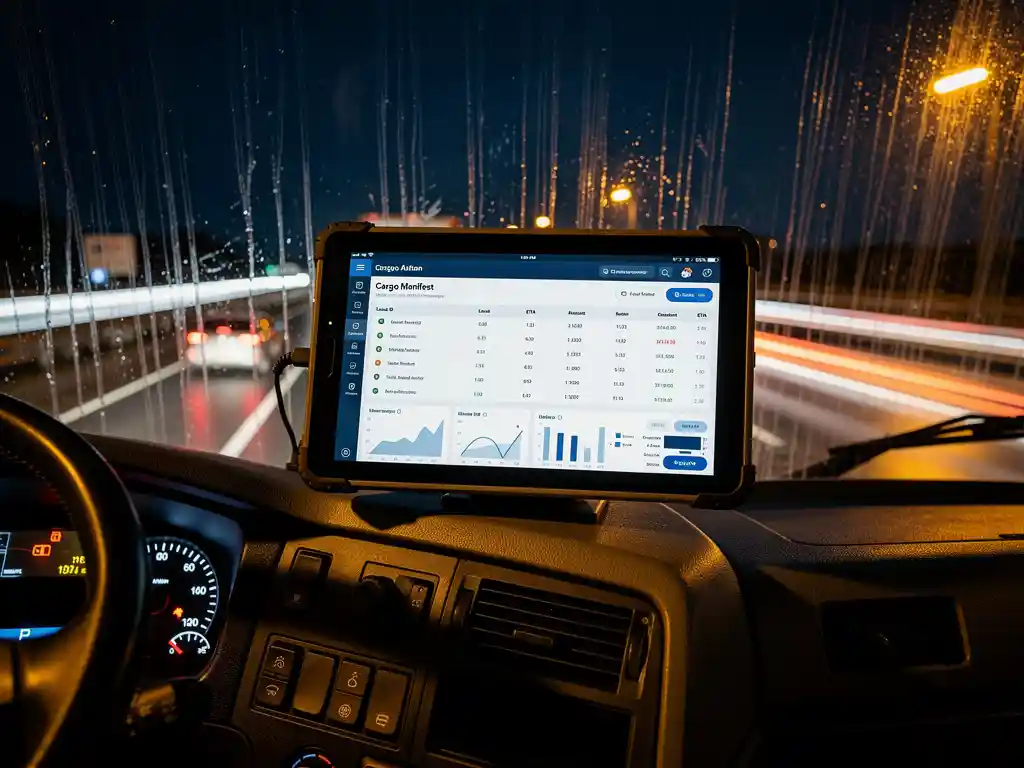
Real-time visibility on critical component shipments comes from combining live tracking technology with proactive monitoring protocols and a logistics partner who treats your components as high-priority freight at every stage. The right approach layers GPS tracking, digital documentation, and customs intelligence into a single, coherent view of your shipment from origin to final delivery. The questions below break down exactly how each piece of that system works.
What tools actually provide real-time shipment tracking?
Real-time shipment tracking is delivered through a combination of GPS-enabled telematics on vehicles, carrier API integrations that pull live status updates, and cloud-based visibility platforms that consolidate data from multiple transport legs into one dashboard. For critical component shipments, these tools work together to eliminate blind spots between handoffs.
The most effective tracking setups include several core technologies:
- GPS telematics: Fitted directly to vehicles, these devices report location, speed, and estimated arrival in real time, giving you a continuous position feed rather than periodic status updates.
- Carrier EDI and API connections: Electronic data interchange links between your systems and your logistics provider’s systems push milestone events automatically, such as departure, border crossing, and delivery confirmation.
- Visibility platforms: Tools like supply chain visibility software aggregate data from multiple carriers and modes into a single interface, removing the need to log into separate portals for road, sea, and air freight.
- Mobile proof-of-delivery apps: Drivers capture signatures, photos, and condition notes at the point of handover, creating a timestamped record that feeds back into your tracking dashboard instantly.
At Jan Krediet, our clients have access to online tracking throughout the logistics process, keeping them informed of every step without having to chase updates manually. For component shipments where timing is critical, this kind of continuous visibility is not a luxury but a baseline requirement.
Why do critical components need more visibility than standard freight?
Critical components need more visibility than standard freight because a delay or damage event in a component shipment does not just affect one delivery. It can halt an entire production line, delay a construction project, or leave end customers without a promised installation. The downstream consequences of a missed component are disproportionate to the size of the shipment itself.
Standard freight often has built-in tolerance. If a pallet of packaging materials arrives a day late, operations can usually absorb the gap. Critical components rarely have that buffer. They are frequently scheduled to arrive just in time for a specific assembly window, meaning any deviation creates a cascade of rescheduling, cost overruns, and customer dissatisfaction.
There are three characteristics that make component shipments inherently higher risk:
- Just-in-time dependency: Components are often ordered to arrive precisely when they are needed, leaving no inventory cushion to absorb delays.
- Single-source vulnerability: Many critical components come from a single manufacturer or region, meaning there is no quick alternative if a shipment fails.
- Condition sensitivity: Technical components, precision parts, and high-value items can be damaged by vibration, temperature change, or improper handling in ways that are not immediately visible but cause failures later.
Higher visibility on these shipments means problems are identified while there is still time to act, rather than being discovered after the disruption has already occurred.
How does a supply chain control tower work for component tracking?
A supply chain control tower for component tracking is a centralized monitoring function that aggregates live data from across your logistics network, applies predefined rules to identify exceptions, and triggers alerts or escalations when a shipment deviates from plan. It acts as the intelligence layer above your tracking tools, turning raw data into actionable decisions.
In practice, a control tower pulls information from carrier systems, customs platforms, warehouse management systems, and GPS feeds into a unified view. It then compares actual progress against planned milestones and flags anything that falls outside acceptable parameters. This might include a vehicle that has not reached a checkpoint on time, a customs filing that is missing documentation, or a temperature excursion in a refrigerated container.
Who operates a control tower?
Control towers can be operated internally by a company’s own logistics team, or outsourced to a logistics service provider who monitors multiple clients’ shipments simultaneously. For businesses without the scale to justify a dedicated internal function, working with a full-service logistics partner who performs this role is a practical and cost-effective alternative.
What makes a control tower effective for critical components?
Effectiveness depends on the quality of data inputs and the speed of the response protocols. A control tower that receives data only at daily intervals is not truly real-time. For critical component shipments, the data refresh rate needs to be frequent enough to allow intervention before a delay becomes irreversible. Equally important is having a clear escalation path so that when an alert fires, the right person acts on it immediately rather than waiting for a scheduled review.
What data points should you monitor for high-risk shipments?
For high-risk shipments, the most important data points to monitor are departure confirmation, border crossing timestamps, estimated versus actual arrival times, customs status, condition flags from driver inspections, and proof-of-delivery confirmation. Together, these cover the moments in a journey where delays and damage are most likely to originate.
Beyond the basic location milestones, experienced logistics teams also track:
- Dwell time at hubs: Time spent stationary at a warehouse, port, or cross-dock that exceeds the planned window often signals a problem before it becomes visible in tracking systems.
- Driver inspection reports: Pre-departure condition checks that are documented and timestamped create a baseline record and catch handling issues before the shipment moves.
- Document completeness: Missing or incorrect paperwork is one of the leading causes of customs delays. Monitoring whether all required documents have been submitted and accepted is as important as tracking the physical goods.
- Weather and route disruption alerts: External conditions that affect transport corridors should feed into your monitoring so that alternative routing can be arranged proactively.
- Carrier performance history: For repeat lanes, tracking on-time performance by carrier and route helps identify patterns that predict future risk.
The goal is to move from reactive tracking, where you discover a problem after it has happened, to predictive monitoring, where the data signals a risk early enough to intervene.
How can customs clearance delays be spotted before they cause disruption?
Customs clearance delays can be spotted before they cause disruption by monitoring document submission status in real time, tracking customs authority response times against standard processing benchmarks, and maintaining direct communication with a customs broker who flags exceptions as they arise rather than waiting for formal rejection notices.
Most customs delays are not random. They follow predictable patterns tied to incomplete documentation, tariff classification disputes, or inspection flags triggered by the type of goods or country of origin. Knowing these patterns in advance allows you to prepare documentation more thoroughly and to build slightly longer customs windows into your planning for high-risk lanes.
Practical steps that reduce customs-related disruption include:
- Submitting import declarations in advance of arrival wherever the destination country’s customs system allows pre-clearance.
- Ensuring commodity codes, valuations, and country-of-origin declarations are verified before the shipment departs, not at the border.
- Working with a logistics partner who handles customs administration on your behalf and has established relationships with customs authorities in key markets.
- Monitoring customs authority processing queues for your destination port or border crossing, which can signal congestion before your shipment arrives.
We handle the complete administrative process for our clients, including customs clearance, so that documentation issues are caught and resolved without the client needing to manage the back-and-forth directly. You can find more detail on how we structure this within our general cargo transport and project logistics services.
When should you escalate a delayed critical component shipment?
You should escalate a delayed critical component shipment as soon as the delay exceeds the buffer built into your delivery schedule and no confirmed recovery plan is in place. Waiting for certainty before escalating is the most common mistake. By the time a delay is confirmed as unrecoverable, the window for alternative action has usually closed.
A practical escalation framework works in three stages:
- Early alert (delay detected, within buffer): Notify your logistics contact and request a confirmed revised ETA. Begin assessing whether the downstream schedule can absorb the delay without action.
- Active escalation (delay threatens deadline, buffer consumed): Engage your logistics provider’s account management team directly. Explore expedited routing options, alternative carriers, or partial shipment to keep the most critical components moving. Notify internal stakeholders who depend on the delivery.
- Crisis response (deadline cannot be met by any standard means): Consider emergency air freight for the highest-priority items, direct factory-to-site routing if applicable, or temporary substitution if available. Communicate proactively with the end customer or production team so they can adjust their own plans.
The single most important factor in successful escalation is having a dedicated contact at your logistics provider who knows your shipment, understands its criticality, and has the authority to act. At Jan Krediet, every client works with a single point of contact who manages all communication regardless of which transport modes or partners are involved, which means escalation reaches the right person immediately. If you want to discuss how we can support your critical component shipments, get in touch with our team directly.