




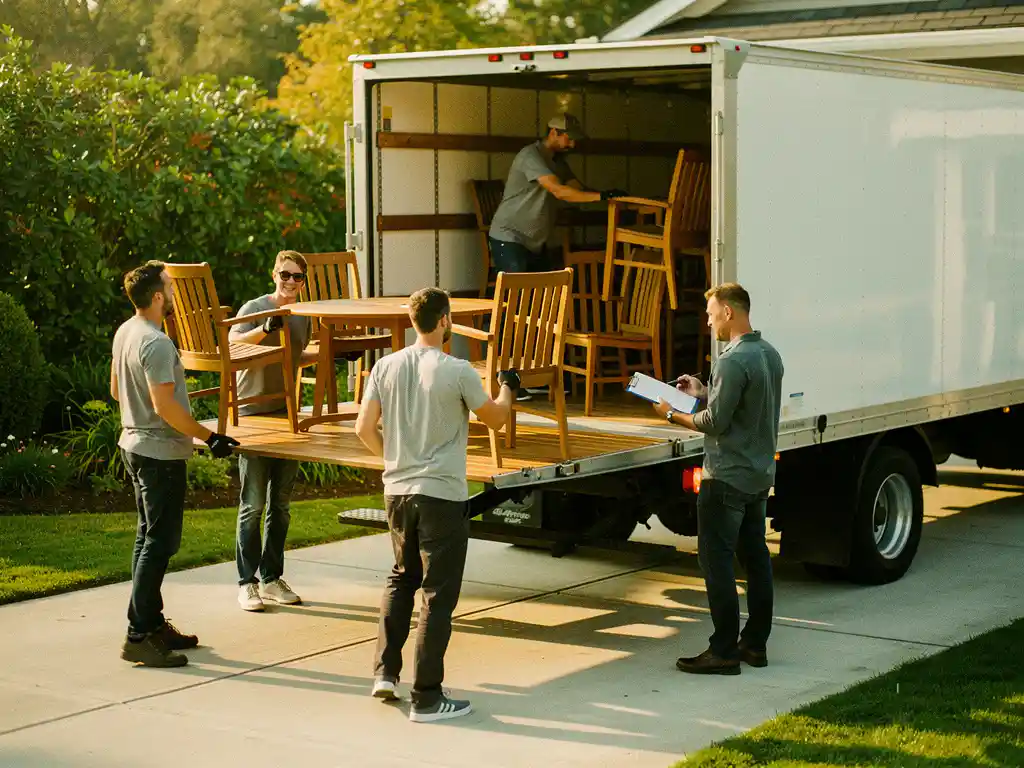
Delivering garden furniture in a confirmed appointment slot sounds straightforward, but the reality involves coordinating multiple moving parts: stock availability, route planning, customer communication, and last-mile execution. When any one of those elements slips, the appointment fails and trust erodes quickly. This guide walks you through exactly how to guarantee garden furniture delivery on appointment, from the groundwork you lay before booking to the proof of delivery you collect at the door.
Whether you are managing a handful of residential deliveries or running a high-volume seasonal operation, the steps below give you a repeatable framework for scheduled delivery that holds up under real-world pressure.
What you need before scheduling garden furniture delivery
Before a single appointment slot goes into the calendar, you need to confirm that the right conditions are in place. Skipping this preparation stage is the most common reason garden furniture logistics operations miss their appointments. Rushing into scheduling without verified data creates a chain of problems that is almost impossible to untangle later.
Run through the following checklist before opening any appointment for booking:
- Stock confirmation: Verify that every item in the order is physically available in the warehouse, not just shown as available in the system. Garden furniture often arrives in multiple boxes or flat-pack components that need to be checked as a complete set.
- Delivery address details: Collect the full address including floor level, access restrictions, lift availability, and any gate codes. Outdoor furniture is bulky and heavy, so access constraints matter more than with smaller parcels.
- Time window preferences: Ask the customer for both a preferred date and an acceptable time window. A two-hour window is realistic for most urban routes; a four-hour window gives more flexibility in rural areas.
- Vehicle and crew requirements: Confirm whether the delivery requires a two-person team, a tail-lift vehicle, or specialist handling equipment. Large garden sets, parasols with weighted bases, and modular corner sofas all have specific handling needs.
- Packaging integrity check: Inspect packaging before the appointment is confirmed. Damaged packaging discovered on delivery day causes delays and disappointed customers.
Once every item on this list is confirmed, you have a solid foundation to schedule the appointment with confidence. If any element is uncertain, resolve it before committing to a time slot. A confirmed appointment is a promise, and it should only be made when you can keep it.
Plan delivery routes around confirmed appointment slots
Route planning for furniture delivery on appointment works differently from standard parcel delivery. You are not optimising purely for speed or volume. You are building a route that honours specific time commitments at each stop, which means appointment times drive the sequence, not geography alone.
- List all confirmed appointments for the day, including the agreed time window and address for each stop.
- Estimate realistic travel and unloading time for each stop. Garden furniture unloads more slowly than small parcels. A large corner sofa set with a dining table can take 20 to 30 minutes at the door alone.
- Sequence stops so that the earliest time windows are served first, then build the remaining route around those anchor points using the shortest practical path.
- Build buffer time between stops. A 15-minute buffer between appointments absorbs minor delays without cascading into missed windows later in the day.
- Assign the route to a specific vehicle and crew, and confirm they have the full stop list, addresses, and time windows before departure.
After the route is finalised, cross-check that the total planned time, including travel, unloading, and buffers, fits within the working day. If it does not, redistribute stops to a second vehicle or move a non-urgent delivery to the next available slot before the day begins, not after problems arise on the road. Our furniture transport approach applies exactly this logic, building appointment integrity into route design from the start.
Communicate appointment details clearly to customers
A confirmed time slot means nothing if the customer is unprepared to receive the delivery. Clear, timely communication is what converts a scheduled slot into a successful handover. The goal is to make sure the customer knows exactly when to expect the delivery team and what they need to do to be ready.
Send communication in at least two stages:
- Confirmation message at booking: Send a written confirmation immediately after the appointment is scheduled. Include the delivery date, the agreed time window, the order summary, and a contact number for questions. Keep it short and factual.
- Reminder the day before: Send a reminder 24 hours before the appointment. Repeat the time window and ask the customer to confirm they will be available. If they cannot be present, this is the moment to reschedule, not on delivery day.
- Day-of notification: Send a message on the morning of delivery confirming the driver is on the way and providing an estimated arrival time. If your operation supports live tracking, include a link. If not, a simple text with an updated ETA is sufficient.
Keep the language simple and direct. Avoid logistics jargon. Tell the customer what they need to know: when the team arrives, how long the delivery will take, and what access they should prepare. If the delivery involves placement in a garden or assembly of components, mention this so the customer can clear the space in advance. Good communication reduces failed first attempts, which are one of the biggest cost drivers in last-mile delivery.
Handle last-minute changes without missing appointments
Even with thorough preparation, changes happen. A customer calls to reschedule. Traffic causes a delay. A vehicle breaks down. The way you handle these situations determines whether your furniture delivery guarantee holds or collapses. The key is having a clear escalation process that your team can execute quickly without needing to improvise.
Set up the following protocols before the delivery season begins:
- Customer-initiated changes: Define a cut-off time for rescheduling, such as 48 hours before the appointment. Communicate this clearly at booking. If a customer contacts you inside that window, assess whether the slot can be absorbed by another vehicle or whether rescheduling is the only option. Always offer an alternative date immediately rather than leaving the customer waiting for a callback.
- Operational delays: If a driver is running more than 30 minutes behind schedule, contact the next customer proactively. Do not wait until the window has already been missed. Offer an updated arrival time and ask whether the customer can accommodate it. Most customers respond well to honest, early communication.
- Vehicle or crew issues: Have a contingency plan for mechanical failure or unexpected absence. This might mean a backup vehicle, a partner carrier, or a pre-agreed mutual aid arrangement with another logistics provider. The contingency plan should be documented and known to your dispatch team.
With your contingency protocols in place, the next step is ensuring that every completed delivery is properly documented. A well-managed exception is only fully resolved when it is recorded and closed out correctly.
Verify successful delivery and collect proof of appointment
The final step in guaranteeing garden furniture delivery on appointment is closing the loop with documented proof. Proof of delivery protects both you and the customer, resolves disputes quickly, and gives you the data you need to improve future operations.
- Ask the customer to sign a delivery confirmation at the point of handover. This should include the date, time, order reference, and a note of the condition of the goods at delivery.
- Record the actual delivery time. Compare it against the agreed appointment window. This data tells you whether your route planning and buffers are calibrated correctly.
- Photograph the delivered goods in situ if the customer consents. For garden furniture placed on a terrace or in a garden, a photo confirms placement and condition.
- Log any exceptions, such as damaged packaging, missing components, or access issues, immediately in your system with a description and any supporting photos.
- Send the customer a delivery confirmation message within one hour of completion. Include a brief summary of what was delivered and a contact point for any follow-up questions.
Review your proof of delivery data weekly during peak season. Look for patterns: recurring delays on specific routes, time windows that are consistently too tight, or stops where access issues keep appearing. This review process is what turns a single successful delivery into a consistently reliable scheduled delivery operation. If you want to explore how professional warehousing and logistics support can strengthen your delivery guarantee from stock management through to last-mile execution, we are happy to walk you through what that looks like in practice.